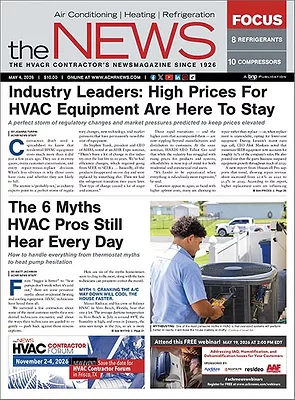
In this issue of The ACHR NEWS, industry leaders postulate on why high equipment prices are here to stay, six myths pros still hear every day, how high prices are fueling disruption, AI-driven growth in refrigerants and thermal design, financial sense and compressor swaps, contractors who have successfully adopted AI, new PFAS legislation, A/C now 14% of average energy bill, “snowbird” HVAC strategies, seismic 2030 labor shortage looming, online scammers extorting contractors, refrigerant regulations a moving target, the gap between 4x and 10x a business, a look at new products, and the latest from SNIPS NEWS.
Check back throughout the week for additional content.
HVAC prices have surged — and aren’t likely to fall. Behind the increase are sweeping regulations, new technology, and shifting market forces that are reshaping how homeowners decide whether to repair or replace their equipment.
New HVAC manufacturers are focusing on reducing installation time and costs through simpler systems, offering more affordable alternatives to traditional, labor-intensive equipment.
AI-driven data center growth is reshaping cooling strategies, driving adoption of lower-GWP refrigerants as manufacturers develop solutions that balance efficiency, sustainability, and reliability.
Rising equipment costs, refrigerant transitions, and broader economic pressure are forcing contractors and homeowners alike to take a closer look at when a compressor swap still makes sense.
With so many AI platforms on the market, knowing where to start and what delivers ROI can be overwhelming. Industry experts share how contractors are cutting through the noise and seeing measurable gains.
The most recent Energy Information Administration figures show that 88% of the housing units in the U.S. in 2020 had some form of air-conditioning, up from 85% in 2009.
Jason Schreyer of Sunset Air and Home Services explains how contractors can help seasonal residents protect empty homes from humidity, storms, and system failures.
The Tennessee Titans’ stadium features oversized HVAC systems, extensive grease ductwork, and unique framing challenges to support continuous operation of kitchens, bars, and outdoor terraces throughout the year.
A century-old Tacoma school has been fully electrified and modernized in a $7.8 million upgrade, balancing historic preservation with cutting-edge energy efficiency.
Forget what you’ve heard about prefab being the silver bullet: Tom Santos argues the real gains in construction efficiency come from rethinking the messy, human processes upstream.
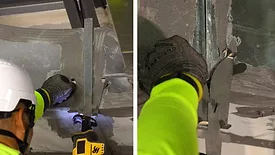
A patented system enables safer, more precise drive cleat installation in ductwork without the need for hammering, reducing fatigue and improving alignment in light commercial HVAC projects.
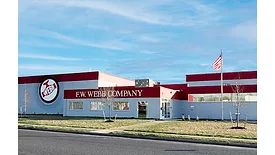
Located at 900 Kennedy Boulevard, the 44,000-square-foot facility will serve plumbing, heating, HVACR, and other professionals seeking a convenient source for systems, tools, equipment, parts, and accessories.
With capacity for up to 4,500 students per year and over 100,000 annual training hours, the ATTC provides immersive, hands‑on experiences that equip technicians with the necessary skills to commission, maintain, repair, and optimize increasingly complex climate control systems.
For your information news briefs from a wide variety of categories within the HVAC industry. Price increases, mergers and acquisitions, award winners, and more are highlighted here each issue.
In commercial buildings with zone-based heating and cooling needs, such as hotels, offices and mixed-use properties, VRF systems can provide as much as 30-45% energy savings compared to traditional ducted systems.
The Merino Mono is priced at a single, transparent flat rate of $3,800, hardware and professional installation included, with installs completed in under one hour.
The time-saving plug-in automates the schedule creation process. Using eCAPS schedules and LOD 300 content that includes electrical and performance data, users can generate multiple product schedules with a single click.