From Prefab to HVAC: The Tennessee Titans’ Stadium
Tennessee Titans’ new stadium is designed to operate year-round with unprecedented hospitality and engineering challenges
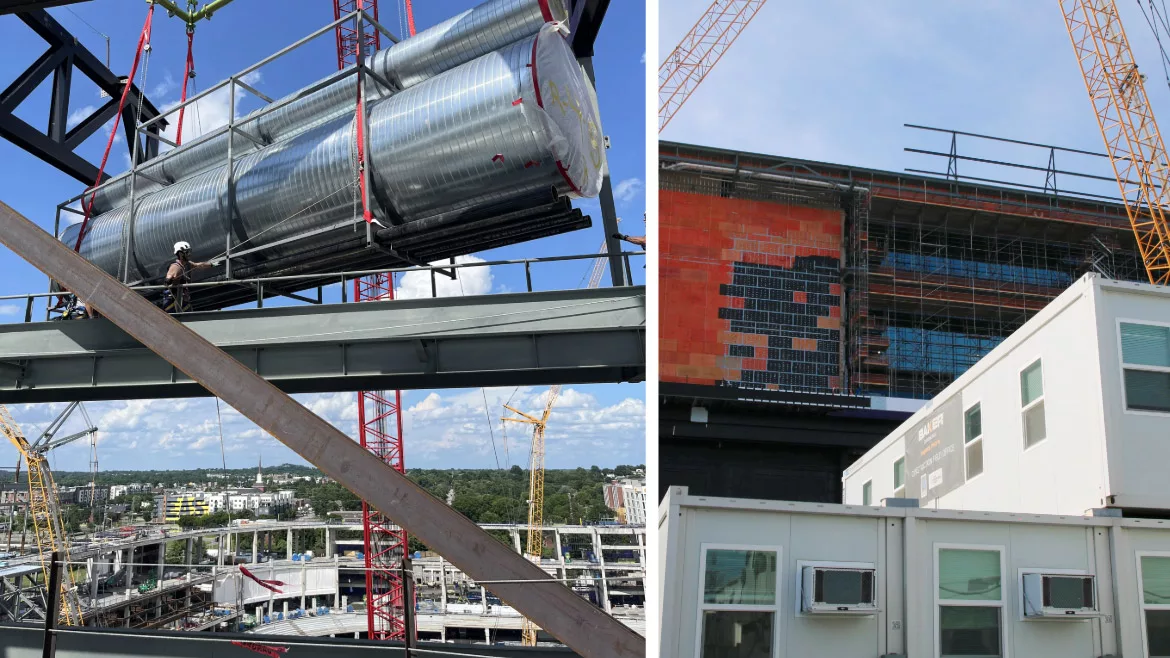
BOWL DUCT CHALLENGE: Massive 92-inch spiral ducts snake through the stadium's bowl, carefully lifted and fitted between towering framing to keep airflow smooth and consistent for year-round comfort (left). To the right, the temporary offices for the Tennessee Titans' contractors.
For Craig Mickelson, Project Executive at Harris, the Tennessee Titans’ new stadium is a unique and complex undertaking. Harris is responsible for the installation and integration of all major mechanical systems – HVAC, plumbing, and piping – across this expansive, year-round venue.
“This stadium is different,” Mickelson said from his on-site office trailer. “It’s not just a stadium. It’s a full city block with restaurants, bars, and outdoor balconies active year-round – not just on game days.”
Year-Round Operation and Mechanical Demands
The stadium has a magnitude of food service and hospitality that Mickelson says he’s never seen before. “They’ve got a lot of high-end restaurants in the stadium. They have terraces all the way around with bars and cooking outside under roof overhangs. It’s going to be very, very nice.”
This hospitality focus translates to significant mechanical requirements, especially ventilation. “There’s a lot of grease duct on the stadium, a lot for the cooking,” Mickelson explained.
When asked about fresh air considerations, he said, “Generally, they don’t use a lot of outside air; most of it is recirculated. We don’t have a lot of economizer function here, but there are some heat recovery units, ERVs – probably about five.”
The stadium also includes a reclaimed water system with two large tanks – one capturing stormwater for landscaping and toilets, and the other serving as makeup water for the cooling tower. Mickelson noted, “The north tank is about 120,000 gallons and the south tank about 300,000 gallons.”
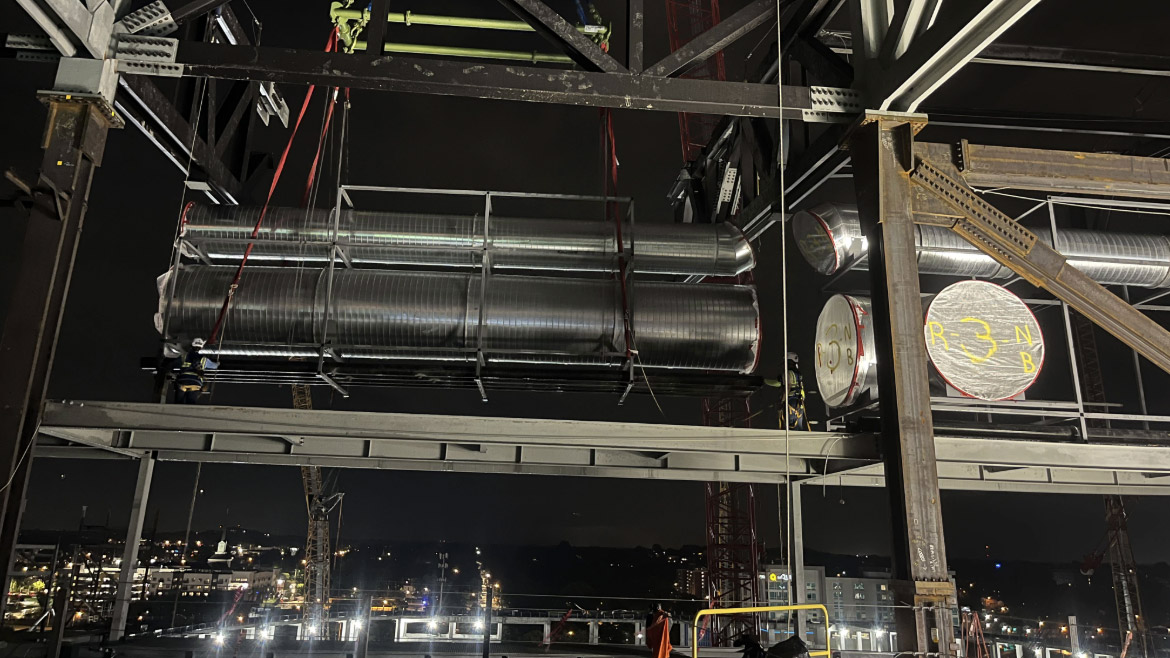
YEAR-ROUND PERFORMANCE: Mechanical systems at the Titans’ new stadium are built to support continuous operation, from packed game days to off-season events. (Courtesy of Harris)
Prefabrication Challenges
Prefab work, often a time saver on large projects, was limited here. Mickelson said, “Unfortunately, on this job, we did not have the opportunity to do a lot of prefab.” They usually do riser prefab for plumbing but “we had to stick build them. Which is unfortunate, because they took much longer.”
On the sheet metal side, some prefab was possible. “We did some bowl duct racks with heating and hot water piping below, then a layer of 92-inch diameter spiral duct above that, and another 92-inch round above that. We set those in one piece, roughly 38 feet six inches long each.”
The spiral duct was fabricated by Superior Duct Fabrication’s new shop in Ohio.
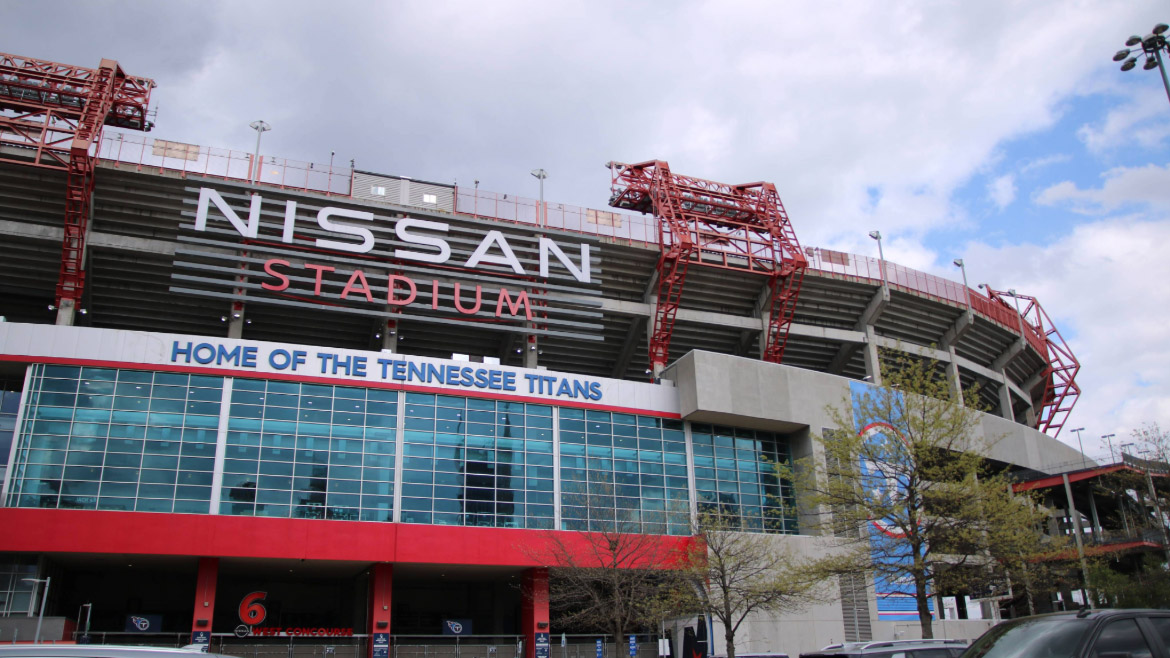
OLD STADIUM: While the Titans' old stadium also has HVAC for air-conditioned concourses, the new, enclosed stadium has much more mechanical complexity, as well as full-onrestaurants, not just concessions. (Staff photo)
Structural Framing Challenges
Mickelson highlighted framing as a major challenge. “The framing is difficult because some walls are 80 feet tall with continuous studs,” he said, adding that planning around these obstructions is time-consuming. “It’s been a very slow process.”
This framing complexity contributed to the need for more onsite construction rather than prefab, which slowed progress.
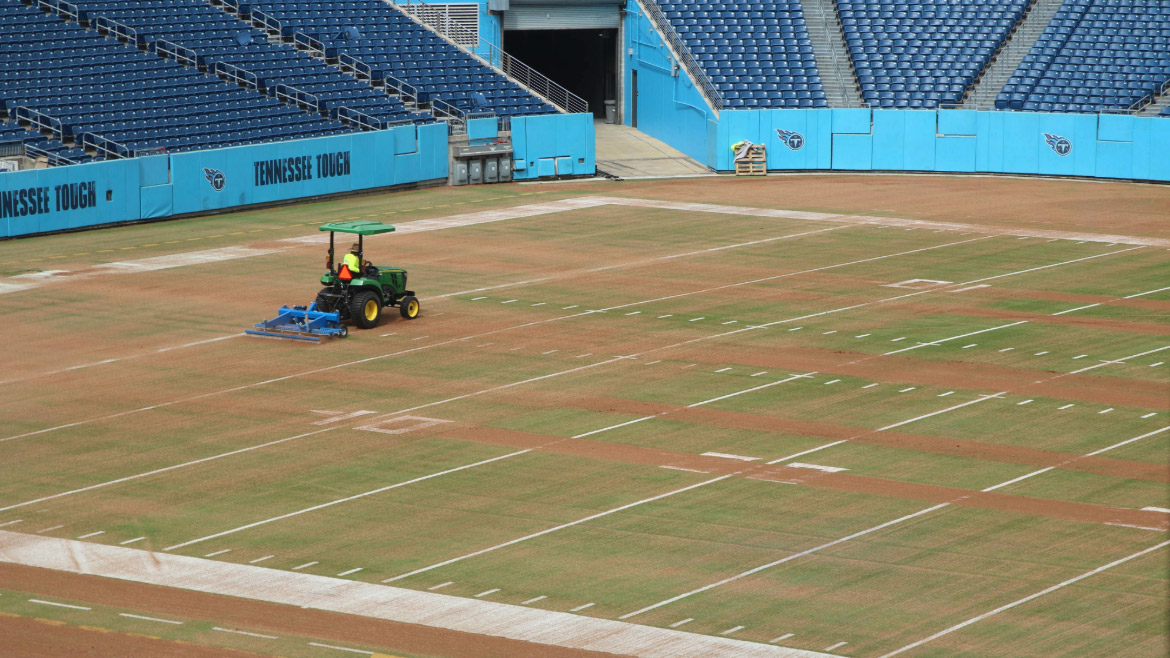
OPEN AIR: The open-air field of the old Titans stadium, contrasting with the new venue’s fixed roof that enables year-round events and enhanced climate control. (Staff photo)
Installation and Field Coordination
The installation process required careful coordination. Mickelson described flying ductwork over an escalator opening, rigging it midair, and shifting it into place. “We had to build it offset, lay it out on the floor where it would sit, then lift it about an inch, slide it over the escalator opening, rerig it, and continue lifting until it fit perfectly.”
The team collaborates closely with other contractors, especially the electrical team, who Mickelson has worked with on multiple stadiums.
Mickelson compared this project to Allegiant Stadium in Las Vegas, where he also worked.
"Vegas was much different. While floor plates went straight up and down, the curtain wall sloped outward and there was a lot of duct really high up against that curtain wall," he said. "Here, both the floor plates and curtain wall are straight up and down."
Both stadiums have roofs over the field, which adds complexity to the mechanical systems compared to open-air venues.
“This job is different because the curtain wall goes up and the floor plates go straight up. Unfortunately, it’s been more difficult because of the framing challenges and the way they have to frame some of the walls, because the walls are so tall. Some walls are 80 feet tall with continuous studs.”
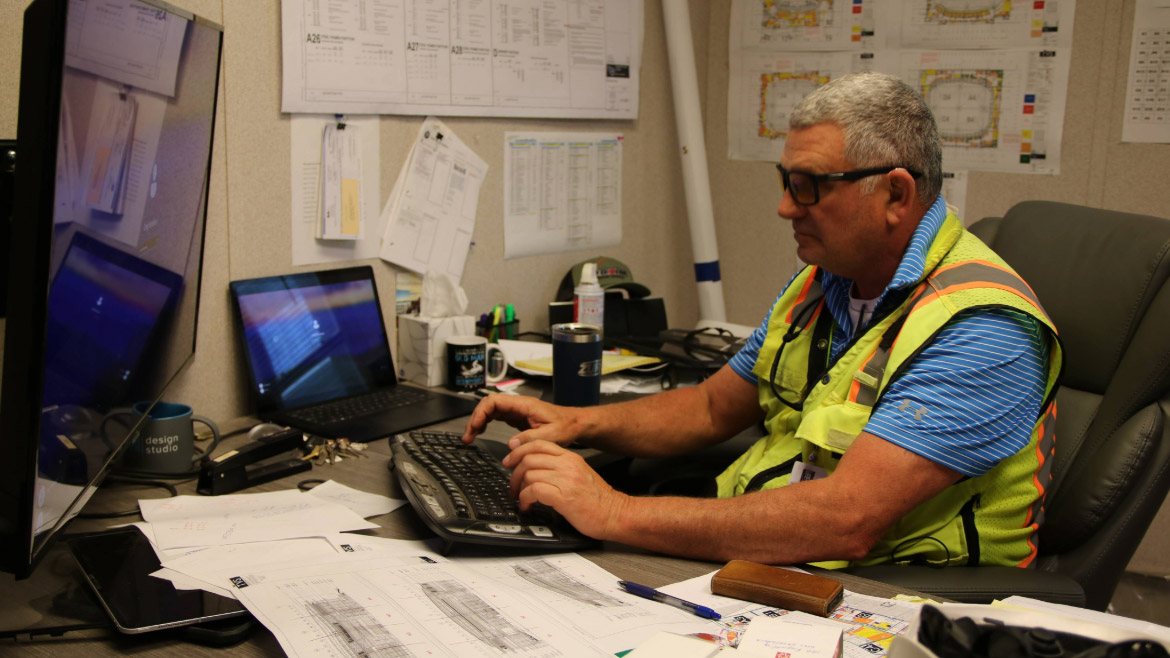
OVERSEER: Craig Mickelson, Harris project executive, overseeing the install of complex mechanical systems powering the stadium’s nonstop operation. (Staff photo)
Looking Back and Moving Forward
After a long career working on stadiums across the country, Mickelson is retiring after this project. “This is it for me – five sports venues are enough,” he said with a laugh.
Reflecting on what he’ll miss, Mickelson concluded, “The people I get to work with. It’s always fun having the team you work with. That will definitely be one of the harder things about leaving.”
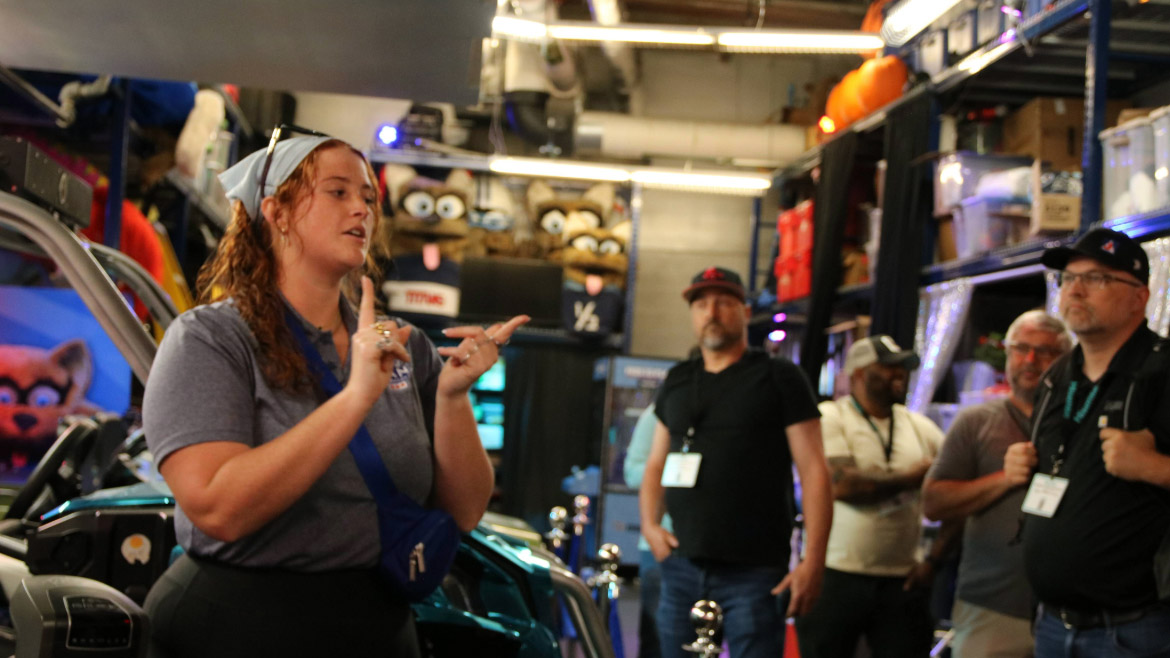
HOME FIELD: The beloved mascot’s home at the old stadium – a tradition soon to be renewed with a brand-new space in the Titans’ next chapter. (Staff photo)
Looking for a reprint of this article?
From high-res PDFs to custom plaques, order your copy today!