Competing Political Pitches to the HVAC Industry
DNC, NRCC share their midterm strategies with HVAC leaders; Plus, retiring Nebraska House Rep. Don Bacon shares parting words with industry
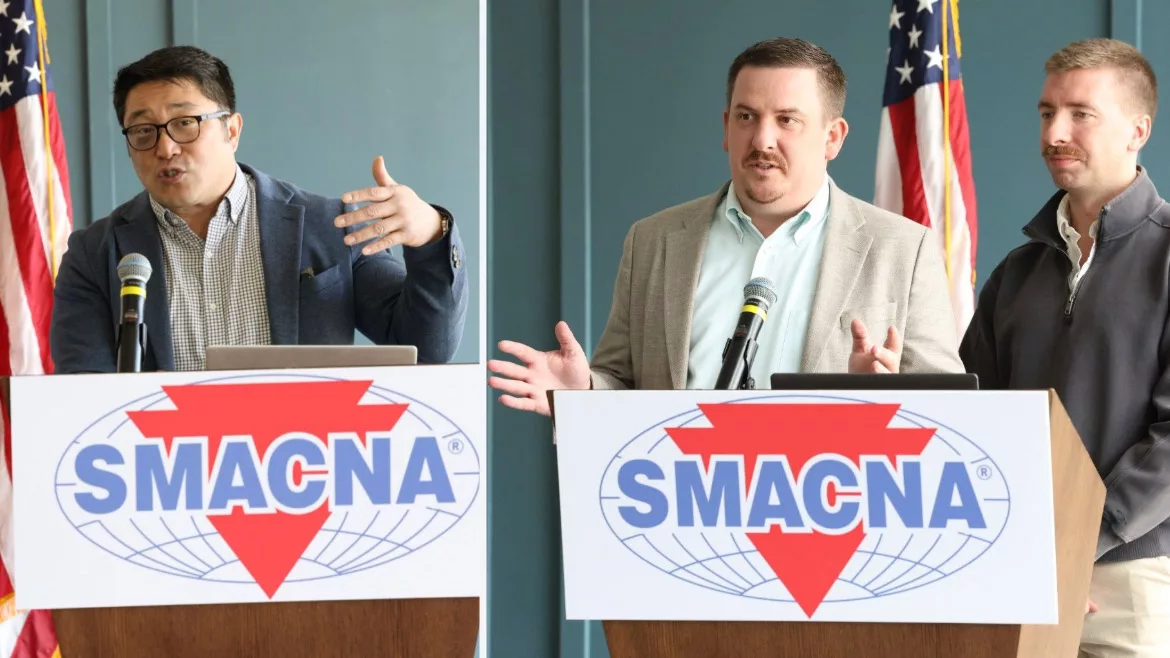
VERSUS: Left: DNC Executive Director Roger Lau. Right: NRCC’s Ezra Riggs and pollster Daniel Longo outline competing visions for the HVAC industry.
The morning air outside the SMACNA 2026 Leadership Conference in Washington, D.C., was thick and muggy. Inside the ballroom, the atmosphere was sharper – charged with calculation, urgency, and the quiet understanding that the stakes for the industry had rarely felt higher.
Contractors, union leaders, and policy insiders filled the room, waiting to hear how both parties planned to make their case – not just for votes, but for influence over the future of construction, infrastructure, and labor.
Democrats: Expansion, Investment, and Relentless Groundwork
Roger Lau, Executive Director of the Democratic National Committee, opened with a message carefully tuned to his audience.
“You are the builders of this country,” he said, drawing an explicit parallel between Sheet Metal and Air Conditioning Contractors' National Association (SMACNA) contractors and Democrats’ broader mission. “When you run for office, you’re driving the car. When you work for the DNC, you’re paving the highway.”
Lau’s pitch centered on scale and endurance: organizing year-round, investing beyond presidential cycles, and competing everywhere – not just in familiar battlegrounds.
“We flipped 30 Republican legislative seats since Trump got elected,” he said. “Republicans have flipped zero. We’re not standing still – we’re expanding the map.”
He acknowledged structural headwinds – gerrymandering, court rulings, and a polarized electorate – but framed them as challenges to outwork, not excuses to retreat. The emphasis was on relationships over transactions.
“We’re building relationships with voters, not just showing up when we need something,” Lau said. “We’re investing all the way down the ballot.”
He closed by aligning Democratic priorities with the room’s core concerns: apprenticeships, benefits, and retirement security.
“We’re not complacent,” he said. “We’re building every single day – just like you.”
Republicans: Narrow Map, Hard Edges, and Tactical Patience
The tone was different when Ezra Riggs of the National Republican Congressional Committee (NRCC) and pollster Daniel Longo took the stage. Where Democrats emphasized growth, Republicans stressed precision.
“It’s a narrow battlefield,” Riggs said. “But that works for us.”
The math was central to their argument: just eight Republicans defending seats in Harris-won districts, compared to sixteen Democrats in Trump-won territory.
“We don’t need to win everywhere – just where it counts,” Riggs said.
Longo’s data reinforced a familiar hierarchy of voter concerns: cost of living first, followed by immigration and an increasingly prominent focus on healthcare.
“Voters remember what things were like four years ago,” Longo said. “They’re still skeptical about the national economy, but more are starting to feel better about their own finances. That’s what moves votes.”
He also leaned into organization and timing: early fundraising, local “battle stations,” and a refusal to overreact to early Democratic spending. “Outside groups spent $60 million attacking our most vulnerable members last year,” Riggs noted. “We didn’t take the bait. The battlefield is tied, and now the election is about to start for real.”
His bottom line was blunt: “We can’t go back to what we had under the Democrats. We have to sell that message.”
And for those focused on early momentum? “Voters don’t really wake up until after Labor Day,” he said. “We’ve been here before. Sometimes, patience is our sharpest tool.”
A notable theme from the Republican presentation was the emphasis on candidates who break the mold of simply running as “generic Republicans.” In battleground districts, success increasingly depends on cultivating a local identity that resonates beyond the national party brand or the president’s image.
These candidates – Hispanic veterans in South Texas, business owners in California’s Central Valley, and community leaders in key swing districts – are building trust by focusing on local priorities and demonstrating independence from Washington’s partisan noise. As Longo put it, “We’re not running as generic Republicans anymore. We’re running as individual people.” This strategy is essential to appeal to the independent and swing voters who decide tight races.
One example of this approach in action is Nebraska’s Don Bacon, a Republican who has consistently fashioned his own political identity – balancing party loyalty with a bipartisan, results-driven approach that earned him respect across the aisle and among his constituents.
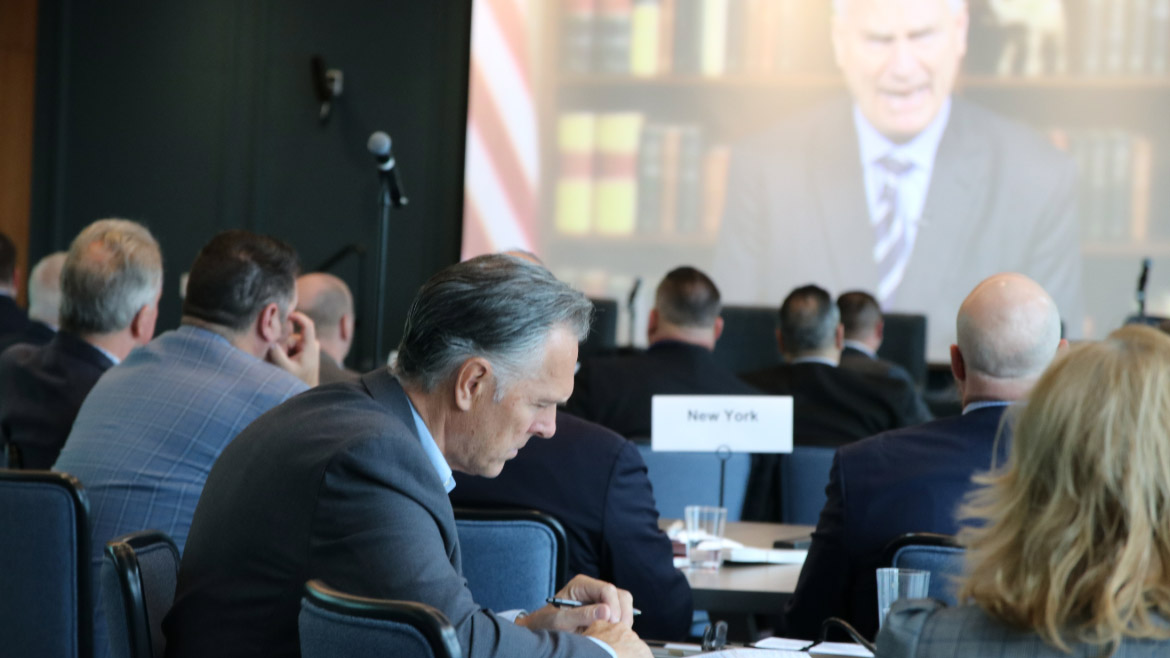
MAJORITY: House Majority Whip Tom Emmer of Minnesota addresses HVAC contractors and industry leaders at the SMACNA 2026 Leadership Conference. (Staff photo)
Don Bacon: Bipartisan Grit, Results, and Warnings from a Builder in Uniform
If the earlier sessions were about party strategy, Rep. Don Bacon delivered something entirely different: a living lesson in governing, drawn from decades in uniform and a decade on Capitol Hill.
Bacon – retiring but unmistakably energized – didn’t just recount bullet points. He told stories. He described his first days in Congress after three decades as an Air Force Brigadier General – a career that taught him to value mission over noise. “Infrastructure has always been a Republican thing,” he said, nodding all the way back to Lincoln’s railroads, Eisenhower’s highways, and even the old Whig, Henry Clay. “But when it came time to vote, a lot of Republicans ran for the hills. I couldn’t do that – I promised my constituents I’d deliver.”
He didn’t sugarcoat the infighting over the Bipartisan Infrastructure Law, first worked up during the first Trump administration, but ultimately passed with slight adjustments during President Biden’s tenure. “That was an ugly night,” Bacon admitted, recalling the pressure to abandon an infrastructure bill he knew his district needed. “People yelling, people hiding out. In the end, you have to do what you said you’d do for your voters – even if it puts you in the crosshairs.”
Bacon’s legacy, he said, was written in the concrete: flood protection at Offutt Air Force Base, a new airport terminal, gas lines replaced, neighborhoods rebuilt, and billions in federal investment for Nebraska’s future. “That’s not because we shouted the loudest,” he told the room. “It’s because we worked across the aisle, brought people together, and got things done.”
His proudest achievement? Chairing a bipartisan House group that delivered the largest pay raise in history for junior enlisted military, fixing barracks, health care, and family support – key wins for service members “who shouldn’t have to rely on SNAP to feed their kids.”
But Bacon’s candor was most striking when he turned to warnings. He called out tariffs that hit Nebraska manufacturers, the dangers of “America alone” thinking, and the fraying of alliances like NATO. “America alone is America weaker,” Bacon said flatly. “You want to face China, Russia, Iran? You need allies. You need consensus. Not just for foreign policy, but for building bridges and airports and pipelines at home.”
He closed by reminding SMACNA members what partnership looks like. “You stood by me in the tough votes, in a tough district. That’s why I kept fighting for you. Bipartisanship isn’t a slogan – it’s the only way this system still works.”
Bacon left the stage to warm applause – his mix of humility, resolve, and results a reminder that, in an era of sharp edges, there’s still room for leaders who build across the aisle.
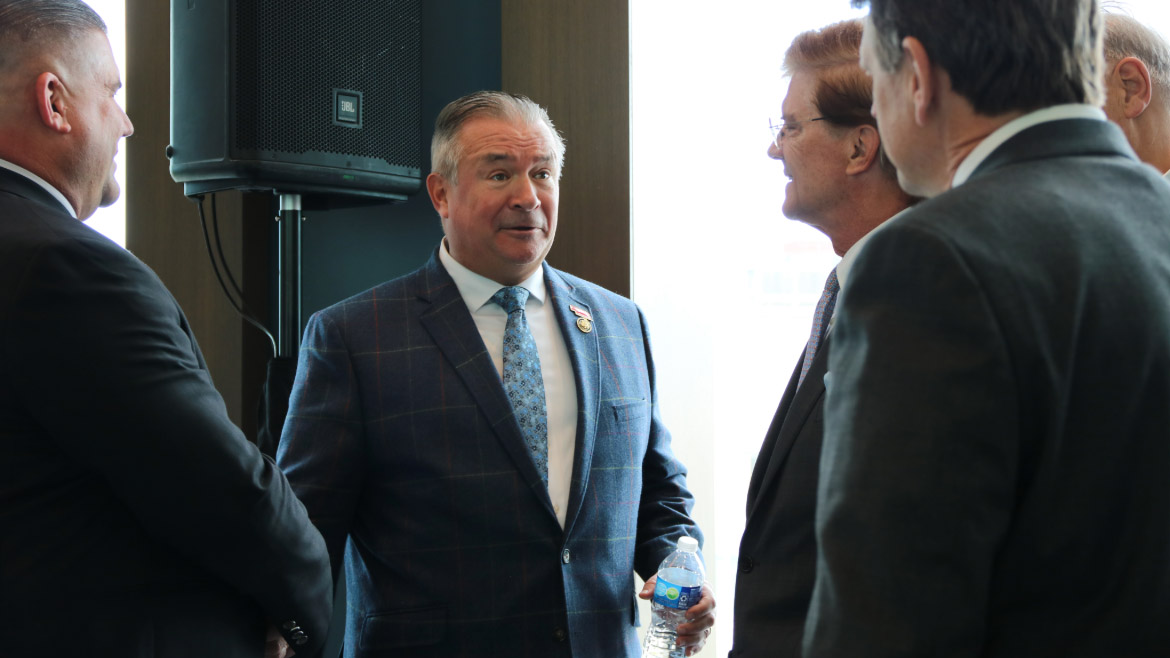
LEADERSHIP: Rep. Don Bacon speaks with sheet metal contractors at the 2026 SMACNA Leadership Conference in Washington, D.C. (Staff photo)
A Conference at a Crossroads
By the time the crowd filtered back into the humid Washington afternoon, the contrast was unmistakable.
- Democrats offered optimism, organization, and expansion.
- Republicans leaned on discipline, targeting, and independence.
- And Bacon mused openly and honestly on the importance of that independence.
For the contractors and workers in the room, the pitches weren’t abstract. They translated directly into projects, jobs, and long-term investment. The conclusion wasn’t tidy – but it was clear.
The campaign may not be in full swing yet, but the competition – for votes, for influence, and for the future shape of American infrastructure – is already underway.
Looking for a reprint of this article?
From high-res PDFs to custom plaques, order your copy today!