Guest Column
The Gap Between 4.0× and 10.93× Is Not a Size Story
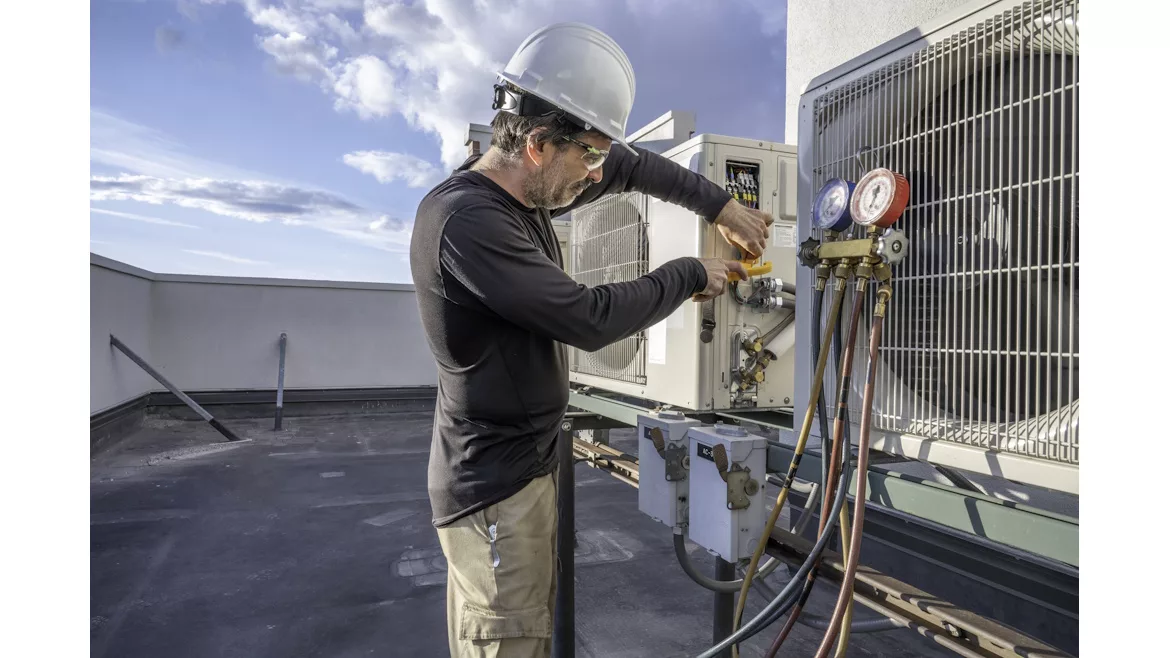
NEW ERA: Commercial HVAC consolidation is still early, but buyers are already drawing sharp distinctions between revenue size and acquisition-ready earnings.
Two commercial HVAC companies went to market in 2025. One had $9 million in revenue. The other had $22 million. When the deals closed, the smaller shop cleared roughly $16 million. The larger shop closed at roughly $6 million.
The $22M company sold for less than 40 cents on the dollar compared to the smaller one.
Revenue explained almost none of it.
The $22M shop ran a 6.8% EBITDA margin. At that revenue, it produces $1.5M in adjusted earnings. The buyer applied four times to what they could actually underwrite.
The $9M shop ran 16.7% margin. Same $1.5M in adjusted earnings. The buyer applied 10.93 times.
The difference was not size. It was what the earnings were made of.
Service and maintenance work generates 50-60% gross margins. Installation generates 25-35%. A shop weighted toward service is not a bigger version of an install shop at the same revenue. It is a fundamentally different business in terms of earnings quality, cash flow predictability, and buyer universe. The spread in multiples is what that difference looks like when it shows up in a closing statement.
Looking for quick answers on air conditioning, heating and refrigeration topics? Try Ask ACHR NEWS, our new smart AI search tool. Ask ACHR NEWS
But margin quality is only the first thing buyers underwrite.
Customer concentration is where the dollar consequence becomes most visible. One account above 20% of revenue means the buyer is underwriting two companies simultaneously: yours and theirs. If that customer leaves in year two, the earnings they paid for disappear. Buyers solve that with earnout conditions, which are a portion of the purchase price tied to that customer’s retention after closing. That is not a negotiating tactic. It is the buyer converting their risk into your problem. The percentage of the deal that is conditional goes up with the percentage of concentrated revenue.
Deals come apart quietly around week six — not in price negotiation, not in diligence finding, but in the buyer’s realization that the business is slower without the owner in the room. If the three most profitable customer relationships route through the owner personally, buyers will structure around that risk rather than pay through it. The offer that arrives after that realization is not the same offer that was floated before it.
Owner dependence and customer attrition risk are the two causes that show up most consistently when commercial HVAC deals collapse after going to market. First Page Sage’s HVAC M&A research puts the rate of companies that formally list and never close at 52%. Neither cause is a revenue problem. Both are fixable before the sale process begins. Neither gets fixed after diligence starts.
The window to fix those issues is not unlimited. Commercial HVAC consolidation is still early stage. PKF O’Connor Davies’ Summer 2025 update describes residential as midway through its cycle and commercial as still at the beginning. The PE buyers building platforms now are acquiring anchor companies first. Once they have their anchors, the next acquisition in each market has different requirements and, often, a different price. Owners who are ready for acquisition before that shift happens have more buyers competing for what they built. Owners who wait are competing in a different market.
The math is not complicated. A business running 16.7% EBITDA margin with a strong service base, low customer concentration, and documented processes is a different asset than one running 6.8% at twice the revenue. Buyers know the difference before the offer is written.
Revenue gets you in the room. Margin gets you the number you want.
Looking for a reprint of this article?
From high-res PDFs to custom plaques, order your copy today!