SCOTUS Declines to Hear Refrigerant Case Seeking to Curb EPA Power
Case sought to revive nondelegation doctrine and challenge agency’s authority under AIM Act
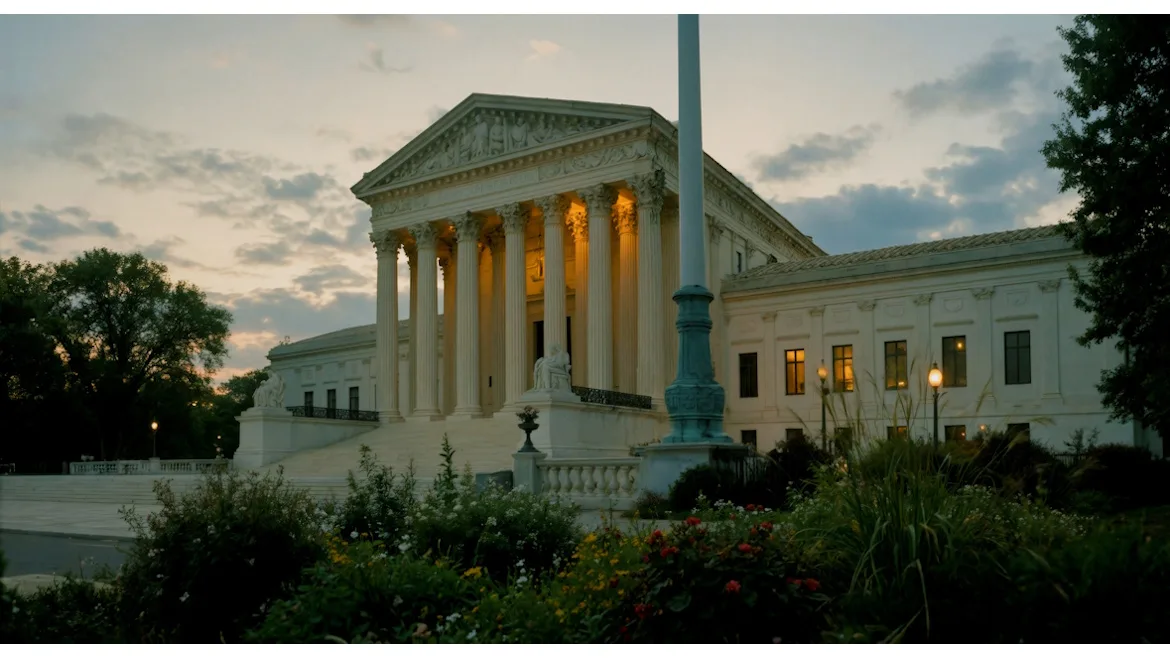
UPHELD: By declining to take up the Choice Refrigerants case, SCOTUS has left in place a lower-court ruling that affirms the EPA's powers within the AIM Act.
The U.S. Supreme Court has denied certiorari in a refrigerant case that sought to fix the Nondelegation Doctrine and end “EPA's unconstitutional control of the hydrofluorocarbon (HFC) refrigerants market.”
In the Choice Refrigerants v. EPA case, the small Georgia-based refrigerant business argued that the EPA has been given an unconstitutional amount of power, which has wiped away nearly a third of their market share.
The lawsuit challenged the EPA’s authority to implement the HFC phasedown under the American Innovation and Manufacturing (AIM) Act of 2020. Previously, Choice Refrigerants and iGas challenged the EPA’s implementation of the AIM Act, but the U.S. Court of Appeals for the D.C. Circuit rejected the arguments, upholding the EPA’s rule, noting that similar cap-and-trade systems were previously used to phase out CFCs and HCFCs.
Choice Refrigerant had asked SCOTUS to take another look at the case in March 2026, and in April 2026, a significant number of interested parties, including 21 states, filed a brief of Amicus Curiae in support.
However, SCOTUS recently declared it would not revive the lawsuit.
The New Civil Liberties Alliance (NCLA), which litigated the case on behalf of Choice Refrigerants, expressed its deep disappointment that SCOTUS passed on this opportunity to revitalize or at least confirm the viability of the current nondelegation doctrine.
“Many scholars and practitioners recognize that the Article 1 Vesting Clause no longer serves the full purpose the founders intended,” Zhonette Brown, General Counsel Senior Litigation Counsel, NCLA, said. “If the Court is going to continue to decline opportunities to enforce this aspect of the separation of powers, the vexations caused by the Administrative State will continue to accelerate.”
Looking for quick answers on air conditioning, heating and refrigeration topics? Try Ask ACHR NEWS, our new smart AI search tool. Ask ACHR NEWS
NCLA still holds the opinion that the nondelegation doctrine is broken, if not possibly beyond repair.
“This case showed that the D.C. Circuit—where many of the nation’s most important environmental cases must be litigated—is incapable of correctly applying the doctrine,” Mark Chenoweth, President, NCLA, said. “If the Supreme Court is not going to replace the doctrine, or at least attempt to repair it, then Congress needs to stop the injustice of requiring cases like this one to be decided exclusively in the D.C. Circuit.”
Looking for a reprint of this article?
From high-res PDFs to custom plaques, order your copy today!