Supreme Court Petition Challenges EPA Authority Under AIM Act
Civil liberties group argues EPA was given unconstitutional authority over HFC allowance allocations
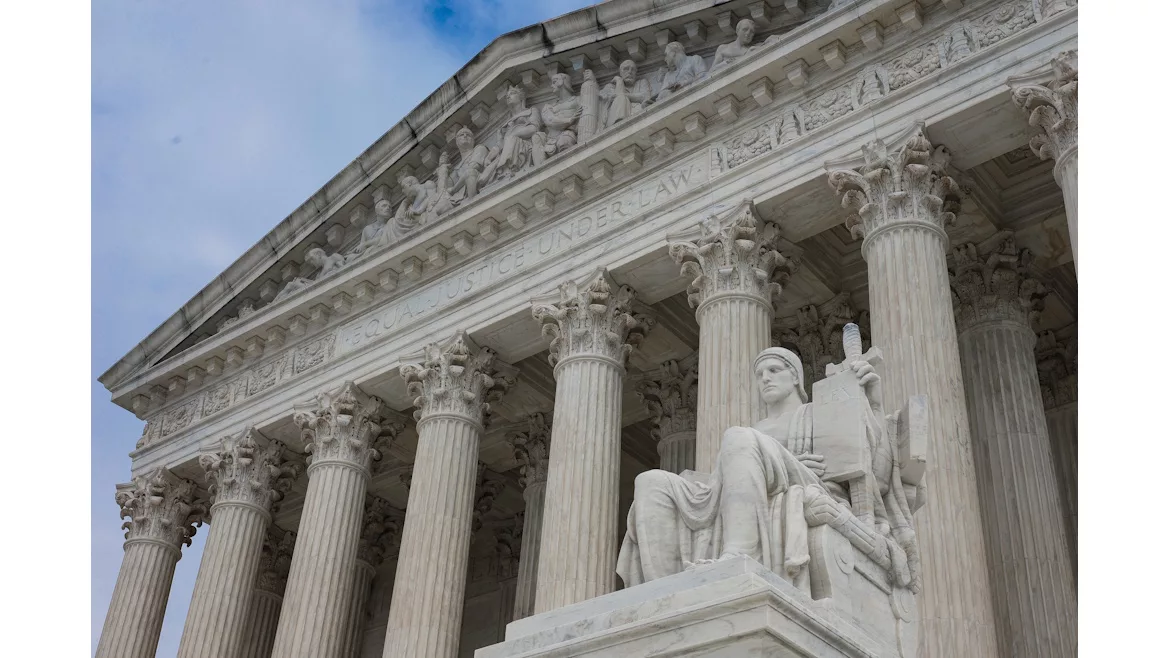
COSTLY IMPLEMENTATION: Choice Refrigerants argues that the EPA allowance system cost company one-third of their market share.
A lawsuit challenging the EPA’s authority to implement the HFC phasedown under the American Innovation and Manufacturing (AIM) Act of 2020 is seeking new life through a petition to the Supreme Court.
A non-profit civil rights group is petitioning the Supreme Court to reconsider Choice Refrigerants v. EPA on the behalf of a small, Georgia-based refrigerant business, arguing that the EPA has been given an unconstitutional amount of power, which has wiped away nearly a third of their market share.
At issue is the EPA’s directive from Congress to reduce HFC production and consumption to 15% of baseline levels by 2036 through an allowance allocation and trading program. Allowances were based on each company’s three highest non-consecutive production or import years between 2011 and 2019.
Previously, Choice Refrigerants and iGas challenged the EPA’s implementation of the AIM Act, but the U.S. Court of Appeals for the D.C. Circuit rejected the arguments last year, upholding the EPA’s rule, noting that similar cap-and-trade systems were previously used to phase out CFCs and HCFCs.
The New Civil Liberties Alliance (NCLA) argues that the D.C. Circuit erred in its decision in upholding the EPA’s actions, and that the AIM Act fails to supply the EPA with any direction on how exactly it’s supposed to reduce HFCs or distribute allowances. As the petition put it, “if the abject lack of direction in the AIM Act does not violate that test, then it is hard to see what ever could.”
“Even under the Court’s current Nondelegation Doctrine, Congress cannot empower EPA to phase down HFCs without providing an ‘intelligible principle,’ directing the agency how to determine how many HFC allowances Choice Refrigerants and each other company will receive,” a press release from NCLA states. “Because the AIM Act says nothing about any specific allocation method for 98% of HFC allowances, the D.C. Circuit grafted the Clean Air Act’s allocation rules for the cap-and-trade phaseout of substances that deplete the ozone to the AIM Act and applied them to phasing down HFCs, which do not deplete the ozone.”
NCLA further argues that the court also cannot constitutionally supply an “intelligible principle” that Congress itself did not.
Looking for quick answers on air conditioning, heating and refrigeration topics? Try Ask ACHR NEWS, our new smart AI search tool. Ask ACHR NEWS
“If the Court is not willing to breathe even the smallest resuscitating breath into the intelligible-principle test, then it should take this opportunity to inter the test for good and craft a better one,” Erin Murphy, Clement & Murphy Partner and Counsel of Record in Choice Refrigerants v. EPA, said.
By allowing the EPA to wield that power, NCLA is arguing it violates the Vesting Clause of Article I of the Constitution, which says “All legislative Powers herein granted shall be vested in a Congress of the United States.” NCLA points out that nowhere does it say that it can be delegated to agencies or courts.
“The Constitution purposefully separated the three branches of government to protect the American people, and the AIM Act has blurred the lines between legislative and executive power. EPA went off script — rather off statute — and fashioned its own rules for what businesses, like our client, live or die under AIM Act allowances,” Kaitlyn Schiraldi, staff attorney, NCLA, said.
NCLA said the EPA’s decisions decimated the market share of their client, Choice Refrigerants, who are a Georgia-based small business. Instead of granting Choice Refrigerants allowances for its patented products, NCLA said the EPA instead relied on Biden-era Executive Orders to set aside allowances for “new market entrants” who may have been “disadvantaged.”
“In picking winners and losers, EPA also oddly allocated some allowances to Choice’s former import agent and to a Chinese-owned company that infringed Choice’s patent and engaged in illegal dumping into the U.S. market,” NCLA stated. “EPA ultimately granted Choice far fewer allowances than the company needed to maintain the market share it had worked for decades to create.”
It was the opinion of the D.C. Circuit that the allowances were focused more on historical market share, excluding 2020 anomalies. The court also unanimously upheld the EPA’s approach as reasonable and statutorily grounded.
Regardless, the actions of the EPA had a significant impact on Choice Refrigerants’ operations.
“The EPA took roughly one-third of Choice Refrigerants’ market share because Congress was lazy,” Zhonette Brown, general counsel and senior litigation counsel, NCLA, said. “Congress told EPA to shrink the market, but let EPA choose any reason for taking (or giving) rights to any company. The Constitution limits that kind of core rights-impacting legislative power to Congress. The Supreme Court must hold Congress to doing its duty rather than let Congress leave hard choices to an unaccountable executive agency.”
Ken Ponder, CEO of Choice Refrigerants, pioneered refrigerant cleaning methods to comply with the Clean Air Act Amendments of 1990, and later patented three HFC products. When Congress passed the AIM Act to phase down HFC production, the EPA was empowered to choose a limited number of “allowances” for companies to produce or import these products.
“Executive agencies like EPA are not allowed to wield unbridled legislative power over the American people,” NCLA stated. “This case offers the Supreme Court a chance to fix the Nondelegation Doctrine by reinvigorating or replacing the intelligible-principle test. The Court should do so.”
As of early March 2026, the Supreme Court has yet to rule on whether or not to grant certiorari (an order to review the lower court’s decision).
Looking for a reprint of this article?
From high-res PDFs to custom plaques, order your copy today!