Update: 21 States, Other Prominent Parties, File SCOTUS Briefs in ‘Choice Refrigerants’ Case
Groups are urging Supreme Court to reconsider EPA’s power under AIM Act
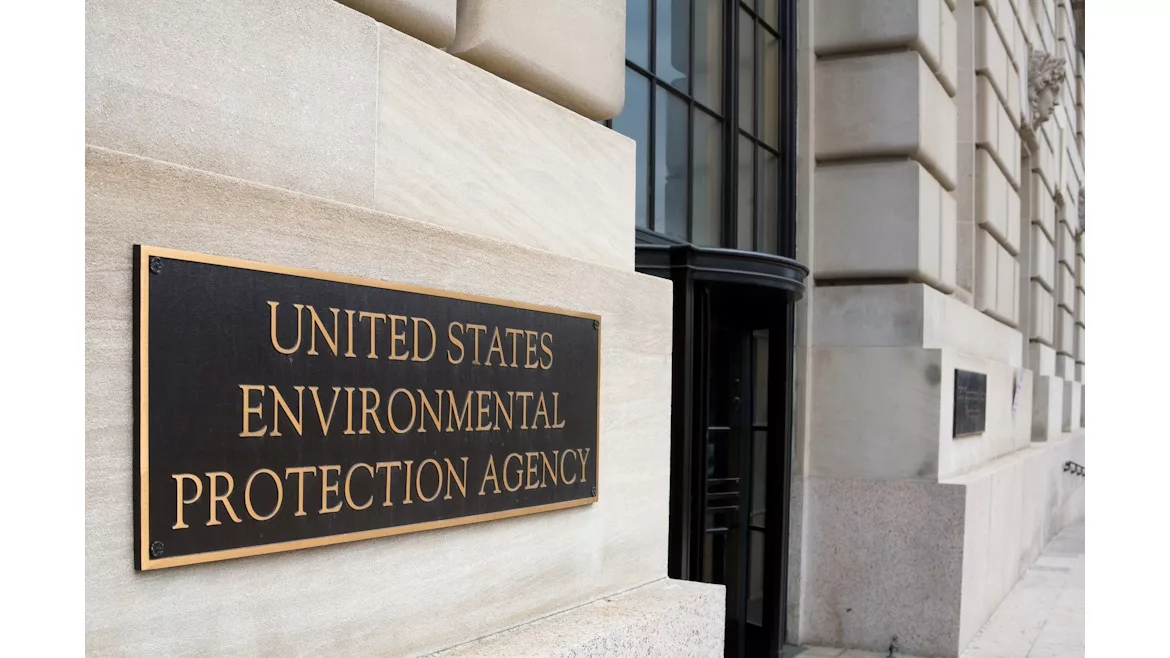
STATES JOIN SUIT: 21 states have written in support of Choice Refrigerant's legal battle, and are urging the Supreme Court to take a look at the case.
A significant number of interested parties are insisting that the Supreme Court (SCOTUS) hear a case against the EPA that hinges on the “nondelegation doctrine.”
Earlier this year, a nonprofit civil rights group petitioned the Supreme Court to reconsider Choice Refrigerants v. EPA on behalf of a small Georgia-based refrigerant business, arguing that the EPA has been given an unconstitutional amount of power, which has wiped away nearly a third of their market share.
Now, 21 states and other prominent parties are urging SCOTUS to take up the case, essentially stating that Congress cannot delegate away its legislative power when it comes to hydrofluorocarbons (HFCs).
In a Brief of Amicus Curiae — a “friend of the court” filing submitted by non-parties — the State of West Virginia and 20 other states, writing in support of Choice Refrigerants, argue that “Congress harms our whole constitutional order when it divests itself of legislative power like this. Amici States in turn suffer real harms; they lose their ability to regulate their own citizens in areas of traditional concern and shed their signature character as ‘laboratories of democracy.’”
The states that filed in support include Alabama, Alaska, Arkansas, Georgia, Idaho, Indiana, Iowa, Kansas, Louisiana, Mississippi, Montana, Nebraska, North Dakota, Ohio, Oklahoma, South Carolina, South Dakota, Tennessee, Texas, and Utah.
The filing also frames Congress handing EPA the power to decide the winners and losers in this multi-billion dollar HFC market as essentially allowing legislators to punt and have all of the political accountability for the consequences to fall on the EPA.
The states further contend that their interest in the case is not limited to refrigerants, but instead raises broader federalism concerns, and they frame the case as an opportunity for SCOTUS to clarify and potentially strengthen the nondelegation doctrine for lower courts.
Looking for quick answers on air conditioning, heating and refrigeration topics? Try Ask ACHR NEWS, our new smart AI search tool. Ask ACHR NEWS
Other parties in support of Choice Refrigerants have chimed in — below are some excerpts from briefs filed by amici curiae:
“If the AIM Act passes muster with the intelligible-principle test, then it seems there is no test at all.”
— Manhattan Institute
“Obviously, one plausible construction of the AIM Act’s silence is that it is silent as to how the EPA was to distribute allowances. The D.C. Circuit concluded that a second plausible construction is that the AIM Act directs that allowances be distributed in the same way as the Clean Air Act. But the text itself contains no evidence of this idea and contains much evidence of its opposite.”
— Southeastern Legal Foundation
“If the decision below stands, the executive will be able to legislate via administrative fiat by rewriting the content of vague statutes. Instead of going through the constitutional process of legislative bicameralism and presidential presentment, the meaning of these laws will whipsaw based on who controls the agency. Regulated parties like Choice will be left to deal with the consequences of an Etch A Sketch legal landscape.”
— Cato Institute
“When a lower court encounters a statute that transfers massive regulatory power without any guiding standard, the court’s job is to recognize the constitutional defect—not to paper over it. By permitting Congress to punt hard choices to unaccountable agencies and then constructing intelligible principles out of legislative history to validate that punt, the lower court subverted the very accountability that Article I demands.”
— Mountain States Legal Foundation
“The AIM Act’s cap-and-trade scheme runs roughshod over the Constitution’s structural guardrails, granting EPA untrammeled power to reshape a multi-billion-dollar industry to achieve whatever policy aims it may conjure.”
— Americans for Prosperity Foundation
“This case provides the Court with a clear opportunity to begin to revitalize the nondelegation doctrine, and with it, the Constitution’s limits on government powers.”
— Advancing American Freedom, American Association of Senior Citizens, Center for Independent Thought, and many others
Looking for a reprint of this article?
From high-res PDFs to custom plaques, order your copy today!


