Can HVAC Train Enough Technicians for the Data Center Boom?
Survey shows more young people see skilled trades as viable career
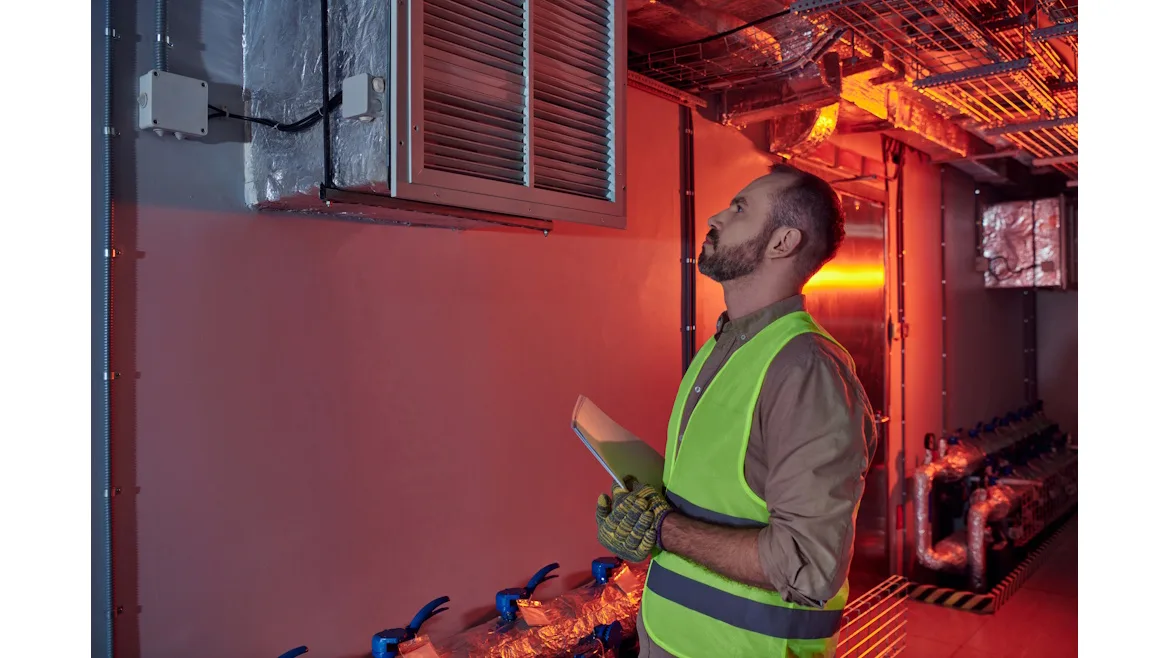
DATA CENTER TRAINING: The demand for HVAC technicians for data center cooling and maintenance may hit a bottleneck, even with more people seeking skilled trades careers.
As AI reshapes white-collar work, the growing demand for data centers is creating new opportunities for both new and veteran HVAC technicians.
A June 2026 survey from SimplyWise asked more than 1,100 respondents ages 18-29 about their career situations. Among the questions, they were asked to rank which jobs they believed would be replaced by AI in the next decade on a one-to-six scale, with one being the safest and six being most at risk.
Of the careers listed, they ranked HVAC technician with the lowest score (2.11).
“I feel strongly that the narrative across the country has changed,” said Brian Kelly, director of HVACR Service with the United Association of Journeymen and Apprentices of the Plumbing and Pipe Fitting Industry of the United States and Canada. “I think more people are choosing to come into the trade as opposed to the four-year traditional college route because of AI.
“AI cannot replace plumbers, pipefitters, and HVAC technicians; AI cannot take away those skill sets and take away those jobs. They might streamline them, but it’s not going to replace them.”
In addition, big tech companies like Meta and Google are pouring millions of dollars into training workers who can build and maintain their data centers.
“The skilled trades have always been the backbone of the American economy, and as technology evolves, so do the incredible opportunities for these essential workers,” said Maggie Johnson, global head of Google.org, Google.
Looking for quick answers on air conditioning, heating and refrigeration topics? Try Ask ACHR NEWS, our new smart AI search tool. Ask ACHR NEWS
---Rendering-courtesy-of-Gensler.png "DAA - Solutions & Technical Institute")
TRAINING: Manufacturers like Daikin Applied are investing in training centers to upskill HVAC technicians to meet the demand for data center cooling. (Courtesy of Daikin Applied)
The demand for data centers — spurred by the rapid adoption of artificial intelligence — is motivating more people to consider a career in skilled trades due to being AI-proof. The Pew Research Center says the U.S. has more than 3,000 operational data centers, with an additional 1,500 data centers in various stages of development.
Trainers with the United Association believe there’s going to be a massive shortage of applied technicians and signatory contractors to handle the workload. But entering the data center industry via HVAC requires more than basic knowledge and know-how. The entire industry’s involvement is needed to recruit Gen Z and beyond.
Specialized Training
Data center cooling isn’t typical commercial work. It requires specialized training to properly install and maintain the equipment, said Robert Vilches, training specialist with United Association.
“You must have a strong background in customer service, hydronics, fluid dynamics, cooling towers, pumps, VFDs, electrical, and building automation systems,” he said. “Those are everyday skill sets for most commercial technicians.”
It’s not just new data centers involved in the growing demand, either. Vilches said older data centers require renovations and upgrades about every seven years.
“These big tech companies are not ignorant to the fact that the old way of building these facilities was an issue in terms of water and power consumption. They’re constantly evolving and making it them more efficient,” he said.
As part of that, HVAC manufacturers are working with tech companies and creating new equipment at a rapid pace, designed specifically for data center operations.
Much of the equipment being produced by major OEMs is sold through select channels. Manufacturers are introducing so much equipment that they’re working hard to train their own technicians, said Vilches. He said he expects that will ease in 2027, and OEMs will begin offering more training outside of factory representatives.
Johnson Controls announced the launch of a dedicated data center training institute at its Advanced Development and Engineering Center in New Freedom, Pennsylvania. It is expected to open in 2027 and to include hands-on training in advanced thermal management technologies.
“The work is meaningful, and the demand is growing fast. Data centers don’t run without skilled technicians, and as technology advances, demand for that expertise only continues to rise,” said Buddy Saucier, vice president, HVAC service operations, Johnson Controls.
In June, Daikin Applied broke ground on a $30 million Solutions & Technical Institute in Plymouth, Minnesota. Scheduled to open in 2027, the facility will feature 120 new training pathways focused on advanced controls, system-level diagnostics, and sustainable technologies.
“The demands placed on our industry are evolving rapidly, and workforce capability has become a true differentiator,” said Yu Nishiwaki, COO for Daikin Applied. “The Daikin Applied Solutions & Technical Institute reflects our commitment to developing the next generation of technical, engineering, service, and sales talent while helping our customers succeed in an increasingly complex environment.”
The Less Obvious Gaps
Beyond the required skills and the ongoing workforce shortage, there are other gaps to contend with before jumping on the data center bandwagon.
Kelly said becoming familiar with the standard operating procedures that come along with these projects is crucial.
“Within data centers, there is a lot of people’s private information in there, and a lot of operators have specific operating procedures you have to permit in to be protected,” he said. “Background screens, the whole nine yards.”
Soft skills play a crucial role in data center projects. Vilches said critical infrastructure clients have different ways of examining projects and even a particular way of communicating that requires a more nuanced approach.
“Some technicians have a hard time adapting to the demands of data center end users. Just about everything has a written procedure that must be followed. Nothing is done without approval, even something as simple as tightening a bolt on a leaking flange,” he said.
There is also the matter of training enough technicians. The desire is there, but classroom availability, willing instructors, and apprenticeships aren’t keeping up with the demand.
“Our biggest challenge is not finding people; it’s finding enough room to fit them in our training program,” he said.
Bryan Orr, founder of HVAC School, said contractors can play a vital role in the instructor shortage by partnering with local programs to help them push past traditional classroom limitations.
“They can advocate for curriculum changes that prioritize hands-on, applied learning over rigid textbook compliance,” he said. “Additionally, contractors can support instructors by exposing them and their students to the exact diagnostic software, mobile apps, and manufacturer literature that technicians are actually using on jobsites today.”
A New Generation
The workforce opportunity extends beyond data centers themselves. The SimplyWise survey’s other results bode well for the industry.
Just under half (46.4%) said the skilled trades feel safer in an AI future, and a combined 48.9% said they would “probably” or “definitely” pick a trade school over college in today’s times. Thirty-six percent said that people their age respect skilled trades more now than a few years ago.
When asked what career they’re currently pursuing or most interested in, 18.6% said healthcare, and 13.4% said they weren’t sure. Only 10.2% said they were pursuing skilled trades.
Whether AI ultimately changes millions of office jobs or not, one thing is becoming increasingly clear: Someone will still have to build, cool, maintain, and troubleshoot the infrastructure that powers it.
Looking for a reprint of this article?
From high-res PDFs to custom plaques, order your copy today!