Domestic Steel is Making the Data Center Boom Possible, Sustainable
Domestic steel manufactured with circular, electric arc furnace (EAF) technology is critical to sustainable data center development
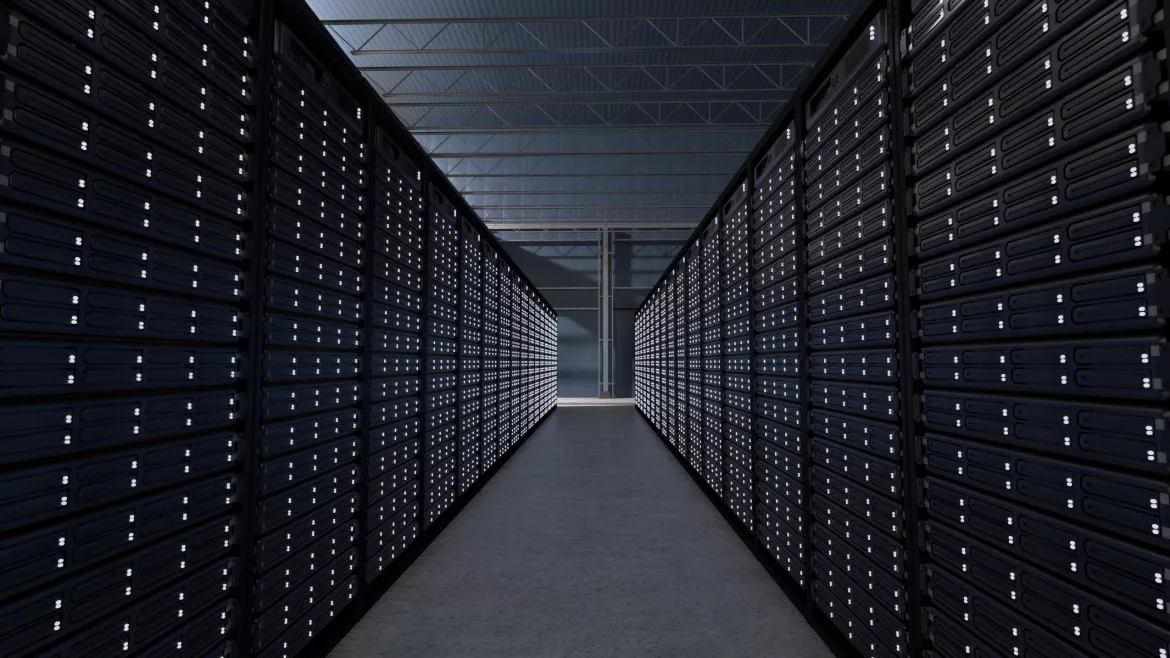
(Courtesy of Nucor)
It’s no secret that the massive demand for cloud storage—driven by the advent of A.I., but also traditional users like social media companies and financial institutions—has led to an unprecedented proliferation of data centers worldwide and particularly here in the U.S.
Domestic data center development is expected to reach 27.5 million square feet by year’s end and then grow to 31.9 million square feet in 2025, up from 21.3 million square feet in 2023 and an average of just 13.7 million square feet between 2017 and 2019.
None of these projects would be possible, of course, without the successful collaboration of commercial real estate developers and brokers, architects, construction managers, and building trades professionals
In addition, steel manufacturers have had—and will continue to have—a significant role in making this accelerated data center development trend possible. Steel products—particularly those made here in the U.S.—are enabling data centers to be built faster, stronger and more sustainably.
While data centers can also be built with concrete or a hybrid of both concrete and steel, those that are primarily made of steel are:
- Lighter — The weight of the structure matters when determining where to locate a new data center. Lighter structures are more earthquake resistant, allowing for a lower chance of service disruptions following seismic events. This is a key factor for tech companies, who are the biggest overall users of data and are mostly headquartered in earthquake-prone California.
- More Efficient — The time it takes to erect and enclose a steel building after breaking ground is significantly less than the timeframe for a similar concrete data center. Concrete construction also requires more on-site work. Building with concrete requires each level and element of a building to be poured and set. Comparatively, steel is typically fabricated offsite prior to delivery and simply bolted or welded into place.
- More Precise — Steel construction has tighter tolerances compared to other building materials, meaning deviances are mostly eliminated and the servers inside can be laid out precisely for optimal performance and to maximize every available square inch of space. If the server stacks and encasements are off by even a miniscule amount, it may disrupt the allowances made for optimum air flow and reduce efficiency.
In addition to these practical benefits, domestically made steel also provides data center developers with significant sustainability benefits.
Over the past decade, as large corporations and local, state and federal governments, have established more stringent sustainability and carbon emission targets, companies have increasingly incorporated environmental pledges across all areas of their operations including the construction of their facilities.
Domestic steel manufactured with circular, electric arc furnace (EAF) technology, is an excellent choice for companies working towards meeting and exceeding these sustainability goals because of its low-carbon footprint. This EAF manufacturing process emits only about one-third of the greenhouse gases emitted by traditional extractive steelmaking method that uses blast furnace (BF)/basic oxygen furnace (BOF) technology to create new steel. This method was widely used in the U.S. in the 1850s and is still used today in most other steelmaking countries throughout the world.
Today, though, almost 70 percent of U.S. steel is manufactured using the cleaner, greener EAF technology. Meanwhile, according to data from S&P Global, as of 2022, 72 percent of total steel production elsewhere in the world was made using BF/BOF steelmaking. This is significant considering that BF/BOF steelmaking produces 2.33 tons of CO2 per ton of crude steel cast compared to 0.68 tons CO2 per ton of crude steel cast produced by EAF steelmaking (worldsteel). That’s a difference of nearly 71 percent.
The adoption of EAF steelmaking in the U.S. has become a competitive advantage for domestic steel companies as more and more developers, engineers and architects are looking to build more sustainable structures.
Data centers, in particular, are steel intensive structures, not only for the structural and exterior sections but also for the internal components. All portions of the server shells—from the cabinets to the racks to the mesh wire baskets that hold the numerous cables—can be made of circular steel.
What’s more, due to ever-evolving technology, the average shelf life for these server racks and components may be limited to just two or three years. The circular, EAF steelmaking process provides a second life for these components. Used steel materials like steel server racks can be converted to scrap, melted down, and made into a new piece of steel either to reinstall in its original home or in another project.
Because of its unmatched ability to utilize the circular, EAF manufacturing process at scale, the U.S. steel industry will remain a critical partner in helping the U.S. grow its dominance in the data center realm for the rest of this decade and beyond.
Looking for a reprint of this article?
From high-res PDFs to custom plaques, order your copy today!