Historic Tacoma School Goes All-Electric in $7.8M Retrofit, Setting New Standard for Energy Upgrades
Ameresco and Tacoma Public Schools deliver a model for sustainable school retrofits

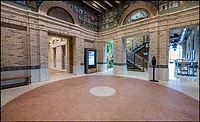
MODERN MEETS HISTORIC: Exposed spiral ductwork supplies clean, conditioned air above newly installed LED lighting, while insulated spiral connects to louvers set in the old window frame for ventilating the old building, leaving the original plaster ceilings and majority of windows untouched.
Tacoma’s McKinley Swing School – a 1908 landmark – has just undergone a transformation that local officials and project leaders hope will serve as a template for aging schools across the country.
Over the past year, the building’s century-old steam boiler system has been replaced with a state-of-the-art electric HVAC system, the result of a $7.8 million infrastructure upgrade led by Ameresco, a national energy solutions firm. The project wrapped up at the end of December and is already being hailed as a win for efficiency, comfort, and historic preservation.
A Delicate Balancing Act
Modernizing a building that’s on the historic registry is never straightforward. “This was a full electrification of a 1908 historical landmark building,” said Brian Solan, Vice President of Business Development at Ameresco, who oversaw the project. “We had to work with the State Historical Preservation Office to make sure every upgrade respected the character of the original architecture.”
The challenge went beyond aesthetics. The school remained partially occupied during construction, requiring careful coordination to keep learning on track and spaces safe. “We’re creating a more comfortable and reliable learning environment so students and staff can focus on what matters most,” said Greg Stidham, Project Manager at Tacoma Public Schools. “Collaborating with Ameresco allowed our district to plan carefully and progress the work with minimal disruption.”
Why Go All-Electric?
Moving away from steam boilers isn’t just about keeping up with the times – it’s about energy savings, better indoor air, and, increasingly, compliance with state policy. Washington’s Clean Buildings program requires schools to monitor and report on energy use, and the new system at McKinley is built for maximum efficiency.
Ameresco installed Variable Refrigerant Flow (VRF) and Variable Refrigerant Volume (VRV) systems, along with dedicated outdoor air units, all powered by an upgraded electrical service. New temperature controls, high-security outdoor equipment enclosures, and plug-level power metering round out the package.
“100% electrification is still somewhat rare in K-12 retrofits,” Solan said. “It’s challenging – especially in older buildings with limited space and electrical capacity. But with the right planning and an electrical upgrade, it’s possible.”
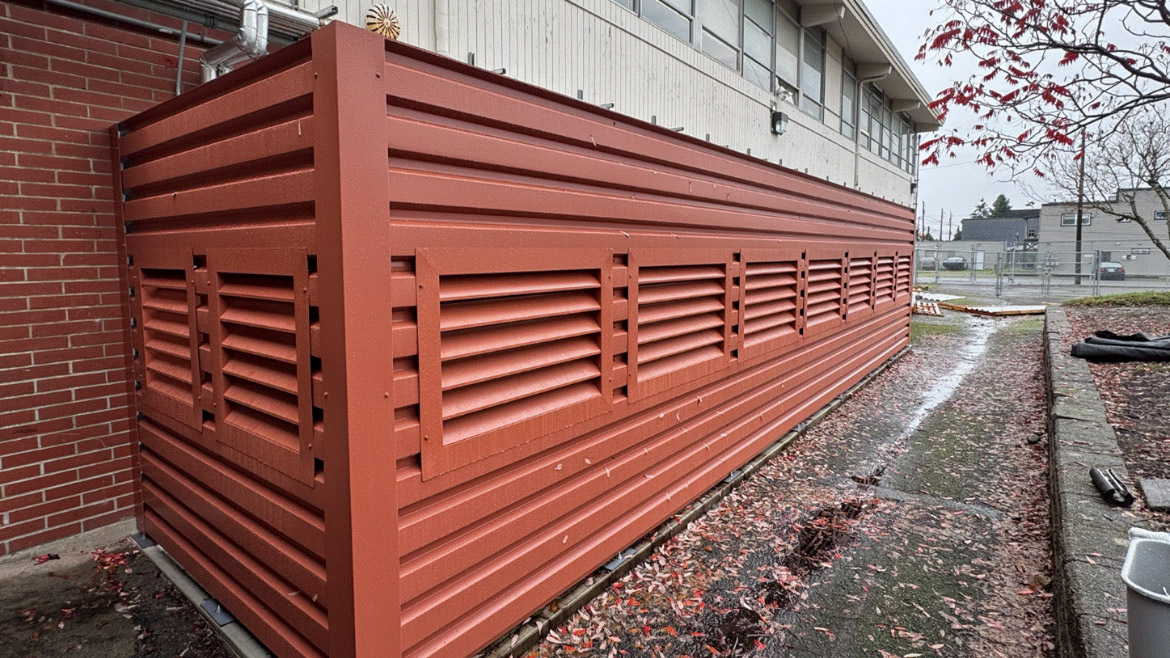
PRESERVATION: Exterior HVAC units are shielded by custom enclosures, maintaining safety and preserving the school’s architectural character. (Courtesy of Ameresco)
Creative Solutions for Old Spaces
A big part of the job was finding ways to bring fresh air into classrooms without disturbing the building’s historic facade. The solution: turning the upper panes of existing windows into discreet but functional air intake grilles.
“We added ductwork in spaces that were never designed for it,” Solan explained. “You’re working with ceiling heights and structural systems that just don’t match modern needs, so we had to get creative. In most classrooms, there’s exposed spiral ductwork running above new LED lighting, because drop ceilings weren’t an option.”
The new system delivers consistent ventilation, something the school largely lacked before. “A lot of those old unit ventilators were drafty or blocked off. Now, every classroom gets fresh air, and the system even provides cooling – something most schools this old just don’t have,” Solan said.
A Model for Other Districts
Tacoma Public Schools has a reputation for being proactive when it comes to facilities management. The district chose a progressive design-build model for the project, allowing for real-time collaboration between engineers, contractors, and school administrators. This approach, which locks in pricing after the design phase, is gaining traction for complex retrofits.
“Tacoma schools are very progressive,” Solan said. “They use innovative delivery methods and are serious about sustainability. Projects like this show it’s possible to balance cost, preservation, and modern standards.”
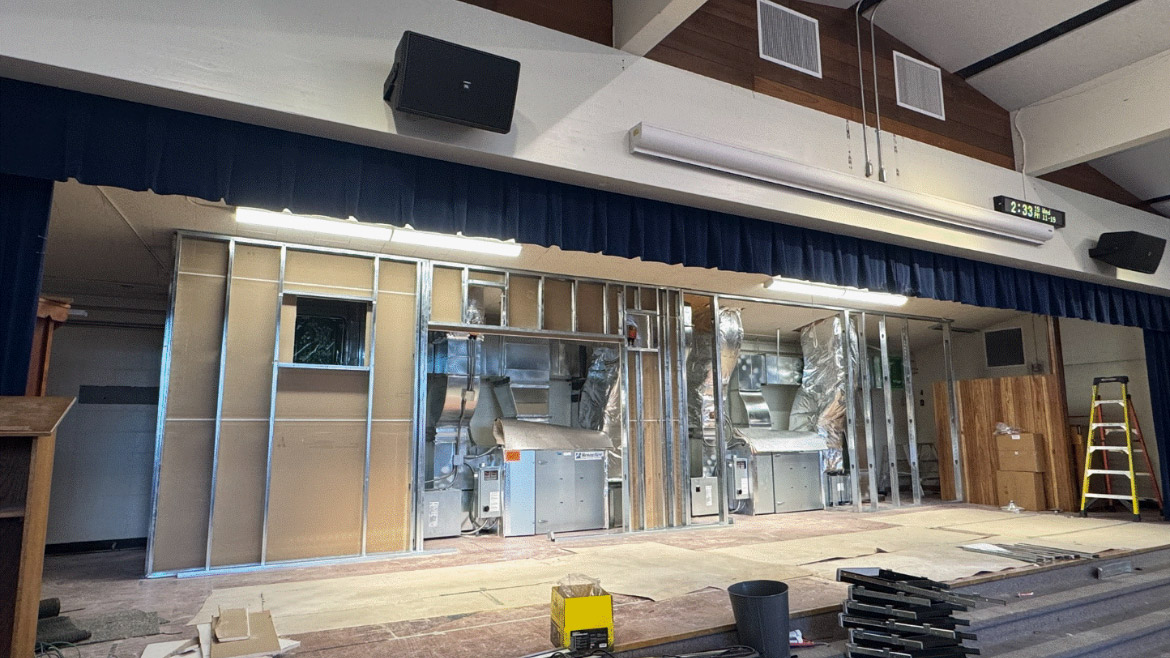
SECURE INSTALL: Construction proceeded while classes continued, thanks to careful planning by Ameresco, Tacoma Public Schools, and the project’s local partners. (Courtesy of Ameresco)
Looking Ahead
While McKinley’s roof couldn’t support solar panels this time around, Tacoma Public Schools has installed solar elsewhere and remains committed to further electrification and renewables. The district also made sure that local contractors and small, minority, and women-owned businesses had a seat at the table – meeting Pierce County’s goal of 30 percent local engagement.
For Ameresco, the project is both a technical achievement and a sign of things to come. As more states push for cleaner, smarter schools, the lessons learned in Tacoma – about collaboration, creativity, and compromise—may soon be put to the test nationwide.
“We learn something new on every project,” Solan said. “But the big takeaway here is that with the right team and the right process, even the oldest buildings can get a second life – and be ready for the next hundred years.”
Looking for a reprint of this article?
From high-res PDFs to custom plaques, order your copy today!