The Next Era of Data Center Cooling
AI is driving growth and accelerating changes in refrigerants and thermal design
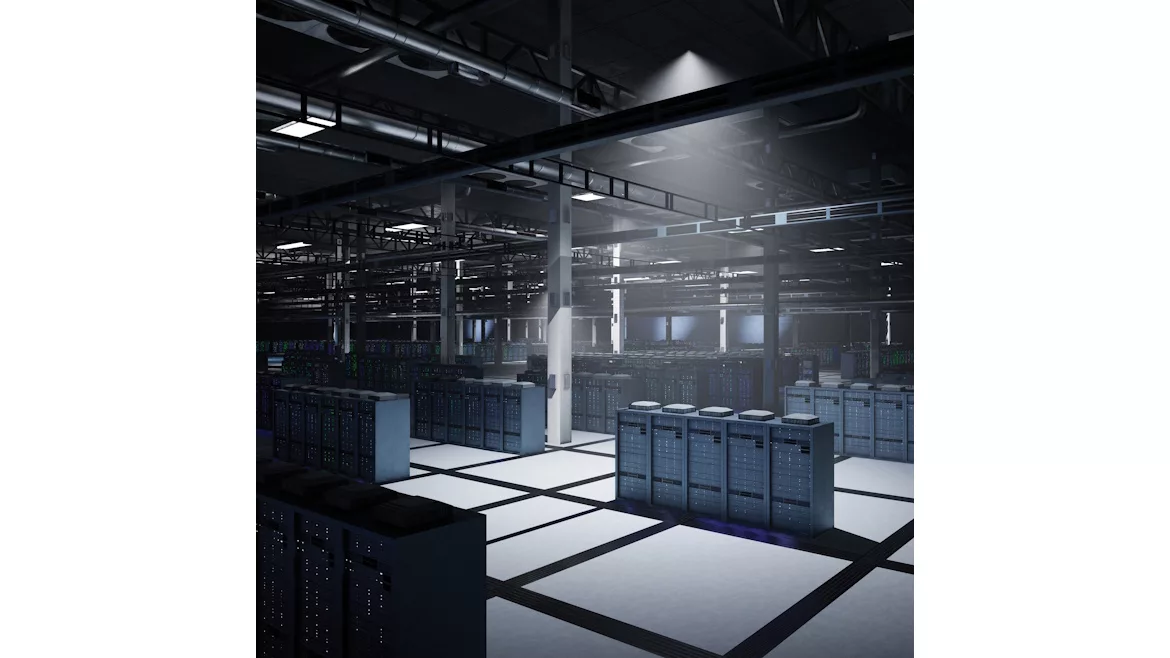
COOLING LANDSCAPE: The data center cooling landscape is entering a period of rapid transformation, driven by regulation, rising densities, and new architectures.
Data centers have become a major growth area for HVAC manufacturers, fueled by AI, high-performance computing, and expanding digital infrastructure. That rapid growth is reshaping how these facilities are cooled, driving adoption of new thermal strategies that use lower-GWP refrigerants. In response, refrigerant manufacturers such as Arkema, Chemours, and Solstice Advanced Materials are developing solutions that balance efficiency, sustainability, and reliability for evolving data center needs.
Regulatory Pressures
Regulation continues to shape refrigerant choices in data center cooling, with U.S. policies driving the transition to lower-GWP alternatives.
“The AIM Act and Technology Transitions rule push the move to lower-GWP refrigerants depending on the sector and size of the equipment (e.g., chillers versus air conditioning),” said Kris Crosby, senior business development engineer at Arkema. “We’re already seeing a transition in air cooling to lower GWP.”
While the AIM Act requires new data center computer room air conditioning and IT cooling equipment to use refrigerants with a GWP below 700 starting January 1, 2027, individual states are implementing their own rules, adding complexity for manufacturers and operators. Crosby noted that while Arkema supports the federal framework, regional differences can complicate compliance.
“We support a consistent, federal approach to regulations and support the implementation of the AIM Act,” he said. “Consistency in regulations eases compliance and simplifies manufacturers' product lines, leading to lower costs to consumers. For example, New York has taken a very aggressive approach in their regulations, which may eliminate many of the refrigerant choices available to the industry.”
Another challenge is how regulators classify emerging cooling technologies like immersion cooling and direct-to-chip technologies, which don’t fit neatly into traditional HVAC categories, said Brandon Marshall, global marketing manager for next-generation refrigerants at Chemours.
“Regulatory frameworks must evolve as fast as the technology — or risk becoming a bottleneck to AI and data center innovation,” he said.
Looking for quick answers on air conditioning, heating and refrigeration topics? Try Ask ACHR NEWS, our new smart AI search tool. Ask ACHR NEWS
While liquid cooling isn’t new, the rise of AI and high-performance computing is accelerating adoption of advanced systems such as two-phase immersion and direct-to-chip cooling, driven by next-generation hardware. These technologies are now falling under EPA and state oversight, despite having no historical regulatory precedent at commercial scale and limited applicability of existing HVAC or power electronics frameworks, said Marshall.
“The central challenge for regulators is how to appropriately classify these emerging systems — and what flexibilities must be built in — to avoid regulatory barriers that could constrain access to next generation cooling technologies and fluids in an industry evolving on multi-year, not multi-decade, timelines,” he said.
Cooling Systems
Most data centers today rely on two primary cooling architectures: chiller-based systems and direct expansion (DX) equipment such as computer room air conditioners (CRACs) or computer room air handlers (CRAHs). Increasingly, these are being supplemented by liquid cooling approaches — including immersion and direct-to-chip technologies — which remove heat at the source rather than conditioning air. While they change how heat is captured, they still typically rely on facility-level systems, such as chillers, to reject it.
Solstice provides a portfolio of low- and ultra-low-GWP refrigerants for stationary HVAC and precision cooling. According to Jeff Dormo, senior vice president and general manager of refrigerants and applied solutions, Solstice’s suite of refrigerants are suitable for a wide range of data center equipment, and the company works closely with OEMs to qualify blends for specific equipment classes.
“As data center cooling strategies evolve — including two-phase direct-to-chip cooling applications, where our solutions are already commercially available — our portfolio is designed to support those applications while balancing performance, safety, and regulatory needs,” he said.
Dormo explained that Solstice refrigerants are engineered to balance low GWP with the thermodynamic traits that matter in mission-critical cooling: predictable operating pressures, robust heat-transfer characteristics, manageable temperature glide for control, and strong energy performance when systems are optimized for the refrigerant.
“That predictability supports steady COP and reliable capacity under sustained high loads,” he said.
Chemours also supports a range of refrigerants across cooling equipment categories, from traditional systems like CRAC units to liquid cooling systems, said Marshall. The two primary forms of liquid cooling — immersion and direct-to-chip — can use either single-phase or two-phase fluids.
“Two-phase liquid cooling applications are a bit different than other systems in use today, primarily due to the fact that the refrigerant or fluid is either in direct contact with the electronics or in extremely close proximity to them,” said Marshall.
Chemours is focusing on two-phase fluids, which offer higher heat transfer and overall capacity through liquid-to-vapor phase change. For two-phase immersion cooling, it is promoting Opteon 2P50, a low-GWP fluid with the dielectric and flammability properties needed for safe, effective operation.
In two-phase direct-to-chip applications, systems leverage traditional refrigerants such as R-515B, R-1336mzz(Z), and R-1233zd, noted Marshall. In this configuration, he said the electronics are not submerged in the refrigerant, rather refrigerant is piped to a cold plate (evaporator), which allows the refrigerant to absorb heat from the IT components.
“By now, you’ve heard all about two-phase immersion as a ‘best in class technology.’ It simplifies mechanical system design while offering substantial benefits for reducing energy, water, and overall space consumption,” said Marshall. “While data and research continue on two-phase immersion cooling, the world is focusing on direct-to-chip solutions.”
Arkema also provides refrigerants used across each category within the data center segment. “Forane-32 and R-454B are used in many a/c applications related to data centers, such as CRAC and CRAH units and some chillers,” said Crosby. “Forane-513A is a lower-GWP refrigerant that can replace R-134a in new systems or as a retrofit product in chillers. Forane-516A is an even lower-GWP refrigerant that can replace R-134a in new systems designed to use an A2L refrigerant.”
For liquid cooling, Arkema is currently supporting two-phase direct-to-chip technologies with Forane HTS 1233zd and exploring additional options for the future, said Nicolas Champagne, business development strategy manager at Arkema. “Forane HTS 1233zd is an option for chillers because it’s a low-pressure, high-efficiency refrigerant. It also has a GWP of 1, which could contribute to a lower carbon footprint for a data center.”
Looking Ahead
As AI continues to push the limits of computing power, the future of data centers — and how they’re cooled — is entering uncharted territory. As Marshall noted, “It’s certainly a new frontier, but we know the solution, and it’s liquid cooling. With the rapid development and release of new IT hardware — specifically chip technologies supporting the training and inference of large language AI models — this demand has already exceeded the capabilities of air cooling and potentially single-phase fluids in the near future.”
He added that cooling demands are accelerating faster than traditional technologies can keep up, making advanced liquid cooling essential for next-generation computing.
“In our view, and based on research happening now, we believe both two-phase direct-to-chip and two-phase immersion cooling will play an important role in the future of data centers. This technology is able to meet the thermal demands with a fraction of the energy, noise, and water of traditional systems.”
Arkema also believes that liquid cooling – particularly for AI chips – will be the solution moving forward.
“The heat density in data centers will continue to increase, requiring advanced cooling practices,” said Champagne. “Dry cooling, such as chillers/dry towers, will also be a major trend to try and limit the water usage of data centers.”
Crosby added, “Energy efficiency will continue to be a major priority as data center usage continues to grow and put pressure on the grid. The industry is trying to improve grid efficiency.”
Solstice is tracking several key trends, including rising computing and AI workloads that generate more heat; increasing regulatory pressure to adopt lower-GWP refrigerants; and a growing diversification of cooling architectures — from optimized air-based chillers and CRAH/CRAC systems to expanding use of liquid and direct-to-chip cooling for high-density applications.
“Over the next five to 10 years, we expect to see a hybrid data center ecosystem that incorporates advanced air and chilled water systems, where appropriate, and expanded liquid solutions for hot spots,” said Dormo. “This hybrid ecosystem will provide an even sharper focus on energy efficiency and lifecycle carbon. Solstice is investing across refrigerants, electronic materials, and thermal technologies to support that multi-pronged evolution.”
Ultimately, the data center cooling landscape is entering a period of rapid transformation, driven by regulation, rising densities, and new architectures — all fueled by the continued growth of AI. As cooling demands intensify, refrigerants will play a critical role in enabling efficient, reliable, and sustainable performance.
Looking for a reprint of this article?
From high-res PDFs to custom plaques, order your copy today!