When Does a Compressor Swap Still Make Sense?
Rising equipment costs and refrigerant changes are forcing contractors to rethink repair vs. replace decisions
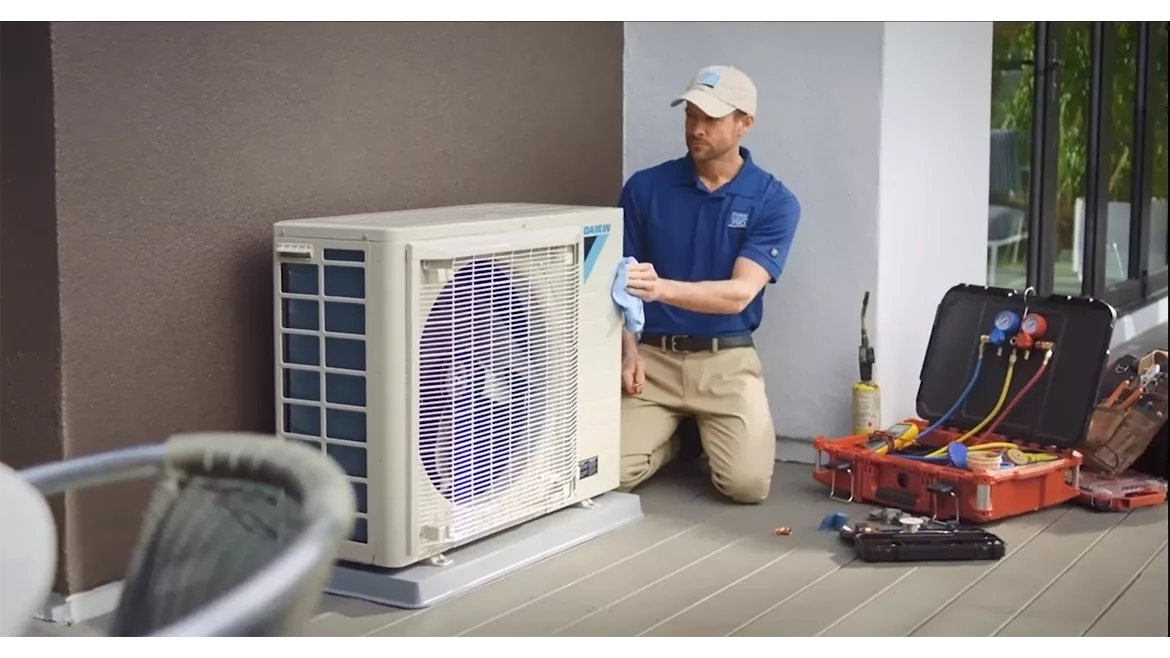
DECISION-MAKING: Contractors must weigh system condition, refrigerant type, and long-term reliability when deciding whether a compressor swap still makes sense.
To repair or replace, that is the question — but it’s just not that simple.
Rising equipment costs, refrigerant transitions, and broader economic pressure are forcing contractors and homeowners alike to take a closer look at when a compressor swap still makes sense.
What was once a simple and straightforward call — replace/repair the compressor or install a new system — has become even more nuanced.
“The residential market for new equipment shipped in 2025 dropped significantly from previous years,” said Nick Mislak, director of HVAC segment marketing in North America, Danfoss Climate Solutions. “This suggests that more compressors are being replaced rather than complete unit replacement. Other factors such as product and parts availability, inventory, etc., also play a large role in the decision to repair vs. replacement.”
A Market Pushing Repairs
Most contractors are dealing with homeowners who are hesitant about fully committing to a full system replacement, mostly driven by cost pressures that extend far beyond equipment.
“The pricing impact in the HVAC industry is not just affecting equipment prices, but parts prices as well,” said King Tong, director of product marketing at Daikin Comfort Technologies North America Inc. “As a result, we have seen repair costs increase in like.”

RISKS: Rising equipment and repair costs are pushing more homeowners to consider compressor replacements, but warranty risks and compatibility challenges remain key factors. (Courtesy of Danfoss Climate Solutions)
But price increases aren’t the only thing plaguing homeowner commitment. It’s broader economic pressures, too.
Looking for quick answers on air conditioning, heating and refrigeration topics? Try Ask ACHR NEWS, our new smart AI search tool. Ask ACHR NEWS
“Consumer decisions to repair or replace equipment are influenced by market conditions and economic factors,” said Jerry Edwards, senior manager of sales engineering at LG Electronics.
Even so, increased consideration of repairs doesn’t automatically mean compressor swaps are the resounding resolution.
Warranty Tradeoffs
One of the first realities contractors must address when evaluating a compressor replacement are warranty considerations.
“Often, warranty coverages have very strict guidelines for using compatible (and at times specified) replacement parts,” Tong said. “Any deviation will likely result in denied coverage if something happens.”
Replacing a compressor in an existing system, rather than installing new equipment, often carries more risk.
“Typically, when a compressor is replaced within an existing residential system, it has a shorter warranty period vs. a new unit that is shipped from a manufacturer or wholesaler,” said Mislak. “In an older system, there are many other factors that can affect overall reliability, such as acid, moisture, dirt and debris, and past maintenance history.”
In some cases, depending on the condition and the age of the unit at hand, the cost and effort of replacing a compressor can rival that of replacing the entire condensing unit.
The complexities of warranties extend beyond the manufacturer. And as products move through the supply chain, coverage terms can evolve.
“When this compressor is sold to the end consumer through various distribution stages, the final warranty conditions can be changed by the entities at each stage (OEM, distributor, contractor),” Edwards said. “Contractors need to be clearly aware of this and guide the end consumer accordingly.”
The repair-vs.-replace decision is also significantly influenced by the fact that replacement compressors typically carry shorter warranties than new equipment.
Refrigerants Reshape Decisions
Another critical consideration when deciding when a compressor swap makes the most sense is refrigerant type.
“In 2025, due to lower Global Warming Potential (GWP) requirements, new units were no longer able to be manufactured using R-410A as a refrigerant,” said Mislak. “Instead, R-32 and R-454B were chosen.”
If a compressor fails, it can only be replaced with a compressor certified for that same type of refrigerant or approved for multiple refrigerants.
“The system’s age is closely tied to the type of refrigerant it uses, and both factors influence whether a compressor-only repair makes sense,” Tong said. “Older systems often use R-22, which has been phased out and is costly to replace or recharge. Even systems with R-410A, while more recent, are also becoming less economical as parts and refrigerant prices rise over time.”
The older the system and the more outdated the refrigerant is, the less practical a compressor-only repair becomes.
Refrigerant pricing and availability can also further complicate the decision.
“Specifically, if the price of a certain refrigerant (e.g., an older type) increases or its supply becomes unstable, it may be more economical to replace the entire system with a new, efficient one that uses a different refrigerant,” Edwards said. “Furthermore, as a system ages, the probability of failure for other components also increases, so the practical benefits of a compressor-only replacement must be carefully weighed.”
New Compressor Means Older System
Even when a compressor-only swap makes sense on paper, its success often comes down to execution in the field.
“When installing a new compressor into an older matched system, it is important to make sure that the new compressor is qualified for the refrigerant as originally designed or has compatibility as a drop-in replacement,” said Mislak. “Compressor capacity should very closely match the original unit design. Other concerns would be physical dimension similarity and mounting footprint.”
Though of the utmost importance, oftentimes contractors still overlook compatibility concerns.
“Selecting a compressor with the correct capacity is critical,” said Edwards. “Installing a compressor with too little capacity can lead to insufficient cooling during peak loads, while installing one with too much capacity can cause short cycling, resulting in poor dehumidification and reduced comfort.”
Electrical compatibility is another concern often overlooked.
“It is essential to verify that the electrical specifications of the replacement compressor meet the requirements of the existing system's controls and electrical standards,” said Edwards. “Overlooking this can lead to system malfunctions or safety issues.”
In other words, what may appear to be a simpler or more cost-effective option can carry hidden risks.
“It may seem attractive to go the easy route in installing a new compressor,” Tong said. “However, the easier route can have major consequences. With ongoing refrigerant changes, contractors need to ensure compressor compatibility with both the system and refrigerant. Mismatches may lead to overall system damage and increased safety risks.”
What’s Age Got To Do With It?
A common misconception is that the age of the system can make this decision for a homeowner. Wrong. There is no predetermined age for compressor change-out.
“Properly installed and properly maintained units will operate correctly for many years, where the compressor life could be longer than the components around it,” said Edwards.
Like most HVAC repairs, compressors typically aren’t replaced until they fail.
“Otherwise, it is not considered a normal part to have on a maintenance schedule to be replaced at a defined interval,” said Mislak. “If the compressor fails on a unit that is very old, then the contractor and the homeowner will need to evaluate what makes the most sense in terms of cost, warranty, and any future parts that could need to be replaced on an older system.”
Basically, the decision should be based on economics directly related to the age of the system, rather than the age of the system itself.
According to Tong, a compressor replacement is generally more appropriate for newer systems. But as systems age, especially those using older or phased-out refrigerants, the cost of repairs and ongoing maintenance increases significantly.
“Even with newer refrigerants such as R-410A, rising parts and refrigerant costs can make major repairs less practical over time,” Tong said. “For older systems, a full system replacement is often the more cost-effective and reliable long-term option.”
Looking for a reprint of this article?
From high-res PDFs to custom plaques, order your copy today!