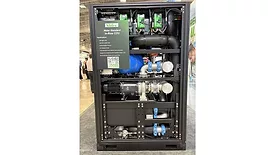
Data centers are quickly becoming one of the HVACR industry’s biggest growth opportunities, but contractors entering the market face far different expectations than traditional commercial work. From precision cooling and nonstop operation to evolving liquid cooling technologies and high-stakes service agreements, success requires technical depth, strong partnerships, and a long-term strategy.
Rising equipment costs, refrigerant transitions, and broader economic pressure are forcing contractors and homeowners alike to take a closer look at when a compressor swap still makes sense.
Contractors in the $3–10 million range are facing increasing pressure from consolidation, rising costs, and operational complexity. While smaller companies stay lean and larger firms scale with resources, the middle is being forced to adapt. The question isn’t just whether it’s shrinking — but whether contractors can successfully navigate the transition.
A recent study set out to measure just exactly what our beloved four-legged doggy friends contribute to indoor air quality (IAQ). What researchers found was that in some cases, pets can rival — and even exceed — the impact of the humans living in the home. For HVACR contractors, the data is a way in.
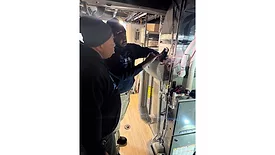
The HVAC installation technician has been with Sinton Air Conditioning and Heating, in Kennett Square, Pennsylvania, for the last six years, starting while he was still in high school.
Across the industry, gaps in system design, commissioning, airflow, and more are still rearing their ugly head, impacting contractor credibility, homeowner satisfaction, and the carefully manufactured HVAC system itself.