HVAC Workforce Crisis Expands Beyond Technicians to Instructor Shortages
Retiring industry professionals encouraged to step into instructor roles
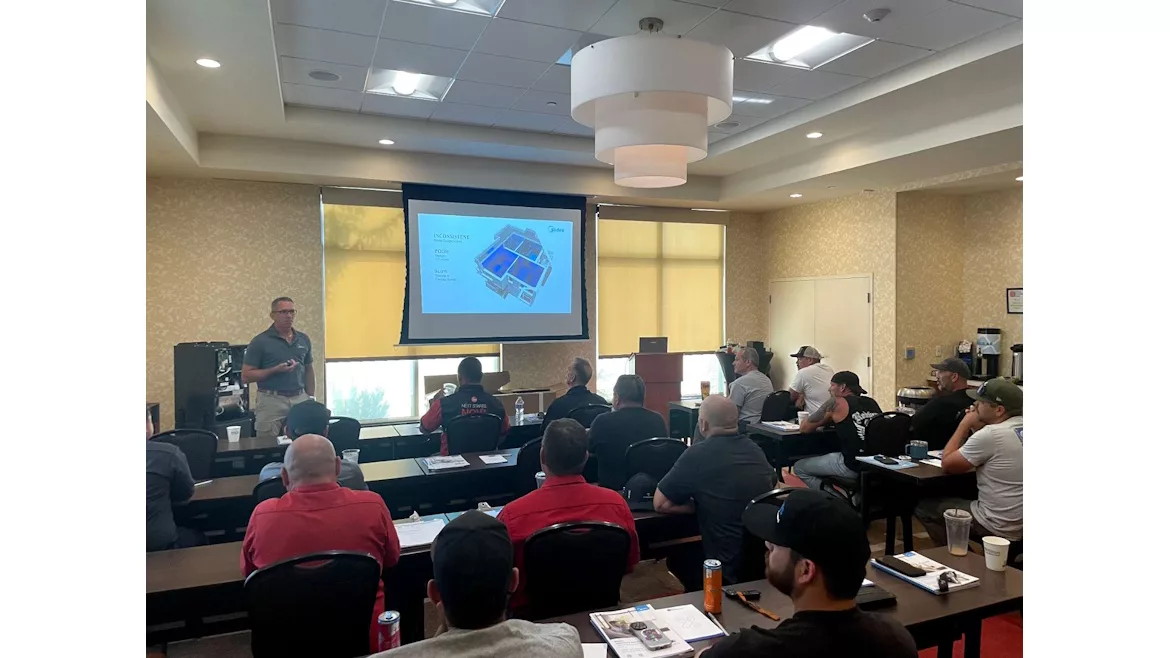
INSTRUCTOR SHORTAGE: The HVAC industry is facing a shortage of qualified instructors to teach the next generation of workers.
The HVAC industry is keenly aware of the labor shortage. But another shortage may prove just as debilitating to the industry’s ability to fill the 40,000 HVAC job openings projected annually over the next decade.
“Who's the next group of people that are going to teach?” said Doug Smiley, manager of technical training at Lennox Residential HVAC. “Just as you have the technician shortage on one side, you equally have an instructor shortage. That's about to start to happen as well with where the next group of instructors and trainers … where do they come from, right?"
Trainers with major HVAC manufacturers previously highlighted the growing knowledge gap in what new HVAC workers are learning versus the technology they’ll be using. But this is only one facet of the workforce issue facing the industry. The other is a lack of available, knowledgeable trainers.
It’s a critical deficiency that needs addressing. More Gen Z workers are realizing there is a solid career path waiting for them in the trades, especially given its resilience against AI-driven disruption. HVAC is also becoming increasingly critical to the country’s infrastructure.
“I believe this issue is much larger than most people realize because the HVACR industry now sits at the center of several major economic and technological shifts happening simultaneously,” said Howard Weiss, president of ESCO Institute, HVAC Excellence. “Data centers, semiconductor manufacturing, electrification initiatives, high-performance buildings, cold chain logistics, and heat pump adoption are all driving the need for highly trained HVACR technicians.”
Steve Howard, an HVAC industry veteran and founder of training firm ACT Group Inc., said most instructors can teach the theory behind HVAC work but lack the field experience to connect it to real-world applications.
“They could teach what’s in the book. They don’t know how to help the students apply what’s actually happening,” he said.
Looking for quick answers on air conditioning, heating and refrigeration topics? Try Ask ACHR NEWS, our new smart AI search tool. Ask ACHR NEWS
Manufacturers can step in as de facto trainers, but that too can have limitations. Paul Chaves, senior manager of training at Mitsubishi Electric Trane HVAC USA, said a student’s path isn’t often set in stone, meaning teaching them about specific systems or equipment might be premature.
“There's no question that there's a gap there, but my personal feeling is that the entry-level students don't need to come to manufacturer-specific training, because unless they have a job already, they don't know who they're going to work for when they graduate,” he said. “They could be working for somebody who does strictly commercial refrigeration, somebody who does ammonia systems.”
A Population Problem
Over the last few years, the United States has struggled to find instructors for Career and Technical Education programs. For the 2025-26 year, the U.S. Department of Education reported that at least 26 states experienced shortages in CTE teachers.
“It’s that underlying thing that nobody’s really saying a whole lot about right now, but in two or three years, we can look up and we can say, ‘Oh my goodness,’ because there are statistics that say the trades are becoming more of a path for a younger generation,” said Smiley.
The Bureau of Labor Statistics estimates that nearly 40% of the skilled trades workforce will be eligible for retirement within the next decade.
Broader demographic patterns are complicating long-term workforce replacement efforts. Fewer Americans are having children, approximately 1.6 births per woman as of 2024, while 2.1 is considered the level needed to maintain population levels, according to data from the Centers for Disease Control and Prevention.
Seeking Solutions
Finding instructors can be difficult, but there are ways the industry can support itself. Howard said as more HVAC workers leave the business side, whether due to age or selling their company, it opens opportunities for them to pass along their institutional knowledge.
“They could work somehow as an instructor part-time — come in once a week and explain how you apply this in the real world,” he said. “They could make a couple of bucks, or maybe do it as a pass-on to the next people.”
Chaves shared similar sentiments, saying entry-level students need a general overview and understanding of the industry. Contractors, whether active or retired, are one of the best sources of knowledge.
"You're talking about a couple of hours once or twice a year, and let them know what needs to be taught. And it's also a good way for contractors to kind of farm students ... I think they need to get involved, should get involved, with helping these schools improve."
Compensation is another barrier to overcome. Weiss said in education, salaries are often tied to academic degrees rather than years of field experience or technical expertise. It’s easier for an HVAC worker to earn a living in the industry than in academia, so making it worthwhile will incentivize more professionals to become instructors.
“Rather than only targeting active technicians currently in the workforce, schools should actively recruit experienced journeyman nearing retirement,” he said. “Many of these individuals already possess the technical mastery schools desperately need. Some may be interested in becoming adjunct instructors while transitioning out of the field. Others may welcome the opportunity to move into full-time teaching roles after retirement.”
On the federal level, the Carl D. Perkins Career and Technical Education Act is the primary funding source for CTE programs. Funding for the grants hovers around $1.45 billion and has decreased over time, meaning the HVAC industry will want to encourage Congress to support investments into the program.
Weiss said one statistic that deserves far more attention in addressing instructor and labor shortages is that women make up 51% of the U.S. population, yet 2% of HVACR technicians are women.
“There is no realistic way to solve a technician shortage, instructor shortage, or workforce development crisis while effectively ignoring half of the population,” he said. “Expanding outreach efforts and changing perceptions about careers in skilled trades must become part of the long-term solution.”
David Rames, senior specialist of product promotion and development with Midea Residential Air Conditioning, said that trainers need to be trained in the latest technology before they can instruct students. He said industry professionals can work with trade school administrators to enlighten them on what they need to be teaching.
“We need to make sure as that older generation — the 50 and the 60-year-old HVAC contractors and technicians — as they move on to retirement, one of the biggest gaps is how are we going to get that younger generation into the trades?” he said.
Looking for a reprint of this article?
From high-res PDFs to custom plaques, order your copy today!