HVAC Industry Warns of Counterfeit Refrigerants Entering U.S. Supply Chain
Mislabeled A2L refrigerants create new risks for distributors and contractors
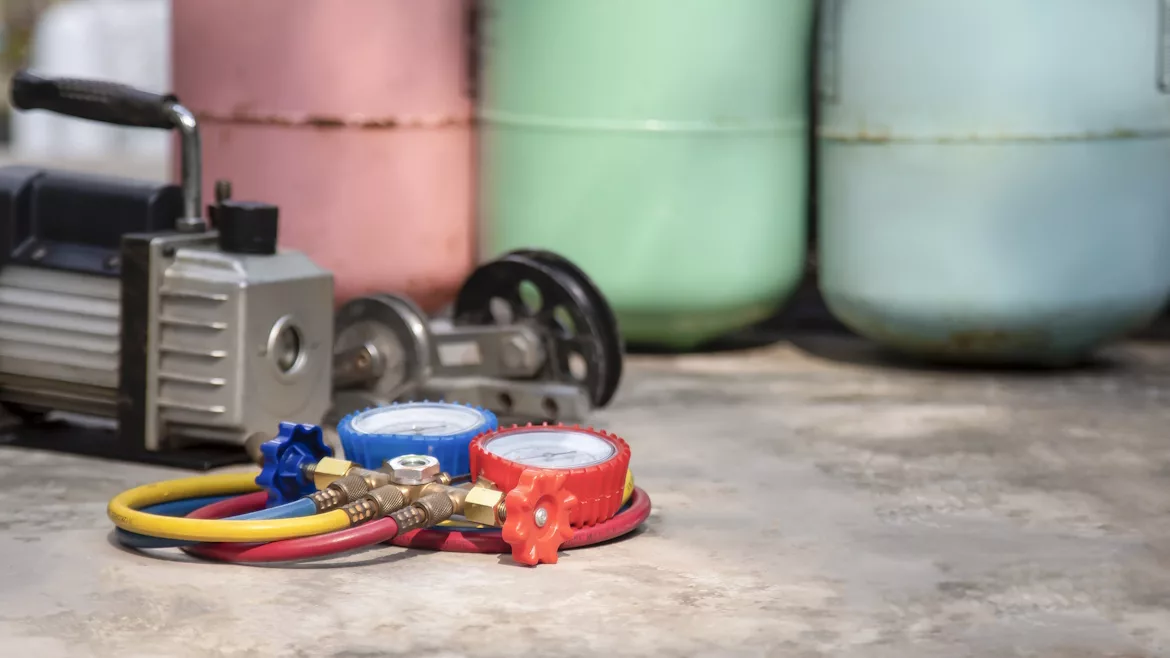
COUNTERFEIT PRODUCTS: Suppliers are warning the HVAC industry of counterfeit products that falsely use trusted brands to pass off potentially illegal refrigerants.
As the HVAC industry goes through one of its most important transitions to switch to lower-GWP A2Ls, counterfeiters are taking advantage by flooding the market with illegal refrigerants.
Refrigerants are being packaged to mimic trusted brands, but these counterfeit R-454B cylinders and packaging may contain contents that don’t align with the label. Manufacturers and industry associations are sounding the alarm, as these mislabeled refrigerants can damage equipment, create safety risks, and increase liability.
“The message to the industry has to be direct: now is the time to strengthen sourcing,” said Vicky Helinski, TSS Americas marketing manager with Chemours. “Buy from authorized, verified suppliers. Confirm products meet AHRI 700 standards. Maintain visibility across your supply chain.
“What looks like a cost advantage upfront can introduce significant downstream risk — to your equipment, your customers, and your business.”
Transition Troubles
Counterfeit refrigerants falsely using another company’s branding are only exacerbating the years-long issue of noncompliant or illegally imported refrigerants that may not comply with regulatory or purity requirements.
Helinski says the illegal importation of refrigerants is emerging in the U.S. with the introduction of HFOs. The transition to low-GWP refrigerants created a rapid shift in demand, resulting in tightened supply chains and market pressure.
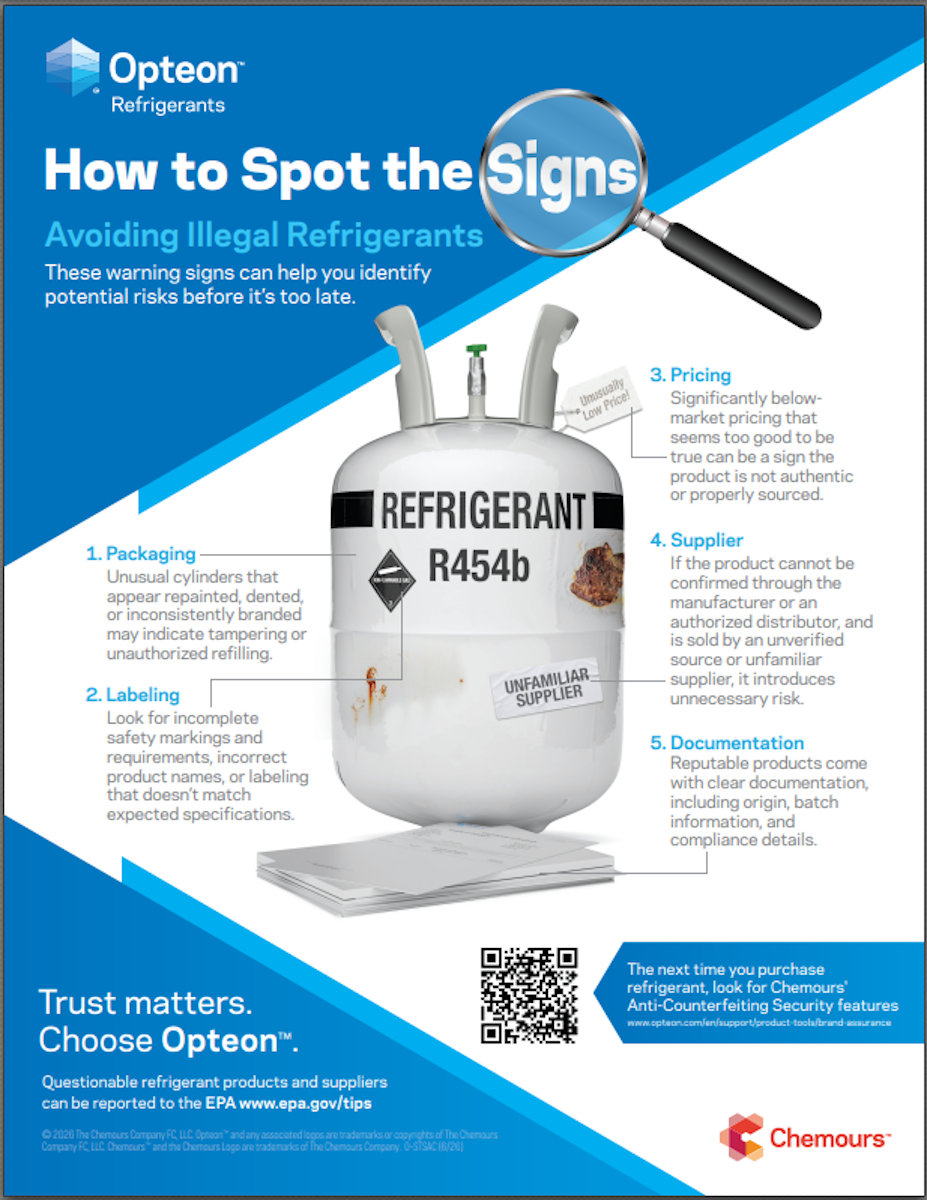
SPOT THE SIGNS: These are common warning signs to look out for when selecting refrigerants to check whether they are legitimate or counterfeit. (Courtesy of Chemours)
“We're seeing it now: suspected illegal, including counterfeit, refrigerants are showing up in the U.S. supply chain in packaging designed to look like trusted brands, including ours,” she said.
Looking for quick answers on air conditioning, heating and refrigeration topics? Try Ask ACHR NEWS, our new smart AI search tool. Ask ACHR NEWS
It isn’t new to see low-quality refrigerants entering the market, said Alex Ayers, vice president of government affairs for Heating, Air-conditioning, & Refrigeration Distributors International. However, the problem of companies attempting to claim their product is made by a different producer is recent.
“This is likely a byproduct of the HFC phasedown and the allocation system, where companies that haven’t been historical participants have a harder time entering the market legally,” said Ayers.
Ayers clarified that it isn’t necessarily the transition to low-GWP, but the allocation system that limits the amount of HFC refrigerants that can legally enter the market.
Recent economic uncertainty contributes to the problem as well. These counterfeit refrigerants are often priced lower, making it tempting to buy them, especially if they appear legitimate.
Signs of Counterfeits
Helinski noted the following are what to look for when determining if refrigerant is authentic or counterfeit:
- The cylinder itself. Look for signs of tampering, repainting, dents, weld marks, or labels that don't appear quite right. Legitimate manufacturers maintain highly consistent packaging, she said.
- The markings. Safety labels, batch codes, and product information should all be present, legible, and consistent. Missing or altered safety markings are major red flags.
- The price. If a deal is meaningfully below the market, ask why. In this category, an unusually low price can be an indicator.
- The paper trail. Real products come with real documentation. Ensure traceability back to an authorized manufacturer or distributor is possible.
A good rule of thumb is that if the product’s origin or specifications can’t be clearly verified, it’s worth pausing before using it.
“The cost of a callback, a system failure, or a customer claim will dwarf any savings on the front end,” Helinski said.
Good Deal, Bad Results
Ayers said distributors must work with verified suppliers of refrigerants to help curtail this problem. Sourcing from authorized manufacturers and established supply chains reduces the chance of stocking illegal refrigerants.
As the adage goes, if a deal seems too good to be true, it probably is. Even worse, it could have a much higher penalty than the cost of dealing with legal suppliers.
“There are already multiple laws covering the illegal sale of counterfeit products and the illegal sale of HFCs,” Ayers said. “The biggest shift buyers should be aware of is their own liability for purchasing illegal products to make a profit.”
The Environmental Protection Agency’s 2021 allocation framework rule incudes purity requirements equal to the AHRI Standard 700. If a refrigerant doesn’t meet the purity standard, it is illegal to sell or distribute it.
Last April, Boise Cascade had to pay over $6 million in fines for selling illegally imported products. According to the Department of Justice, they were buying products from a company under investigation for evading countervailing and anti-dumping duties.
“Boise Cascade either knew about or was willfully blind to the illegal importation of the plywood [it] were purchasing from Horizon Plywood,” said Principal Deputy Assistant Attorney General Adam Gustafson of the Justice Department’s Environment and Natural Resources Division. “[The] guilty plea and sentence make clear that companies that turn a blind eye to fraud in pursuit of profit will be held accountable.”
While this case didn’t involve refrigerants, Ayers said it illustrates how downstream purchasers can face liability when they ignore the warning signs regarding illegally sourced products.
For contractors, using improper chemical compositions can lead to system inefficiency, component damage, or failure. As a result, it can increase service calls and costly repairs and violate warranties.
Some counterfeit products contain flammable or hazardous substances that aren’t properly disclosed, which elevate safety risks for contractors and end users, said Helinski. Even if properly handled, the noncompliant refrigerants can violate environmental and safety regulations.
“Beyond safety and legal risks, reputation is on the line — especially if problems reach the end user,” she said.
A2L’s Role
Helinski said lower GWP A2L refrigerants provide environmental and performance benefits, noting they have undergone years of testing, code development and equipment design. Manufacturers emphasize that the refrigerants themselves are not the concern.
Since they require specific handling, charging procedures, transport rules, and equipment compatibility, using A2Ls properly depends on the refrigerant’s label being accurate.
“That's why supply chain integrity is the safety story right now — not the refrigerant itself,” she said.
Anyone who suspects counterfeit or mislabeled product can report it to the EPA at epa.gov/tips.
Looking for a reprint of this article?
From high-res PDFs to custom plaques, order your copy today!