Is HVAC’s Middle Class Disappearing?
Growth is exposing new challenges for contractors caught between small and large
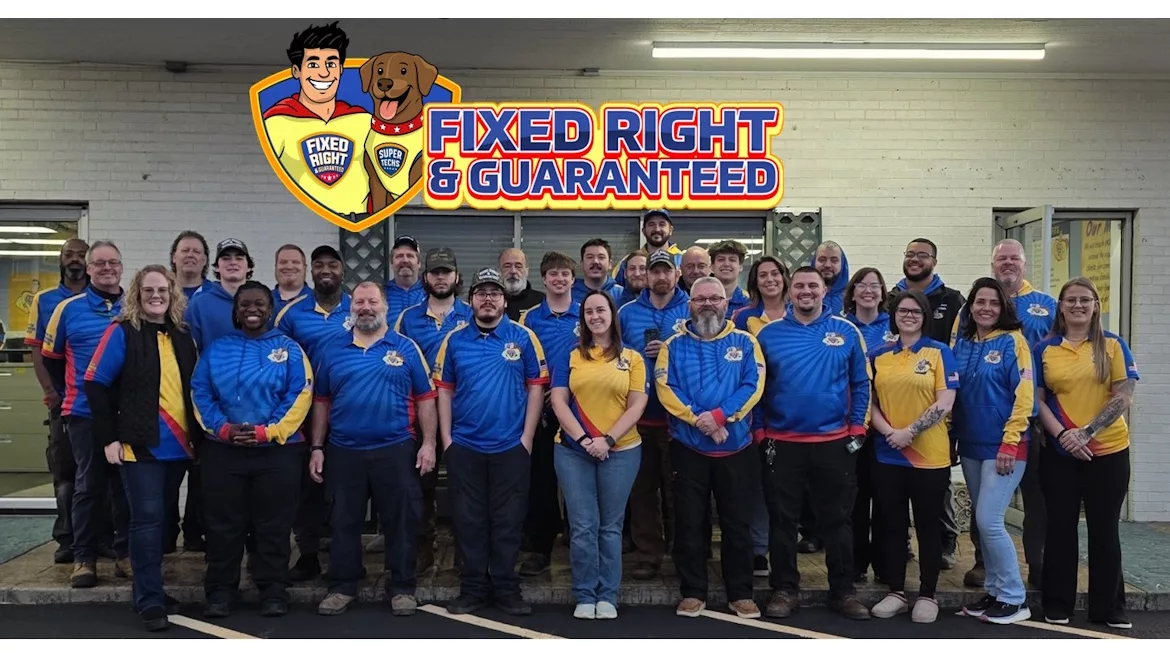
MID-TO-SCALE: Midsized HVACR contractors are navigating rising costs, increased competition, and operational challenges as they work to scale their businesses and remain competitive in a changing market.
The disappearance of mid-sized HVACR contractors has long been viewed as an industry trend — driven by competition, consolidation, and the straight-up difficulty of scaling from a mid-sized operation into a larger, fully-operational, efficient organization.
Smaller companies can stay agile in an evolving market within their means. Larger companies, sometimes backed by private equity, have the resources to scale and stay competitive. But for the contractors in the middle, growth can introduce as many challenges as it does opportunities.
All this to say: The middle is getting harder to hold.
This raises the question — is the HVAC middle class actually disappearing, or is it a case of adapt or die?
The “Valley Of Death” In Growth
For HVACR contractors in the $3 million to $10 million range, the pressure is real — and contrary to popular belief, it’s not just from outside sources.
Private equity-backed firms continue to scale and consolidate, while smaller contractors stay lean and keep chugging along. Midsized companies, however, are often caught in the middle —facing rising operational costs, labor struggles, and increasing demand for technology and organization.
The real challenge isn’t just competition. It’s transition.
Looking for quick answers on air conditioning, heating and refrigeration topics? Try Ask ACHR NEWS, our new smart AI search tool. Ask ACHR NEWS
Marco Radocaj, owner of Balance HVAC, has experienced this firsthand — leaving a midsized company because of the constraints. Smaller contractors, he said, can operate profitably with just one capable person handling most backend responsibilities like scheduling, ordering, customer service, billing, service coordination, etc., while the field teams stay manageable.
But that model doesn’t necessarily scale.
“The problem hits hard during the transition to midsize,” Radocaj said. “At this scale, the volume of backend work outgrows what one person can reliably handle without sacrificing quality, responsiveness, or accuracy. The owner/manager becomes the bottleneck.”
At that point, contractors have a tough decision to make: hire additional staff and increase overhead costs, or keep things the way they are, which usually results in lower quality of work, frustrated customers, and a strained staff.
Larger companies don’t face those same issues — they already have management layers in place, and their overhead costs are spread across more work.
“This allows them to scale field operations far more effectively than a company stuck in the awkward middle,” Radocaj said. “As a result, many contractors in the $3-10M range find themselves squeezed: Their overhead jumps sharply just to maintain service levels, but their revenue and margins haven't yet scaled enough to comfortably absorb the increased costs.”
Industry-wide changes are adding to that pressure. According to Dan Quinonez, COO of PHCC - National Association, those pressures aren’t evenly distributed.
“While it’s difficult to measure the force of each factor directly, we see some of the primary drivers as slow end-market demand and continued price escalation, labor availability constraints, and industry consolidation,” said Quinonez.
At the same time, midsized contractors remain attractive acquisition targets.
“It is common for businesses at this size to have high potential returns in the next stages of growth,” said Julian Scadden, president and CEO of Nexstar Network, who noted the organization has not seen clear data confirming the middle is shrinking outright.
For some, this “valley of death” in growth may be temporary.
“I think the ‘shrinking middle’ will be temporary as AI and automation tools become more accessible and integrated,” Radocaj said. “They should dramatically reduce backend workload, allowing midsized firms to grow without proportional overhead increases.”
Growth Exposing Gaps
While outlying market factors do play a role, some contractors argue the biggest challenges are internal.
Roy White, owner of Fixed Right & Guarantee Heating and Cooling, a midsized outfit in southern Maryland, said the “squeeze” is largely self-inflicted.
“I genuinely believe every single company faces the same challenges,” White said. “The difference is how we respond and deal with each of those challenges.”
As companies grow, what once worked might no longer. Owners who were used to having total control and their hands in every aspect of the business must shift into doing what’s necessary to continue success, like developing people and adjusting pricing strategies.
“If we do not grow as leaders, then the challenges will be much bigger than they need to be,” White said.
What It Takes To Compete
For many midsized contractors, they aren’t falling behind because they lack the technical expertise — it’s the business fundamentals that trip them up.
“Most contractors don't truly understand the true costs of doing business, so they/we don't charge enough,” White said. “Because of that, they can't pay their people enough, offer the best benefits that their team deserves, they can't afford to compete in marketing and technology, and their operations ultimately suffer as a result.”
The issue comes down to understanding the math of the business, and that what worked at a smaller scale, like low overhead and long hours, becomes more unsustainable the more growth the company experiences.
“We could get away with it when we were small with very little overhead and working ourselves to death, but as we grow, there is no covering up bad decisions anymore, and that is exactly what improper pricing is,” White said.
At the same time, the baseline for competition has risen.
“Contractors now need a real presence online (Google, Local Service Ads, strong online reviews on multiple platforms), consistent call handling, and a structured approach in the home with options and financing,” said Quinonez. “On top of that, systems to manage scheduling, pricing, and performance tracking are essential.”
Emerging tools like AI-driven order handling, online booking, and automation are also becoming part of the equation — raising that bar even further.
Buying power is another differentiator. And according to Scadden, leveraging that buying power is the area of opportunity for mid-sized contractors.
“Whether that is in equipment, distribution, marketing, or any other service, it is difficult to match the pricing larger businesses can command with volume purchases,” Scadden said.
Industry Impact
As the industry continues to evolve, the effects extend beyond contractors to both customers and technicians.
Smaller companies, while nimble, often stretch their teams thin — a recipe for burnout.
“Smaller contractors typically overwork their teams because there just aren't enough people to cover everything, and they also typically try to be everything to everybody and don't focus on what they are best at,” White said.
On the other hand, larger (and sometimes PE-backed) firms are driving more structure across the industry — bringing better pay scales, formal training, clearer career paths, and more consistent processes and pricing.
Radocaj said as midsized contractors adapt to this level of competition, these improvements will raise overall standards, making the business — regardless of size — more professional, profitable, and sustainable for contractors themselves.
“Customers should see higher service quality and clearer expectations, while technicians will gain better career paths, training, and compensation,” Radocaj said.
But that shift does come with tradeoffs. Midsized contractors have something not all other firms can touch: “the trust and familiar, personal feel of a family-owned business,” Radocaj said. “This human element and trust remains priceless for many homeowners.”
Scadden also pointed to a common misconception — that “independent” always equals small.
“While many investment-backed groups represent collective dollars, the majority of their portfolios are made of small to midsize operations,” Scadden said. “The impact on customers is not the well-run independent or the investment-backed contractor, it is the new startup without the professional structure to maintain a healthy business that serves their community.”
Strategies For Midsized Contractors
For contractors in the middle, when it comes to strategy, there’s no longer a default path forward.
Some may choose to scale. Others stay intentionally small. For some, selling might be the right decision.
“For someone who is getting close to retirement and does not have someone to turn the business over to, then selling makes sense,” White said. “That could be to private equity, someone on their team, or another contractor looking to grow themselves.”
For those chasing growth, success comes down to intentionality. This may include adopting AI tools to reduce administrative burdens, building a structure around hiring and management that encourages leadership and also avoids costly bottlenecks, and prioritizing employees, be it through training, compensation, or culture.
“Prioritize your field employees — the ‘feet on the street,’” Radocaj said, noting they are the foundation of any successful operation.
Equally important is having a long-term vision or starting with the end in mind.
“Every business owner should have an exit strategy,” Scadden said. “Even if it is on a distant horizon, every decision you make will be more confidently executed when you know your goal.”
For White, the opportunity remains both significant and “amazing” — but only if contractors approach growth the right way.
“If we are priced appropriately, we can grow enough to have a team big enough where a few people aren't getting burned out,” White said. “We can afford to invest in coaching in all areas of HVAC and life as well to make everyone on our team better every day.”
Looking for a reprint of this article?
From high-res PDFs to custom plaques, order your copy today!