Whatever wearable device makes the most sense for a particular construction company, the most important factor is that business owners and managers take advantage of these new technologies that could potentially save lives and improve the safety and health of their employees.
The U.S. Environmental Protection Agency (EPA) has delayed the effective date of certain amendments to its Risk Management Program (RMP) rule until Feb. 19, 2019.
Susan Harwood Training Grants support worker safety, health training
August 10, 2017
The U.S. Department of Labor’s (DOL’s) Occupational Safety and Health Administration (OSHA) announced the availability of $10.5 million in Susan Harwood Training Grants to fund training and education for workers and employers to help them identify and prevent workplace safety and health hazards.
Regulations, market drivers, and trends reflect that carbon dioxide (CO2) is increasingly being used as a refrigerant in a variety of applications. This includes applications such as: supermarkets/grocery stores, cold rooms, walk-in freezers, industrial cold storage, and food manufacturing/processing.
Each year, the Sheet Metal and Air Conditioning Contractors’ National Association (SMACNA) congratulates its members for their outstanding performance in occupational safety and health through SMACNA’s Safety Excellence Award Program (SSEAP). With increased participation from last year, the 2017 safety survey results show that safety and health continues to be a high priority for SMACNA contractors.
ProForm F3 Harnesses feature a patented relief cord system that allows users to relieve possible deadly pressure on femoral arteries and pressure on the clavicle typically caused by harness straps in a post-fall condition.
Contracting organizations and business owners around the country enjoyed a victory when President Donald Trump signed a resolution into law eliminating the Obama administration’s ‘Volks rule.’
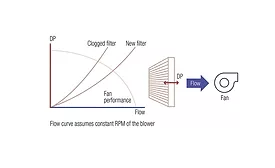
More often than not, filters are being changed too late
May 22, 2017
Where clean air is needed, an air filter is usually not far away. In the last decade, the filtration industry has made tremendous progress in filter technologies. With new materials and designs, advances in nonwoven fabric manufacturing, and pleating methods, as well as new developments like nanofiber layers and coatings, filters have become more efficient, reliable, and compact. Demands on the filtration industry are also changing. It’s no longer solely about filter efficiency and dust-holding capacity; with soaring energy prices and increasing awareness of sustainability, filter media are expected to contribute to lower energy consumption.