FROSTlines
When Refrigerants Change, So Do the Contactors
A2L refrigerants are driving new requirements for arc-producing electrical components
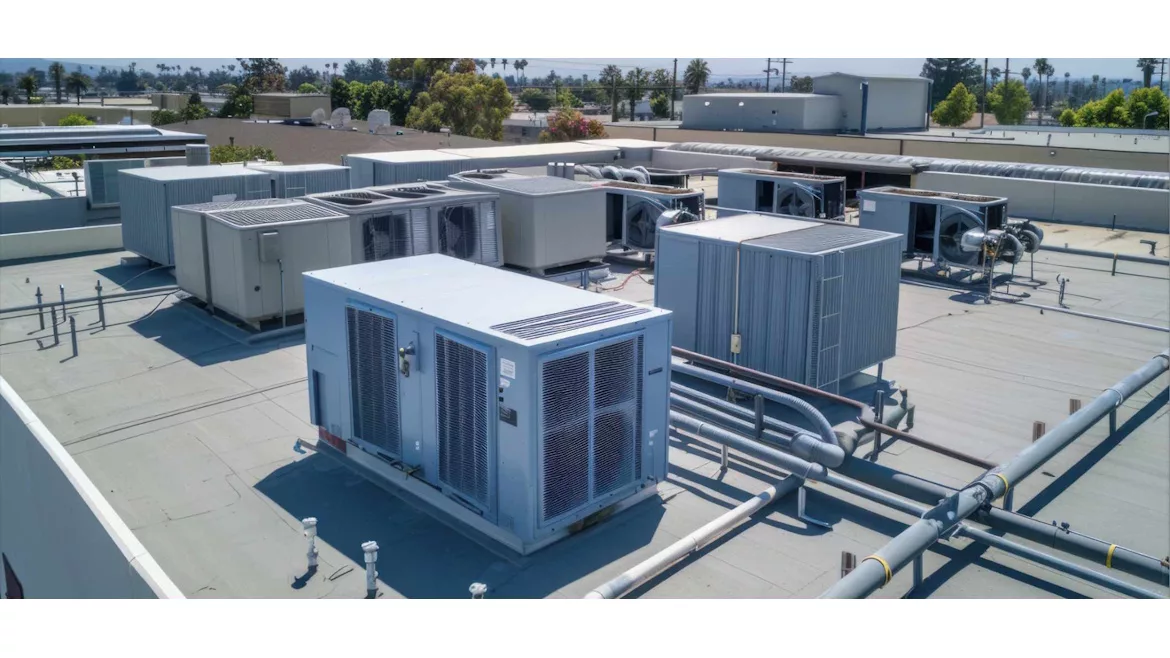
CONTAINING IGNITION: Equipment containing A2L refrigerants requires an electrical architecture designed to contain potential ignition.
The shift away from high-GWP HFC refrigerants is doing something most engineers didn’t anticipate: it is forcing a reexamination of electrical switching components that have gone largely unchanged for decades.
For years, electromechanical contactors, disconnect switches, and control relays were selected based only on electrical performance — voltage, current rating, and duty cycle. But because many low-GWP HFC alternatives are mildly flammable, a new parameter has appeared on the spec sheet that has nothing to do with electricity: flame arrest.
This shift is a result of the AIM Act, which mandates an 85% reduction in HFCs by 2036. As of January 1, 2025, the production and importation of R-410A (2,088 GWP) systems have ceased, replaced by a new generation of refrigerants like R-454B and R-32. While these gases are environmentally superior, their ASHRAE A2L classification means they require an electrical architecture designed to contain potential ignition.
Components That Must Comply
Not every electrical device in a refrigeration or HVAC system needs A2L certification – the components in scope are those that produce arcs during normal operation or under fault conditions. Two questions determine whether a device qualifies:
- Does it arc?
- Could leaked refrigerant reach it?
Here are some of the components that require A2L certification.
Electromechanical contactors and mini-contactors. Every time an electromechanical contactor opens or closes to control a compressor, fan, or defrost circuit, it makes an arc at the contact gap. In a refrigerant-present atmosphere, that arc is a credible ignition source.
A2L compliance demands that contactor housings meet the Annex JJ maximum gap dimensions in the UL safety standard, so any flame initiated inside the housing cannot propagate through the enclosure openings into the surrounding atmosphere. Meeting those dimensions requires new tooling, retesting, and certification under the UL component category LZGH2/8.
Disconnect switches. Disconnectors used for circuit isolation make the same type of arc as electromechanical contactors. A disconnector operated in an area where leaked refrigerant could accumulate poses an identical ignition risk and must meet the same Annex JJ gap geometry and arc containment requirements.
Looking for quick answers on air conditioning, heating and refrigeration topics? Try Ask ACHR NEWS, our new smart AI search tool. Ask ACHR NEWS
Substituting a non-certified disconnector of similar current rating into an A2L system introduces an unqualified ignition source into the circuit.
Electromechanical and monitoring relays. Control relays used for sequencing, safety interlocking, or demand logic share the Annex JJ requirement whenever they sit within a potential refrigerant leak zone. Flammable gas requirements include:
- Evaluation of spark-producing components;
- Determination of arcs and hot surfaces under normal and abnormal conditions; and
- FMEA demonstrating that no fault can generate an arc capable of reaching the gas’s self-ignition temperature.
Motor protection circuit breakers. Motor protection circuit breakers (MPCBs) in compressor circuits also fall within the scope of A2L compliance when they are located in the potential refrigerant leak zone.
Components that do not arc, such as transformers or sealed solid-state electronics that cannot produce sufficient arc energy under any fault condition, typically do not require A2L-specific certification. However, the exemption still requires a documented FMEA showing that no fault scenario can generate ignition-capable energy.
Replacement And Compliance
The ASHRAE A2L classification means lower toxicity (A), flammability (2), and low burning velocity at or below 10 cm/s (L). In ASHRAE Standard 34 classifications, high LFL (lower flammability limit) values — typically 10% to 19% volume in air compared to roughly 2% for propane — mean that a large concentration must accumulate before a flammable mixture forms. The high minimum ignition energy means A2L gases need a powerful source to ignite. An electrical arc from an electromechanical contactor or switch supplies more than enough energy, which is why switching components is the primary focus of A2L compliance.
Two product-level standards govern compliance. IEC/UL/EN 60335-2-40 covers heat pumps, air conditioners, and dehumidifiers, while IEC/UL/EN 60335-2-89 covers commercial refrigeration appliances. Component specifiers should know four annexes in particular:
- Annex JJ establishes maximum opening dimensions for electromechanical contactor and relay housings;
- Annex KK addresses hot surface ignition temperature testing under both normal and fault conditions;
- Annex LL and PP cover refrigerant detection systems; and
- Annex NN specifies flame arrest enclosure verification.
The critical UL component category is LZGH2/8, developed under UL 60335-2-40. A certificate issued under LZGH2/8 proves the absence of any ignition source inside the unit per Clause 22, which enables UL to waive the more onerous Annex FF leak simulation testing at the system level. That waiver can shave weeks off the product development cycle.
This matters most for unprotected systems, where at least one part of the cooling system sits inside the food storage or occupied space. In these designs, a refrigerant leak could create ignitable conditions near electrical components. Compliance requires either component-level LZGH2/8 certification or a whole-enclosure flame arrest approach. Specifying LZGH2/8-certified electromechanical contactors and disconnectors takes the simpler path.
Leak Detection
UL 60335-2-40 requires leak detection sensors that activate at less than 25% of the refrigerant’s LFL. When concentrations approach threshold levels, the system must initiate ventilation or controlled shutdown.
That requirement changes what an electromechanical contactor does in the system. A mini-contactor controlling a ventilation fan is now a safety actuator. The disconnect switch is the device that isolates circuits when the detection alarm triggers. Because many A2L refrigerants are denser than air, detectors should sit at low points near coil connections, valves, and compressor compartments.
To ensure components are compliant, consider the following checklist:
- Verify LZGH2/8 certification on every electromechanical contactor, mini-contactor, and disconnect switch in the refrigerant zone. A component with the right current rating but without A2L certification is a non-compliant ignition source.
- Confirm Annex JJ gap compliance. The housing gap dimensions are a physical design parameter. There is no equivalence between A2L-certified and non-certified components of the same electrical rating.
- Check VFD listings. Any drive previously listed under UL 508C must be re-specified against UL 61800- 5-1 for A2L service. This is frequently missed in system conversions.
- Request FMEA documentation from component suppliers. The analysis must demonstrate that no fault condition produces an arc reaching the refrigerant’s self-ignition temperature.
- Build leak detection into the control architecture from the start. Electromechanical contactors and disconnectors are part of the safety response chain, so specify them accordingly.
- Consider A2L compliance even where it isn’t mandated yet. Some sectors, like data center cooling, have no hard A2L requirement today. But many specifiers in those sectors are already requesting compliant components as an added safety margin, and the regulatory direction is clear. Designing A2L compliance into the BOM now avoids a second round of re-specification later.
For decades, selecting refrigerants and electrical components were independent engineering decisions. With A2L, however, they are not. The flammable nature of the new refrigerants means every arc-producing device in the system poses a safety concern, and the standards now reflect that. Engineers and contractors who build this understanding into their specifications today will spend less time chasing compliance issues once the equipment reaches the test lab.
Looking for a reprint of this article?
From high-res PDFs to custom plaques, order your copy today!