Predicting the Next Service Call
AI-driven diagnostics and connected HVAC systems are reshaping maintenance strategies

FUTURE-FORWARD SERVICE: Connected equipment and AI-driven diagnostics are changing traditional approaches to maintenance and customer support.
As connected equipment and artificial intelligence-driven diagnostics become more common across HVAC systems, contractors are increasingly shifting from reactive repairs to predictive maintenance strategies.
With labor shortages remaining a constant challenge and customer expectations continuing to rise, many contractors are investing more heavily in tools that can detect potential system issues before failures occur. Much of that shift is being driven by manufacturers, which are increasingly developing integrated smart systems with predictive diagnostics capable of identifying service needs before breakdowns happen.
Preventive vs. Predictive: The Defining Difference
While preventive maintenance follows a fixed service schedule designed to reduce the risk of unexpected failures, predictive maintenance relies on real-time operating data, system monitoring, and analytics to identify potential issues before equipment performance declines or breakdowns occur.
“Preventive maintenance follows a set schedule, whether the system needs it or not, while predictive maintenance relies on real-time information from the equipment itself,” said Tyler Oehlman, associate director of product management at Carrier. “By continuously monitoring performance, the system can spot early warning signs and address issues before they become bigger problems.”
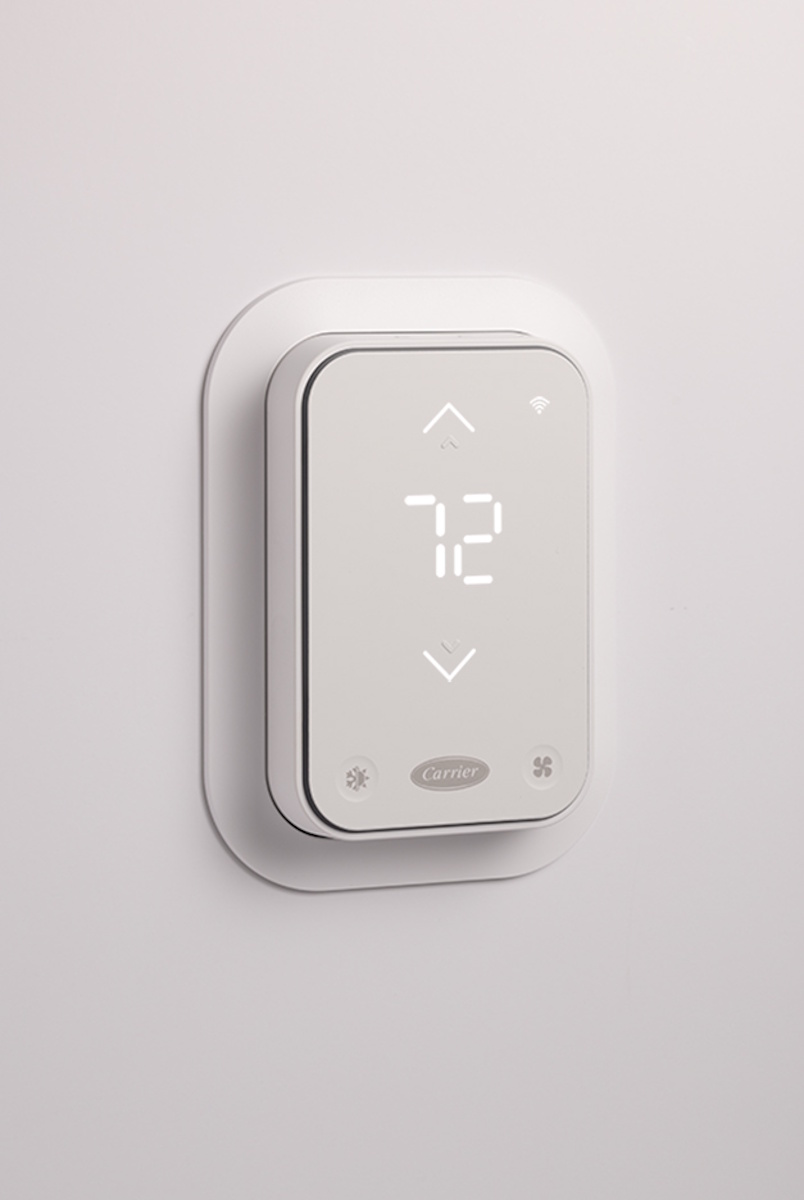
SMARTER VALUE: While many customers are already familiar with smart monitoring features, the broader value lies in improving operational efficiency and reducing costs. (Courtesy of Carrier)
HVAC manufacturers are increasingly embedding predictive diagnostics, remote monitoring, and connected capabilities into their equipment.
“Predictive maintenance uses real-time operational data and AI-driven insights to identify emerging issues early, allowing contractors to address problems before they lead to downtime, reduce efficiency, or system disruptions,” said Gani Nayak, vice president of IoT at Rheem Connected Products North America.
Nayak said the rapid expansion of connected HVAC equipment and IoT platforms over the past five years has made operating data far more accessible, accelerating the development of predictive capabilities.
Looking for quick answers on air conditioning, heating and refrigeration topics? Try Ask ACHR NEWS, our new smart AI search tool. Ask ACHR NEWS
“Rheem is investing heavily in expanding its connected ecosystem with advancements in remote monitoring, AI diagnostics, and service tools rolling out over the next 12-24 months to make installation and service faster, smarter, and more proactive for both residential and commercial applications,” he said.
Turning Data into Action
That growing connectivity is also changing how contractors approach maintenance work, whether residential or commercial.
While many customers are already familiar with smart monitoring features, the broader value lies in improving operational efficiency and reducing costs.
“The industry has evolved from using basic alarms, scheduled preventative maintenance, and a technician’s skill of interpreting symptoms from a unit or component, to using a more connected experience, with data delivered from a unit’s controller to learning models which help identify performance degradation and at-risk components,” said Randy Speights, senior technical product manager with Lennox Commercial.
A common misconception is that predictive maintenance can provide exact answers about what will fail and precisely when it will happen.
“We view it as a probabilistic tool that becomes more valuable when combined with real-time data, analytics, and in-field observations,” Nayak said. “The goal is to help contractors and building operators make earlier, more informed decisions that reduce downtime, improve system performance, and prevent small issues from becoming failures.”
For residential and commercial customers, connected HVAC ecosystems can improve efficiency and system visibility.
“This technology is emerging across connected residential HVAC systems, smart thermostats, heat pumps, and commercial water heating solutions, where continuous monitoring enables fault detection and performance optimization,” Nayak said.
While predictive maintenance remains in the early stages for many HVAC contractors, adoption is growing alongside the expansion of connected equipment and AI-enabled diagnostics. A 2026 Fluke Corporation survey of maintenance and manufacturing professionals found predictive maintenance adoption doubled year over year from 9% to 18%, driven by increased investment in Industrial AI and connected technologies.
“Contractors often underestimate the benefits of integrating digital tools into their everyday operations, from remote monitoring and CRM systems to emerging AI assistants,” said Nayak.
Making Predictive Maintenance Customer-Focused
Predictive maintenance is about delivering value beyond equipment performance. Increasingly, that value is measured through customer experience.
“We’re seeing homeowners and building operators increasingly expect better performance, greater efficiency, and more visibility into how their systems are operating, pushing the industry toward smarter, data-driven solutions,” said Oehlman.
Transforming raw system data into clear diagnostics and recommended actions is where predictive maintenance translates into practical service.
“Predictive analytics can improve the customer experience, not just the service process,” said Speights. “Customers want to hear more than just a unit failed; they want to know what is happening, why it matters, and what can be done before comfort or operations are affected.”
As customers become more educated about the impact of smart technologies on efficiency and costs, contractors can use predictive insights to improve communication and strengthen customer relationships.
“No one wants to pay for a service event, but predictive analytics provides actionable data that supports the need and allows time to schedule a more convenient service,” Speights said. “This proactive and data-backed approach is a powerful new way to transparently build trust between a contractor and their customer.”
It’s not just large commercial systems that now benefit from the latest advances in predictive maintenance tools. While it used to be thought that overly complex systems require overly complex monitoring, Oehlman said it’s becoming increasingly accessible across residential and light commercial applications. “Predictive capabilities are increasingly built into residential HVAC systems,” he said. “The real value isn’t just in the technology itself; it helps contractors streamline operations, improve responsiveness, and deliver a more proactive, connected customer experience.”
The Jobs Question
As predictive maintenance tools become more sophisticated, questions remain about how the technology will affect technician roles and workforce demand. Industry experts say technology is more likely to augment technicians than replace them.
“Labor constraints and growing system complexity are pushing contractors to adopt smarter tools that help them work more efficiently, diagnose issues faster, and reduce unnecessary service calls,” Nayak said.
In the Fluke survey, skills-related challenges accounted for nearly 78% of the obstacles organizations face in adopting new maintenance technologies, highlighting ongoing concerns about labor availability and workforce expertise.
But those same obstacles also mean new technology tools can help bridge a meaningful gap.
For contractors, predictive maintenance could also help improve dispatch efficiency and prioritize service resources. Whether addressing refrigerant leaks, component wear, airflow issues, or indoor air quality concerns, technicians remain central to the service process.
By identifying at-risk equipment before failure occurs, service departments may reduce emergency calls, schedule work more strategically, and improve technician productivity.
“I imagine in the near future, a contractor will be able to convey to a customer an entire plan for when and how a part will be replaced, before the customer is aware that it needs to happen,” Speights said.
Looking for a reprint of this article?
From high-res PDFs to custom plaques, order your copy today!