ACHR News
search
Ask ACHR NEWS AI
cart
facebook twitter instagram linkedin youtube
  • Sign In
  • Subscribe
  • Sign Out
  • My Account
ACHR News
  • NEWS
    • Breaking News
    • New HVAC Products
    • Featured Products
    • Manufacturer Reports
    • HVAC Data
    • Legislation
    • ACHR NEWS Centennial
  • RESIDENTIAL
    • Air Conditioners
    • Furnaces
    • Residential Heat Pumps
    • Ductless
    • Residential IAQ
    • Testing, Monitoring, Tools
    • Components & Accessories
  • COMMERCIAL
    • Air Handlers
    • Rooftop Units
    • Chillers and Cooling Towers
    • Commercial Heat Pumps
    • Boilers and Hydronics
    • VRF/Ductless
    • Commercial IAQ
  • REFRIGERATION
    • Refrigerants
    • Refrigerant Regulations
    • Leak Management
  • CONTRACTOR PRO
    • Geothermal
    • Homeowner Study
    • VRF and VRV Ductless
    • Unitary Trends
  • EDUCATION
    • Training and Education
    • Business Management
    • Service and Maintenance
    • Continuing Education
    • Market Research >
      • HVAC Brand Awareness Report
      • VRV, VRF, VRVZ Report
      • Unitary Trends Report
      • Water Heat Professionals Report
    • Webinars
    • Sponsor Insights
    • eProducts Info
    • White Papers
  • EVENTS
    • HVAC Contractor Forum
    • Industry Events and Webinars
  • MEDIA
    • Videos
    • AHR Expo 2025 Videos
    • Podcasts >
      • ACHR News Podcast
      • HARDI Podcasts
      • AHR Expo Podcasts
      • ACCA Podcasts
    • Interactive Spotlights
    • Quizzes
    • eBooks
    • HVAC Talkback
  • HVAC GROUP
    • ACHR NEWS >
      • Current Issue
      • Digital Edition
      • Subscribe
    • Distribution Trends
    • SNIPS NEWS >
      • Join SNIPS NEWS
    • Engineered Systems News >
      • Join ES News
    • HVACR Directory
    • Contests
    • Newsletters
    • Contact
    • Advertise
    • My Account
HVAC ContractingBusiness Management

Managing the Safety of Your Workers

Implementing wearables could save lives

By Chris Holbert
September 4, 2017

The construction industry was the number one workplace for fatalities in 2015 according to the Occupational Safety and Health Administration (OSHA). There were a total of 4,379 worker fatalities in private industry in 2015, and 21.4 percent of those deaths were of workers in the construction industry. These numbers make it evident that construction executives need solutions for monitoring the health and safety of their workers. And, workers need the most efficient means possible to report and react to emergencies.

Excluding highway collisions, the top causes of death in the construction industry were falls, a person being struck by an object, electrocution, and a person being caught in or between objects. The Bureau of Labor Statistics sites that, in 2015, these four causes were responsible for 64.2 percent of construction worker deaths.

These causes of death illustrate how difficult it could be for a construction worker to place a 911 call in an emergency. After a fall or being struck by an object, a worker could likely be unconscious. A common scenario for each of these causes is the inability of the construction worker to make use of a cell phone to reach help.

According to the Pew Research Center, approximately 95 percent of Americans now own a cell phone of some type and more than one-third own a smartphone. While these devices provide many conveniences, their use is highly limited in emergency situations.

With a cell phone, the user is still required to be conscious and within range of the phone to be able to make a call for help. In the case of mobile workers and lone workers, cell phones are not the most reliable or function-rich options for tracking and monitoring employee safety and health. Additionally, in the case where a lone worker is confronted by a hostile third party, the cell phone is the first item often taken so as to prevent a call for help.

A better solution than relying on cell phones for emergency communication are easily worn devices (i.e., wearables or wearable devices) that automatically report changes that could indicate an emergency. Or, a device that a worker could easily utilize to express the need for help without having to speak or make much of a movement.

Fueled greatly by consumers rapidly adopting fitness trackers and smart watches, the global wearables market is expected to reach a value of $19 billion in 2018. But, the construction industry could also become an influential customer shaping this evolving space. Already there are products like smart hard harts, smart safety vests, smart eyewear, and even stick-on patches that can monitor everything from an employee’s location to body temperature and positioning. These devices eliminate the need for a worker to proactively report an emergency, but like cell phones they have their limitations as well.

Looking for quick answers on air conditioning, heating and refrigeration topics? Try Ask ACHR NEWS, our new smart AI search tool. Ask ACHR NEWS →

For example, while the devices are able to transmit certain information about a situation to a manager or human resources department, they do not create a direct line of communication between the worker and responder. If verbal communication is possible in the emergency situation, the worker would still need to place a call on a phone.

Potentially a better option for the construction industry would be mPERS devices similar to those used by seniors for years. Essentially, a help button that can be pressed after a fall to alert emergency responders that assistance is needed. These types of technologies have become more beneficial because they no longer require a base station device to place calls, limiting their range of use.

Like other wearables, mPERS devices are small and lightweight. They provide location technologies and also offer built-in fall advisory capabilities. Wearables with this type of functionality are able to detect horizontal and vertical movement, but taking it a step further than simply reporting a fall on the job via a text message or red flag in a software system, mPERS devices can also eliminate the need for the worker to initiate a call for help. Instead, they can trigger one automatically. And, cloud-based technologies can make it possible for central stations to immediately respond to the call for help. 

Another benefit of mPERS devices over cell phones is long battery life. Unlike phones that sometimes have to be charged multiple times a day, mPERS devices have less functions and do not need to be fully functional at all times. They can be left off or essentially in a hibernation mode until the SOS button on the device is pressed. Once this action occurs, location information can be sent to a central reporting destination, and an emergency call can be placed. This enables mPERS devices to have battery lives of up to 30 days on one charge.

Whatever wearable device makes the most sense for a particular construction company, the most important factor is that business owners and managers take advantage of these new technologies that could potentially save lives and improve the safety and health of their employees.

Publication date: 9/4/2017

Want more HVAC industry news and information? Join The NEWS on Facebook, Twitter, and LinkedIn today!

KEYWORDS: safety and HVAC wearable technology

Share This Story

Looking for a reprint of this article?
From high-res PDFs to custom plaques, order your copy today!


Chris holbert portrait

CEO of SecuraTrac.

Recommended Content

JOIN TODAY
To unlock your recommendations.

Already have an account? Sign In

  • HVAC-enrollment

    The Trades Are Back: HVACR Programs See Nearly 30% Enrollment Spike

    A new wave of future technicians is entering the pipeline.  
    Training and Education
    By: Matt Jachman
  • 2025 Top 40 Under 40

    2025 Top 40 Under 40 HVACR Professionals List

    The 11th annual Top 40 Under 40 list highlights those...
    HVAC Commercial Market
    By: Hannah Belloli-Oster
  • LG Ductless Mini-Split Systems

    The 9 Types of Heat Pumps

    As the U.S. moves toward electrification, heat pumps are...
    Air Source Heat Pumps
    By: Joanna R. Turpin
Subscription Center
  • Create an Account
  • Start a Subscription
  • Manage My Account
  • Sign Up for Newsletters
  • Visit Customer Service
  • Update Preferences

More Videos

Sponsored Content

Sponsored Content is a special paid section where industry companies provide high quality, objective, non-commercial content around topics of interest to The News audience. All Sponsored Content is supplied by the advertising company and any opinions expressed in this article are those of the author and not necessarily reflect the views of The News or its parent company, BNP Media. Interested in participating in our Sponsored Content section? Contact your local rep!

close
  • Piggy Bank
    Sponsored byWatercress Financial

    Energy Prices, Inflation, and HVAC: What Today’s Homeowners Care About

  • Refrigerated Food
    Sponsored bySolstice Advanced Materials

    R-455A Refrigeration: A Cold Storage Solution for the Future

  • Airex Rooftop Units
    Sponsored byAirex Manufacturing Inc

    Consolidating Roof Penetrations: A Growing Trend in Multifamily HVAC Design

Popular Stories

HVAC-Price-Increase-graphic

HVAC Price Increase List: June 2026

Trump-Section-232.jpg

Trump Reduces Section 232 Tariffs on HVAC Equipment to 15%

Refrigerants-and-gauge.jpg

HVAC Industry Warns of Counterfeit Refrigerants Entering U.S. Supply Chain

Heat-pump-cutaway.jpg

PFAS Rules and A2L Building Codes Continue to Evolve

Midea-training.jpg

HVAC Workforce Crisis Expands Beyond Technicians to Instructor Shortages

View The ACHR NEWS
Centennial Anniversary Timeline

The ACHR News Timeline Chart
Submit a Letter
Submit a letter to our editors.

Events

November 6, 2025

Next-Gen Data Center Cooling: HVAC Innovation and Real-World Solutions

On Demand As AI workloads and high-density computing push traditional cooling methods to their limits, the data center industry is accelerating the adoption of next-generation HVAC technologies.

June 17, 2026

Decarbonization Without Disruption

This webinar will explore practical HVAC decarbonization strategies that minimize disruption while maximizing long-term performance and ROI.

View All Submit An Event

Poll

Summer Staff

Are you fully staffed for the summer season?
View Results Poll Archive

Products

BNI Mechanical/Electrical Square Foot Costbook, 2026 Edition

BNI Mechanical/Electrical Square Foot Costbook, 2026 Edition

See More Products
Decarbonization Without Disruption - Free Webinar - 6/17/2026

Related Articles

  • The HVAC sector

    Improve the Safety of Valves in Your Facilities with These Measures

    See More
  • Managing the Rise of Meritless Whistleblower Retaliation Claims

    See More
  • Sept. 20, 2006: MCAA Introduces Seminar on ‘The Profitability of Safety'

    See More

Related Products

See More Products
  • Training-Managing-System-2017.jpg

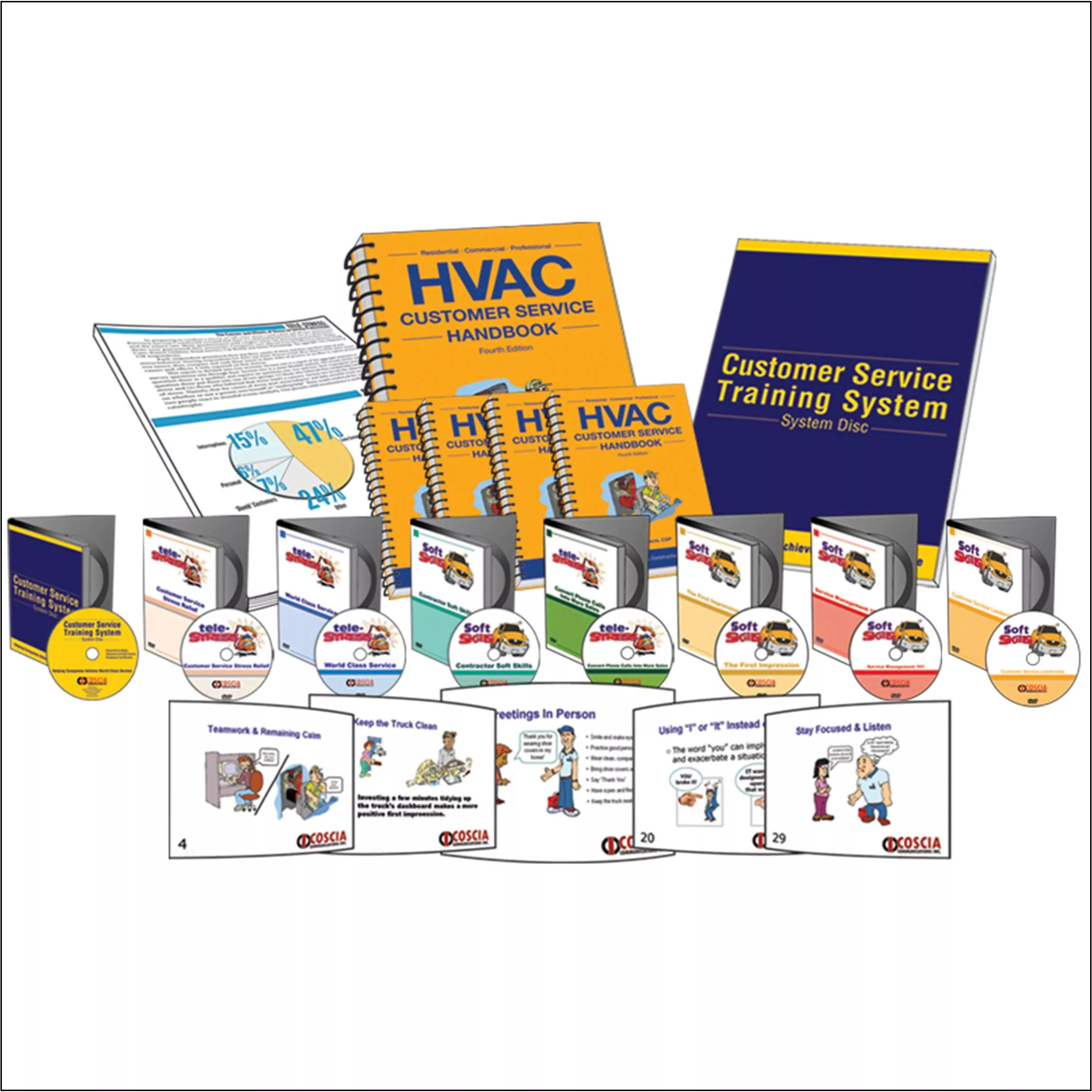
    Customer Service Training & Managing System by Steve Coscia

  • Building Information Modeling: Planning and Managing Construction Projects with 4D CAD and Simulations

  • front cover only.jpg

    How to Market Your HVAC Business

See More Products

Related Directories

  • Magid Glove and Safety

    Magid is a family-owned, U.S.-based manufacturer and distributor of head-to-toe PPE to keep your workers safe, comfortable, and compliant.
  • MSA Safety (Manufacturer)

    MSA Safety Incorporated (NYSE: MSA) is the global leader in advanced safety products, technologies, and solutions. For the HVAC-R industry, MSA Safety provides gas and refrigerant analysis, detection, monitoring, and tracking solutions. Their FieldServer IIoT gateways are ideal for enabling 24/7 cloud-based monitoring solutions.
×

Sign Up. Stay Informed.

The #1 trusted source for the HVACR industry since 1926

SUBSCRIBE
  • RESOURCES
    • Advertise
    • Contact Us
    • Advisory Board
    • Classifieds
    • Submit a Letter
    • Directories
    • Store
  • ACCOUNT CENTER
    • Create an Account
    • Start a Subscription
    • Manage My Account
    • Sign Up for Newsletters
    • Visit Customer Service
    • Update Preferences
  • SERVICES
    • Marketing Services
    • Reprints
    • Market Research
    • List Rental
    • Survey/Respondent Access
  • STAY CONNECTED
    • LinkedIn
    • Facebook
    • Instagram
    • YouTube
    • X (Twitter)
  • PRIVACY
    • PRIVACY POLICY
    • TERMS & CONDITIONS
    • DO NOT SELL MY PERSONAL INFORMATION
    • PRIVACY REQUEST
    • ACCESSIBILITY

Copyright ©2026. All Rights Reserved BNP Media, Inc. and BNP Media II, LLC.

Design, CMS, Hosting & Web Development :: ePublishing