AHRI Shipment Data Show A/C, Heat Pumps Down by 29% in January
Heat pumps still outpaced warm-air furnaces

The first peek into 2026 shows shipments of a/c, heat pumps, and gas furnaces continue to decline, though a month-by-month comparison shows the inklings of a rebound for the HVAC industry.
The latest shipment data from the Air-Conditioning, Heating, & Refrigeration Institute provides data for January 2026, showing that most products tracked by AHRI decreased compared to the same time last year, indicating a slow start to the year.
Air Conditioners and Heat Pumps
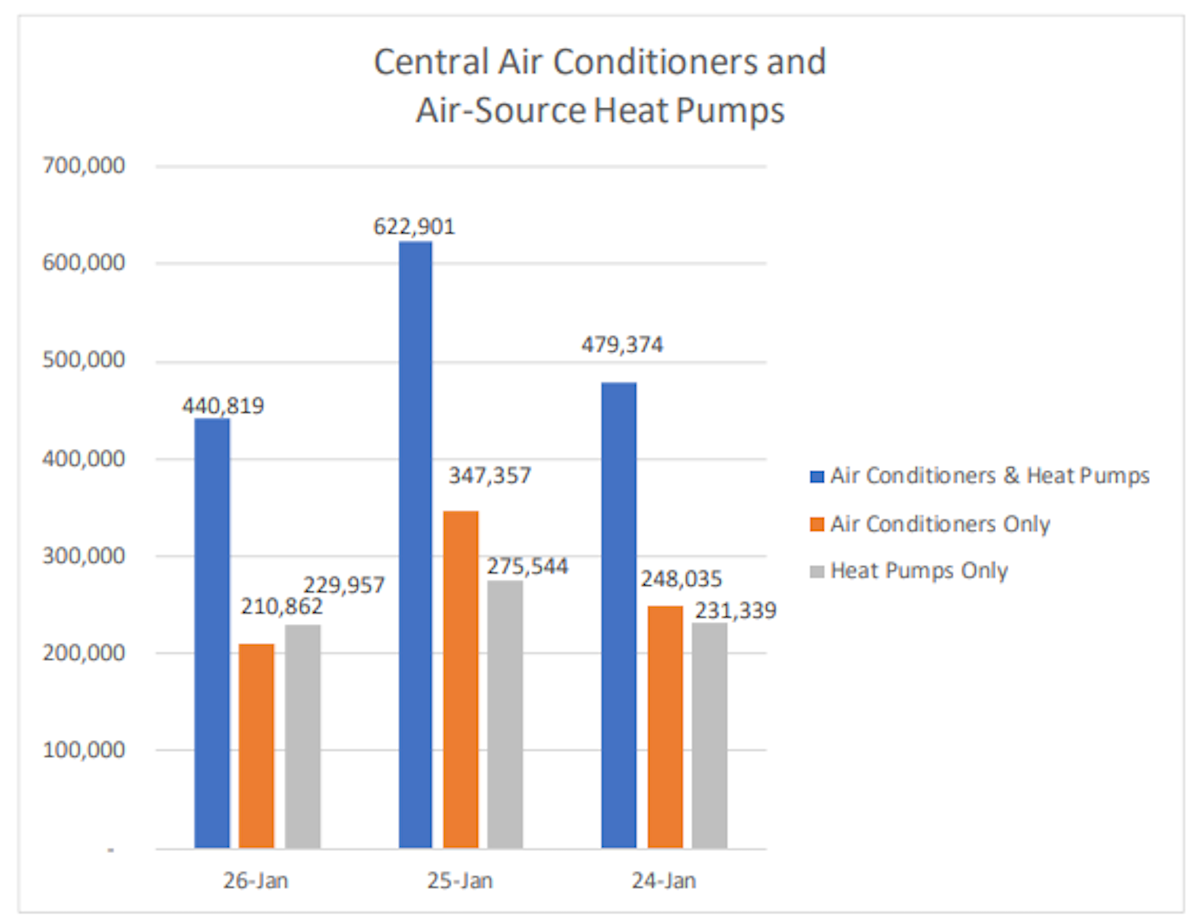
A/C AND HEAT PUMPS: AHRI data showing shipments of a/c units and heat pumps for January 2024-2026. (Courtesy of AHRI)
January is now the eighth consecutive month where shipments of a/c units and heat pumps have declined. When comparing January 2026 to January 2025, the following bears out:
- Air conditioners and heat pumps: 440,819, down 29.2% from 622,901
- Air conditioners only: 210,862, down 39.3% from 347,357
- Heat Pumps only: 229,957, down 16.5% from 275,544
Since it is the first month of the year, these are the year-to-date totals, which don’t paint a rosy picture for the start of 2026. However, in looking at how January compared to December 2025, slight signs of hope emerge:
- Air conditioner units and air-source heat pumps: Up 7.97% from 408,244
- Air conditioners only: Up 11.7% from 188,715
- Heat pumps only: Up 4.8% from 219,529
Seasonality might be the cause here, but it could also be signs of the rebound referenced by Carrier in its Q4 earnings report, where company leadership said replacement demand should begin to recover over the course of 2026.
“We think that we're balanced, and it will now be a function of underlying demand as we get into the season,” said David Gitlin, chairman and CEO, during the earnings call.
The month-over-month increases, however, are not as strong as in previous years. From December 2024 to January 2025, the average increase in shipments for a/c units, heat pumps, and combined shipments was 20.1%, compared to this year’s average of 8.15% for the same period. That average for December 2023 to January 2024 was 10.4%.
Looking for quick answers on air conditioning, heating and refrigeration topics? Try Ask ACHR NEWS, our new smart AI search tool. Ask ACHR NEWS
Warm-Air Furnaces
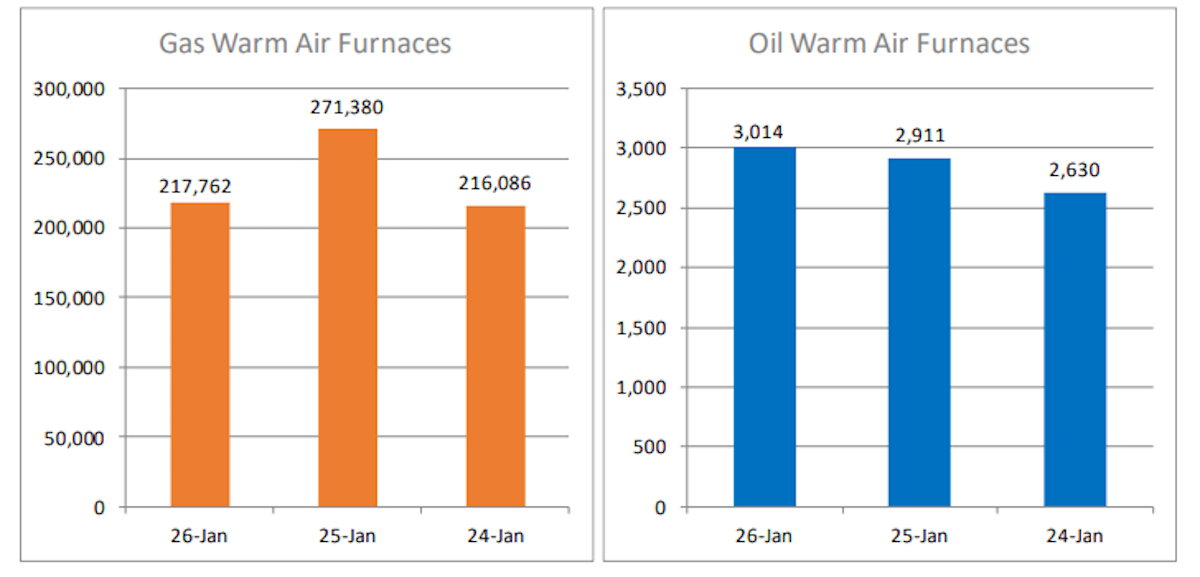
WARM AIR FURNACES: AHRI data showing shipments of warm-air furnaces for January 2024-2026. (Courtesy of AHRI)
Gas furnace shipment totals saw a nearly 20% decline from January 2024, while oil furnace shipments modestly increased in the same period.
- Gas warm-air furnaces: 217,762 units, a 19.8% decrease from 271,380
- Oil warm-air furnaces: 3,014 units, up by 3.5% from 2,911
This marks yet another month where heat pumps outsold warm-air furnaces, marking a shift toward heat pumps being the primary “box” shipped for residential. It’s important to note, though, that heat pumps and furnaces aren’t always in direct competition. Nate Adams, founder of Nate the House Whisperer, notes that heating can’t be provided via electricity with an a/c, and field conversions of a/c units to heat pumps are not easily accomplished.
“The odds of somebody actually opting to field convert an a/c to a heat pump are essentially zero,” he said.
Regardless, compared to December 2025, warm-air furnace shipments were lower overall in January:
- Gas warm-air furnaces: Down 18.4% from 267,065 units
- Oil warm-air furnaces: Down 25.7% from 4,058 units
Residential Storage Water Heaters
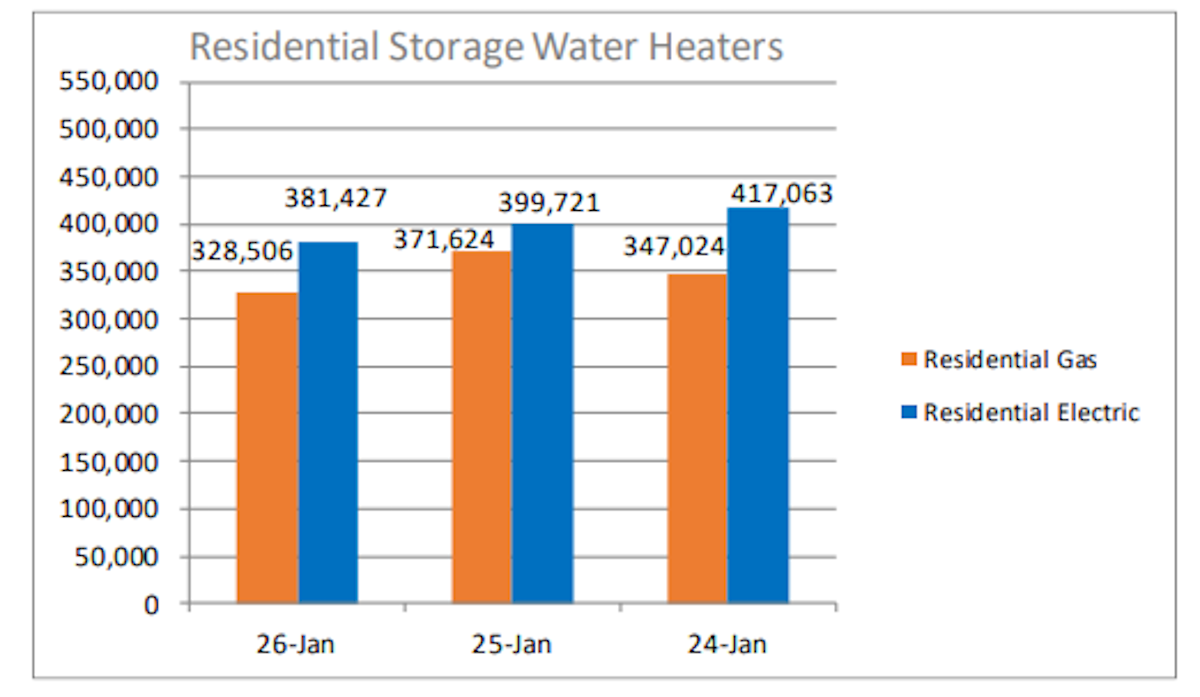
WATER HEATER SHIPMENTS: AHRI data showing shipments of residential electric and gas water heaters for January 2024-2026. (Courtesy of AHRI)
Gas and electric water heaters saw mixed growth last January compared to the same period last year:
- Residential gas storage water heaters: 328,506 units, down 11.6% from 371,624
- Residential electric storage water heaters: 381,427 units, down 4.6% from 399,721
Steeper declines were seen in both categories when compared to December 2025’s shipment totals:
- Residential gas storage water heaters: Down 21.5% from 418,518 units
- Residential electric storage water heaters: Down 17.5% from 462,252 units
Adams said in analyzing AHRI data, he found that electric water heaters have surpassed gas in the last couple of years, indicating a gradual shift toward electrification on multiple fronts, not just with heat pumps.
“It was running 52% gas, 48% electric basically through the 2010s, so then around 2020 it started flipping, and now it’s like, 54/40,” he said. “It’s not a done deal or anything, but it’s moving.”
The Coming Year
2026 will be interesting to track, given the number of states and cities looking to shift toward electrification through code amendments and new laws that favor electricity over other energy sources like natural gas.
This includes bans or restrictions on the use of fossil fuels, like Colorado’s law that now limits gas furnaces and water heaters to ultra-low nitrogen oxides emissions or those in compliance with the latest Energy Star standards. In Oregon, heat pumps are required for both heating and cooling for new residential construction with a split-system air-conditioning system.
Two major bills are reshaping HVAC as well. One is the Homeowner Energy Freedom Act, which, if enacted, would repeal a $4.5 billion rebate program from the Inflation Reduction Act that incentivized residential energy efficiency, such as heat pumps.
It’s also a year where the industry continues to adapt to the transition to A2L refrigerants. Some states, like New York, are pushing for limits on refrigerants with global warming potential that exceed federal standards. A continued push to ban products containing PFAS, which are substances that accumulate in the body and cause health risks, could hit refrigerants as well.
“So carbon dioxide, ammonia, propane, and isobutane are going to be the only refrigerants that you really have available,” said Todd Titus, director of state government affairs at Heating, Air-conditioning & Refrigeration Distributors International (HARDI).
Looking for a reprint of this article?
From high-res PDFs to custom plaques, order your copy today!