Electrification Laws Gain Momentum, Forcing HVAC Contractors to Adapt
Colorado’s new gas equipment rules may signal what’s next for the industry
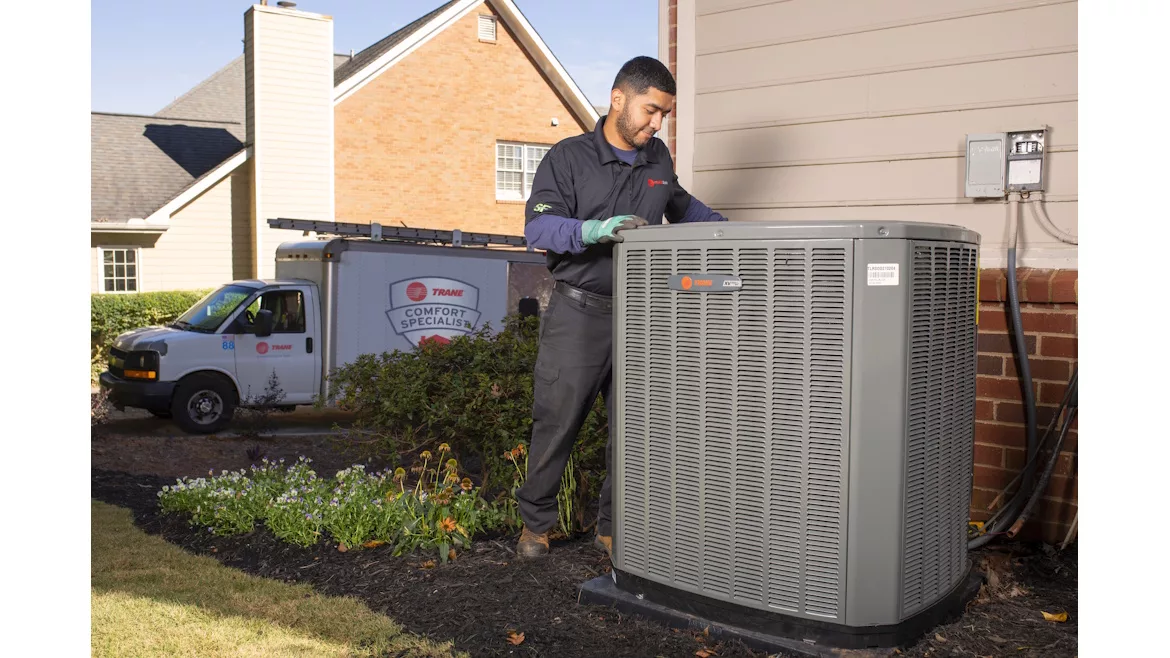
SMART SYSTEM: Trane’s XV20i heat pump comes equipped with advanced communications technology and a variable-speed fan that helps it adapt in real time to the needs of the conditioned space.
Whether spurred on by sustainability goals or grappling with rising energy costs, state and local legislators are slowly moving the HVAC industry toward electrification and decarbonization.
Case in point, a statewide restriction on residential gas furnaces and water heaters in Colorado took effect this year, limiting the options to either ultra-low nitrogen oxides emissions or those in compliance with the latest Energy Star standards.
This could be a sign of things to come for more states as they look to meet zero-emission goals and environmental agendas, in turn creating more chaos for HVAC contractors looking to serve their customers.
“It’s possible that Colorado’s mandate will become a model for other states, particularly those that are already pursuing aggressive electrification and decarbonization agendas,” said Chris Czarnecki, ACCA director of government relations and advocacy.
A Pincer of Electrification
Much of the legislative activity related to these efforts is occurring in the coastal states. In 2025, California and Washington had 12 bills each, Oregon had 11, and New York had nine, according to the Building Decarbonization Coalition.
In 2021, Massachusetts was the first state to enshrine thermal energy network pilots into law. Overall, 13 states have approved bills related to gas companies retooling themselves into utilities providing thermal energy.
Other programs are aimed at assisting low-income renters, like the Alachua County Energy Efficiency Program in Florida, which assists renters in less efficient homes. The program provides up to $15,000 per house for upgrades, which can include heat pumps and more efficient water heaters.
Looking for quick answers on air conditioning, heating and refrigeration topics? Try Ask ACHR NEWS, our new smart AI search tool. Ask ACHR NEWS
Eric Hatton, vice president of utility and government services for EGIA, said the industry can expect more states to commit to energy efficiency. He said what traditionally happens in HVAC is that initiatives are adopted on the coasts and slowly make their way inward.
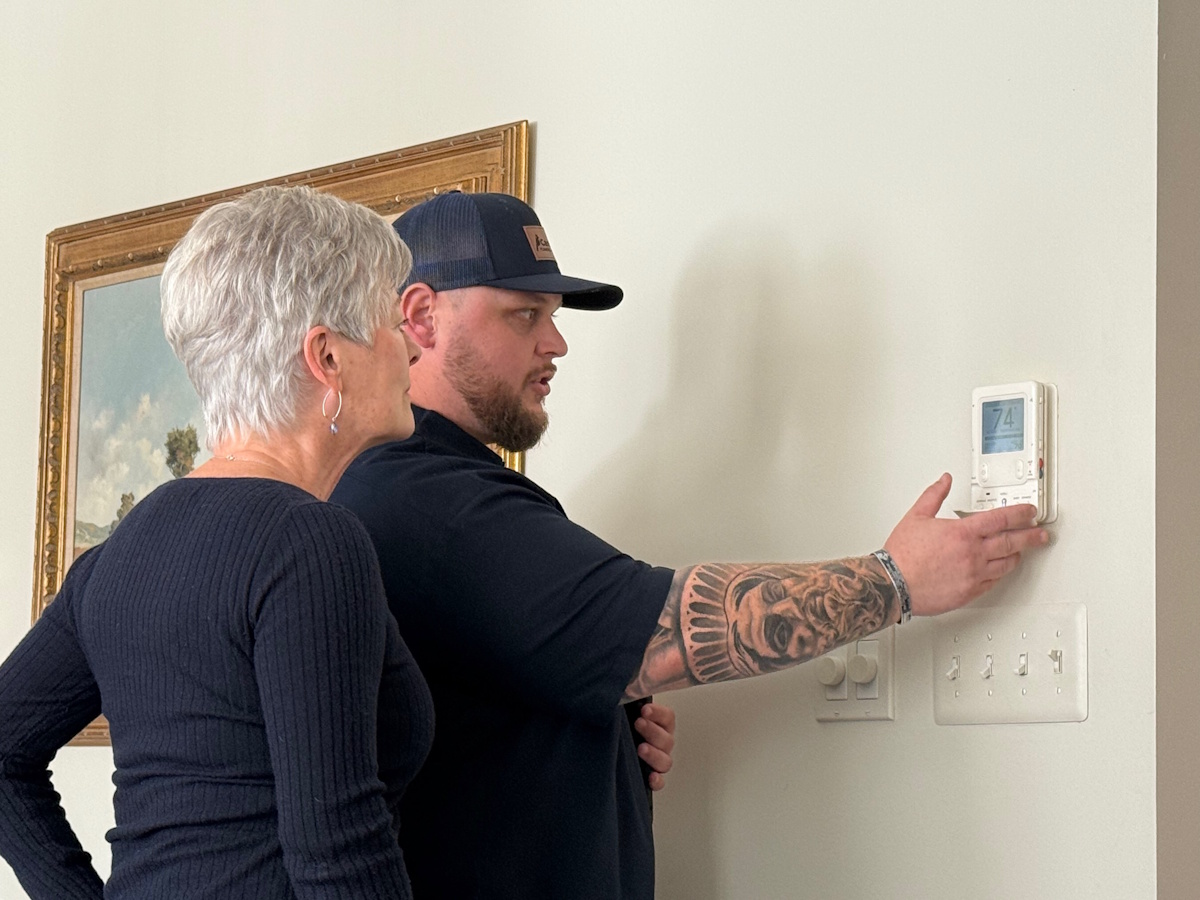
ENERGY SAVINGS: Cardinal Plumbing Heating & Air explains how older or out-of-date systems compound seasonal energy costs. (Courtesy of Cardinal Plumbing Heating & Air)
“We're seeing an ongoing commitment to energy efficiency, demand side management ... more of those programs in that category adding decarbonization and electrification goals to their program designs,” he said. “That more established, maybe sometimes more slower-moving segment of the industry, is slowly catching up.”
In Colorado, the statewide requirement prohibits the manufacturing, distribution, sale, or lease of new fan-type central furnaces or water heaters that don’t meet the new emission limits or Energy Star requirements.
“It’s already beginning to be a pattern,” said Todd Titus, director of state and public affairs for HARDI. “There’s a clear push for electrification from states, from [environmental non-governmental organizations], and other environmentally focused initiatives and implementers of those programs and technology.”
Increasing Incentives
One of the main trends to keep an eye on is the incentives and rebates states offer for switching away from natural gas. While the federal government has cut back on tax credits offered by the Inflation Reduction Act, states are creating their own incentive programs.
In Colorado, the Clean Heat Program aims to reduce greenhouse gas emissions, requiring gas utilities to cut emissions by 22% by 2030. It incentivizes transitioning to electric heating systems with significant rebates.
“It's been interesting to see what gas utilities are going to do. You know, electrification sort of doesn't fit too well with their services or their product,” Hatton said. “In some cases, they've increased the rebate size by 10 times because they received some additional state funding.”
Titus said HARDI is encouraging incentive programs at the state level versus outright bans. By doing so, states can move toward energy efficiency or environmental goals while still giving consumers the option of natural gas.
“You’re selling whatever the consumer wants. The consumer makes the choice at the end of the day,” he said. “That’s why we’re looking more at the carrot than the stick kind of initiative. We’re looking for incentives. We’re looking at ways to persuade, without force, the consumer into seeing what the transition to electrification looks like.”
Hatton encourages contractors to investigate what programs are available. While it depends on the state, he said, for every program dollar spent, there is $10 to $15 of economic benefit to the state through increased sales and increased employment.
“These programs are such a great business opportunity for contractors,” he said. “My advice when I'm talking to contractors is always dedicate time to find the programs that work for your business and really embrace those programs, engage, and understand the requirements.”
Legislation to Watch
Czarnecki laid out additional pieces of legislation contractors should keep an eye on:
- In Maryland, lawmakers have introduced SB 804 and HB 212, which would require certain new buildings and retrofits meet space and water heating demand without fossil fuels and adopt “electric and solar-ready” standards.
- In Massachusetts, S.2263 would create a Clean Heat Standard, requiring utilities to meet annual greenhouse gas reduction targets by paying into a statewide credit system or delivering approved “clean heat” upgrades, which would drive electrification.
- In New York, S.4158 requires the New York Public Service Commission to align gas system planning with the state’s climate law and limit policies that encourage expansion of the state’s gas distribution system. This would change incentives and approvals in New York away from natural gas and toward electrification and decarbonization.
Continued Resistance
Though legislative efforts march on, members of the HVAC industry, along with consumers and utility companies, will continue to push back against electrification efforts that inhibit the market.
ACCA said such laws can limit contractors' ability to offer customers multiple options and increase upfront costs for installing all-electric systems.
“In many cases, homeowners are being pushed or even forced to adopt technologies that they may not want or might not be appropriate for their needs, budget, or regional climate conditions,” Czarnecki said.
He said that 26 states have enacted statewide fuel and energy choice laws that preempt localities from restricting access to natural gas and other fuel sources.
The South Coast Air Quality Management District in California proposed amendments to its existing rules, PAR 1111 and 1121, to achieve zero-emission standards for natural-gas-fired, fan-type central furnaces and residential water heaters. It went to the governance board in June 2025 and was rejected.
In Washington, voters approved of ballot initiative I-2066 in the November 2024 election, which prohibits state and local government from restricting access to natural gas. The initiative is under review by the Washington Supreme Court due to a ballot technicality.
Not all resistance calls for the outright rejection of legislation. For instance, Titus said HARDI worked to have the Colorado ultra-low NOx law clarified. Distributors and manufacturers would effectively lose a large portion of their wares since the law didn’t address equipment shipments.
“If there’s a distributor that has a large facility that they use as a central hub to go to the east to west coast, or to another state, they need to know they can still use that as the transportation location. Otherwise, Colorado just lost a major business,” he said.
Hatton said utility-delivered programs face the dilemma of whether to move toward electrification or increase efficiency. He said the cost-effectiveness of electrification is going to remain a gray area and vary from state to state.
“There's still some utilities out there that long for the days of less regulation, and they want to build more power plants and just sell more electricity, sell more gas,” he said. “I think over time, you've seen fewer utilities really hold to that old business model way of thinking.”
While legislative efforts may seem like they’re hampering the HVAC industry, Czarnecki said contractors will remain resilient and adapt to policy changes.
“Many contractors have already invested in training and staffing to service and install a broader range of equipment that complies with electrification and decarbonization mandates,” Czarnecki said. “This includes, but is not limited to, heat pumps, heat pump water heaters, geothermal systems, and solar-enabled technologies.”
Federal vs. State Law
In general, when two policies contradict, the more restrictive policy is implemented. Such is the case for federal laws and regulations versus state-level laws.
That doesn’t mean there aren’t conflicts. The U.S. filed a lawsuit in federal district court on Jan. 5, 2026, asking to have natural gas building codes in two California cities declared preempted by the Energy and Policy Conservation Act, a federal law.
The city codes, adopted in 2019 in Morgan Hill and 2021 in Petaluma, prevent the use of natural gas in new construction in most cases and establish electrification requirements.
According to the complaint, “There is no set of circumstances under which Morgan Hill’s and Petaluma’s natural gas ban would be valid under federal law. The bans’ limited exceptions do not save them from preemption.”
If successful, the lawsuit could become a precedent as states look to regulate or otherwise ban the use of natural gas through energy regulations.
Looking for a reprint of this article?
From high-res PDFs to custom plaques, order your copy today!