FROSTlines
How the Refrigerant Transition Will Impact Grocers
Food retailers grapple with challenges posed by evolving regulations

The refrigerant transition dominated many discussions at the Food Marketing Institute’s (FMI’s) 2024 Energy & Store Development Conference in Baltimore, Maryland. As food retailers grapple with the challenges posed by evolving regulations, the AIM Act was a recurring theme, with many sessions addressing its impact on the industry.
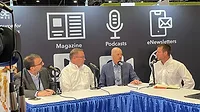
During a regulatory update session, Stephanie Harris, chief regulatory officer and general counsel at FMI, and Timothy Anderson, director of regulatory strategy at Hussmann Corp., provided an overview of the shifting regulatory landscape. They highlighted key federal and state policies reshaping the food retail industry, including the refrigerant regulations under the AIM Act. These policies require food retailers to not only navigate a complex array of compliance deadlines, but to adopt new refrigeration technologies that use low-GWP alternatives, such as mildly flammable (A2L) and natural refrigerants.
Technology Transitions
In this session, Harris addressed subsection (i) of the AIM Act, entitled “Technology Transitions,” which provides the Environmental Protection Agency (EPA) with the authority to restrict the use of regulated HFCs in sectors or subsectors where they are used. Over the past few years, she said FMI worked closely with its members to assess the rule’s practical impact on operations. To help shape the final regulation, FMI met with the EPA multiple times and submitted comments outlining why certain aspects of the rule were problematic.
“We actually commissioned an economist to walk through all of that work to truly demonstrate the costs associated with some of the proposals and the timeline that they were looking at,” said Harris. “When the final rule was released, we quickly realized that the timeframes for HVAC and the supermarket systems were not sufficient for the industry to adopt alternatives, given a variety of challenges in the supply of substitutes, unique geographic challenges of adopting some of those substitutes, and other issues such as building code inaction.”
As a result, FMI, along with several other trade associations, filed a lawsuit challenging the EPA's regulation. Harris explained that the lawsuit argued that EPA's timeline violated the AIM Act and was arbitrary and capricious, meaning the agency failed to adequately consider key factors when developing the timelines.
“We didn't challenge the substance of that regulation — we really just focused on the need for adequate time for companies to be able to come into compliance,” she said. “The case has now been fully briefed, and the DC Circuit Court of Appeals held their oral argument on September 12, 2024. These are hard cases to win, but we're hopeful that the court realizes the practical challenges associated with meeting these deadlines, which for HVAC is 2025, and for supermarket systems, it's 2026 or 2027.” She added that the decision is expected to be made around March 2025.
No Preemption
Anderson explained that under the AIM Act, there is no federal preemption of state laws or rules, which means individual states can pass more stringent HFC regulations than those outlined in the AIM Act. He pointed to California, Washington, and New York as examples of states that have adopted stricter refrigerant regulations.
Looking for quick answers on air conditioning, heating and refrigeration topics? Try Ask ACHR NEWS, our new smart AI search tool. Ask ACHR NEWS
In California, for example, regulations for new commercial refrigeration systems with more than 50 pounds of refrigerant require using refrigerants with a GWP below 150. Starting in 2025, California will ban the sale of virgin high-GWP HFCs like R-404A and R-507A, with additional bans on other virgin refrigerants, including R-407A by 2030 and R-448A by 2033.
“In California, you also have to reduce the weighted average GWP of all of your fleet of stores below a certain level by 2030,” said Anderson.
Washington State will enforce similar rules for new commercial refrigeration systems over 50 pounds of refrigerant starting in January 2025, he said, including less than 150 GWP refrigerants and a refrigerant management program. However, unlike California, there is no GWP requirement for existing systems.
In New York State, the proposed rules would require new commercial refrigeration systems to use refrigerants under 150 to 300 GWP starting in 2025, and after that, it is more of a wild card, said Anderson.
“They proposed that in 2034, any new system would have to be less than 10 GWP. At that point, the only thing that's available are natural refrigerants like CO2 or R-290, or maybe pure HFOs. This will be the most stringent HFC regulation in the country, if it comes to be. We don't know what's going to happen with this rule.”
Choices, Choices
The AIM Act does not mandate specific low-GWP refrigerants, allowing flexibility for end users to choose solutions that best fit their needs. For commercial refrigeration systems, current low-GWP options include CO2, propane (R-290), A2Ls (<300 GWP), and certain A1 refrigerants (<300 GWP), said Anderson.

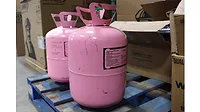
REFRIGERANT CHOICE: Food retailers are trying to figure out which low-GWP refrigerants they should use in their refrigeration systems. (Staff photo)
“You hear a whole lot about CO2, of course, because it's a non-flammable refrigerant and there's no charge limit,” he said. “So if you want to use a centralized rack with CO2, no problem. It does require a lot of electronics, sensors, electronic valves, and controllers. And of course, it's challenging to use in hot climates — you've got to apply some additional technology to try and get the energy efficiency there.”
Propane (R-290) is an increasingly attractive low-GWP refrigerant option, especially since EPA’s SNAP Rule 26 raised the maximum charge size from 150 grams per individual circuit up to 304 or 494 grams, depending on the type of equipment. Closed systems, such as frozen reach-in cases with doors, are limited to 304 grams, while open cases, like multi-deck units for dairy or meat, can use up to 494 grams. “That's helpful, because it will help increase the energy efficiency of the equipment, reduce the number of compressors, and reduce the first cost of the equipment,” said Anderson.
Examples of A2L refrigerants with a GWP below 300 include R-454C and R-1234yf. These refrigerants are also subject to charge limits, with maximum releasable charges per individual circuit typically ranging from 165 to 200 pounds. While the standards for these mildly flammable refrigerants are largely in place, building codes remain uncertain, particularly in "home rule" states without statewide codes, said Anderson.
“A2Ls are a little bit challenging with respect to the codes in certain applications,” he said. “If you want to do an A2L project, make sure you get the authority having jurisdiction on board early on. Make sure they are willing to work with you on that.”
Finally, there are non-flammable HFC-HFO blends with less than 300 GWP, such as R-515B.
“This is not a silver bullet,” said Anderson. “It's very low capacity, so you need a lot more compressor displacement than you would with a typical refrigerant today like R-448A or R-449A. It's really only suited to medium-temperature applications, because its normal boiling point is too high to use for low temp. It's good potentially for use on the high side of a CO2 cascade system.”
All of this may seem a little overwhelming, which is why Anderson recommends that when it comes to managing the new refrigerant regulations, food retailers follow the four Rs: reduce GWP, reduce the charge size, reduce leaks, and reach out.
On reducing GWP, Anderson says this means moving to new <300 GWP equipment as soon as it's practical — although there is not a lot of time, as the AIM Act’s deadline is 2027. He noted that if existing equipment still has a reasonable remaining lifespan, consider retrofitting it to use the lowest GWP A1 refrigerant available. For example, in systems currently using R-404A, replace that with nonflammable, lower-GWP options such as R-448A or R-449A. He said that any recovered R-404A can be banked for future servicing of other systems still using that refrigerant.
“Second, reduce the charge size,” said Anderson. “If you have new systems, try to design them with smaller charges. Move the racks closer to the loads. Consider distributed systems rather than centralized systems, etc. The less refrigerant you have, the fewer headaches you'll have down the road.”
Third, reduce leaks by using best practices, said Anderson.
“Consider automatic leak detection systems where it makes sense. And the last recommendation is to reach out to your trusted OEM partners and talk to them in more detail about what your options are. None of these is the perfect option. If somebody tells you that one of those is perfect for you, they're probably not telling you the truth. They all have trade-offs. Talk to your OEM and understand what those trade-offs are, and find the solution that works best for you.”
Looking for a reprint of this article?
From high-res PDFs to custom plaques, order your copy today!