Grocers Share Concerns Over Alternative Refrigerants
Food retailers cite problems with CO₂ and other low-GWP refrigeration systems
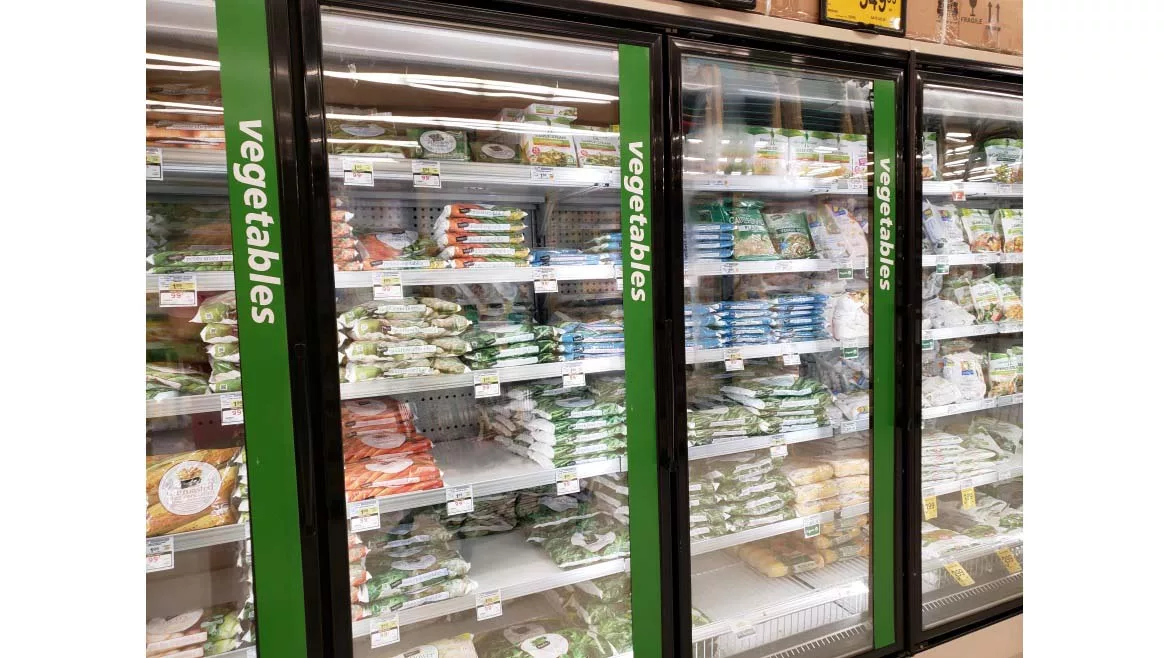
At one of the more provocative sessions at the Food Marketing Institute’s (FMI’s) 2023 Energy & Store Development Conference (video below), which was recently held in Baltimore, Maryland, food retailers discussed their disappointing experiences with refrigeration systems that utilize alternative refrigerants. With CO2 systems, in particular, they cited problems with refrigerant leaks, as well poorly designed systems that often did not perform as well as they were led to believe. In fact, one speaker pointed out that in certain regions of the U.S., HFC systems had an annual energy performance advantage over CO2 systems, ranging from 16% to 25%.
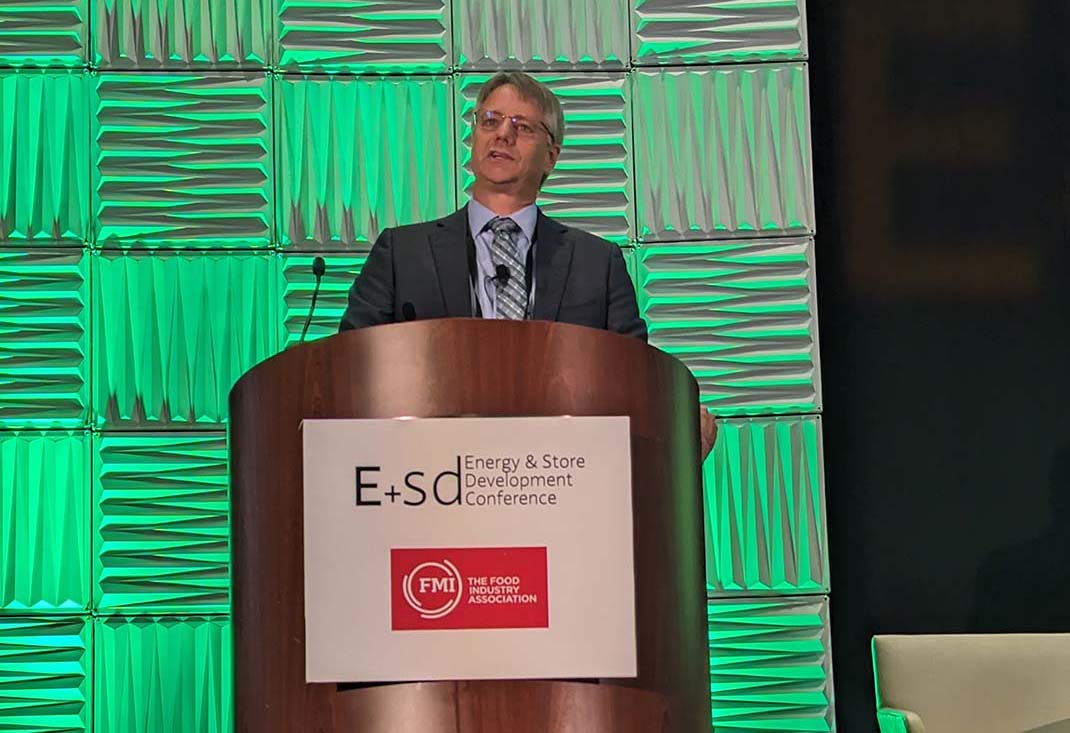
MORE TIME: H-E-B’s Paul Anderson said the industry needs more time to develop reliable refrigeration solutions. (Staff photo)
That is significant, and it is one of the reasons why food retailers are concerned about the transition to alternative refrigerants. As Paul Anderson, group vice president of design and engineering at H-E-B, noted, “Due to the pandemic, ongoing supply issues, an increase in demand for refrigeration systems, loss of quality control across our entire industry, and technician shortages, there has been a significant burden placed on this industry, which delayed the development of new alternative solutions that meet the EPA's proposed rule. The industry needs more time to develop real solutions that enable a smoother transition for the entire food retail industry.”
Low-GWP Options
That said, Anderson was clear that many food retailers, as well as FMI, support EPA's efforts to reduce the GWP of refrigerants, adding that the food retail industry has been working proactively to design, manufacture, test, and operate environmentally friendly systems for a very long time.
“But it sure would be nice to find real solutions, avoid all unintended consequences, and solve this problem once and for all, so we can allocate resources to other innovative initiatives,” he said. “As an industry, we've been working on eliminating bad refrigerants since the 1970s. And wouldn't it be great if this was the last time we had to retrofit a refrigeration system? I don't know about you, but I think we need to work together to find a solution that eliminates the need for future retrofits.”
Some of the less-than-300 GWP refrigerants that can potentially be utilized in low- and medium-temperature refrigeration systems include A1 refrigerants, R-471A and R-515B; mildly flammable (A2) refrigerants, R-1234yf, R-1234ze, R-455A, R-454C, and R-454A; and the so-called natural refrigerants, R-290 (propane), R-722 (CO2) and R-717 (ammonia). Nick Doherty, PE, associate principal at Cushing Terrell in Missoula, Montana, offered the pros and cons for each group of alternatives.
“For the A1 refrigerants, unfortunately, there is not enough information, which is making it very difficult to obtain data associated with an operational system,” he said. “However, these refrigerants cannot be used as a drop in; therefore, you cannot reuse an existing system — it has to be changed out to a completely new refrigeration system. Also due to the lower capacities of these A1 refrigerants, the size of the equipment will most likely increase from what is available today.”
When it comes to A2L refrigerants, Doherty pointed out that their flammability will delay their adoption into building codes, consequently delaying their availability in commercial refrigeration equipment. It will also require time for the authorities having jurisdiction to understand the changes and incorporate or amend their local codes. He added that A2L refrigerants are widely available in other countries and that their adoption in North America will likely gain traction.
Looking for quick answers on air conditioning, heating and refrigeration topics? Try Ask ACHR NEWS, our new smart AI search tool. Ask ACHR NEWS
These systems show promise, said Doherty, citing as an example the United Kingdom grocer, Asda, which recently replaced a 12-year-old CO2 transcritical system with a new system containing the A2L refrigerant, R-454A, which has a GWP of 238. This was higher than the CO2 system it was replacing; however, store management believed the annual energy would offset the total environmental impact and decrease the cost of operation.
“The system was installed in 2021, and in 2022, Asda released the report showing that the A2L refrigerants use significantly less energy and that there was an overall reduction in CO2 emissions compared to the existing transcritical CO2 system that it replaced,” said Doherty. Indeed, he shared that since Asda replaced its CO2 system, they experienced an energy savings of 34%, which translates into annual energy savings of about $51,000.
As for natural refrigerants, such as CO2, propane, and ammonia, there are many different types of equipment available. With CO2 systems, there are concerns over the increased energy usage in warmer climates, the use of other natural resources such as water, and the need for more qualified and experienced technicians due to increased pressure and required specialized technology, said Doherty.
Addressing water usage, Anderson shared that he studied the actual amount of water required to keep transcritical CO2 systems operating in his stores, and it came out to approximately 600,000 gallons of water per store per year. He had not anticipated that it would be such a significant amount.
“For R-290 or propane, due to its flammability, there are factors such as charge limitations that create capacity limitations of the equipment,” said Doherty. “However, there are studies that indicate that standalone propane units show improved efficiencies when compared with their replacements.”
Ammonia has a GWP of zero and has shown increased energy efficiencies in systems; however, due to its toxicity, there are only a handful of commercial refrigeration systems within the United States, said Doherty.
Group vice president of design and engineering
H-E-B
Operational Challenges
Shawn Holzschuh, director of refrigeration at Target Corp., offered his first-hand knowledge of the operational challenges that can occur with refrigeration systems containing CO2. One of those challenges concerns power, which is not unique to CO2 systems, as loss of power or dirty power can impact all systems; however, with CO2, power failures often result in total loss of refrigerant, which increases overall emission rates, he said.
“We are looking at combating this challenge in two ways,” said Holzschuh. “Ideally, we would install full store generators; however, due to the cost, this is not always a viable option. Therefore, we're evaluating split power for systems. This allows us to maintain full control of critical equipment, while holding temperature on strategic cases. In addition to primary power, we see opportunities associated with providing a clean, uninterrupted 24-V power system to our controls through a standardized monitored UPS system. The more we can maintain proper operation of controllers, the more stable the operation, which is critical to the long-term management of CO2 systems.”
With respect to maintenance, high-pressure CO2 systems require a more targeted focus on sequence of operations, sensitivity and accuracy of sensors, and maintenance and repair of piping, whether its ferrous copper or stainless steel, said Holzschuh. Stainless steel requires specialty welding, whereas ferrous copper is more brittle and susceptible to cracking, putting an increased strain on technicians, he said.
“Technicians must be aware of the pressure in CO2 systems and what happens if it releases,” said Holzschuh. “They need to understand control sequences to manage rising pressures. They also need to be a master of multiple controllers, and they need to understand how to communicate with various manufacturers’ hardware, all while having a work order load that continues to grow. This creates challenges for service providers who are already navigating shortages of qualified technicians. How do we help these technicians get the skills they need? Through training. However, our experience is that training must happen more frequently than it has in the past. Also required is training of the store maintenance engineers, store team members, and headquarter partners, so that we can all have a deeper understanding of CO2 systems.”
Anderson added that the reliability of some of the new technologies leaves much to be desired, leading retailers to experience an alarming rate of catastrophic failures, resulting in unnecessary food loss.
“Compliance systems are also substantially more costly than traditional systems,” he said. “In fact, a recent study sponsored by FMI estimated an incremental capital cost will range between $1 million and $2 million for each project, and many stores will experience higher energy and refrigerant cost under the proposed rule. We need to spend time and resources training and developing the technicians who install and service these systems. They are our future, and we need to invest in them.”
Looking for a reprint of this article?
From high-res PDFs to custom plaques, order your copy today!