A look at how the HVACR industry came together during the 1940s — highlighting the companies, technologies, and people who helped power a global effort that aided us in ultimately winning the war.
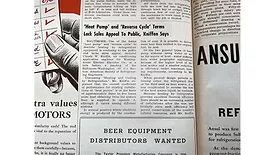
“Use of the terms ‘heat pump’ and ‘reverse cycle’ to describe heating by refrigeration equipment is confusing to the public and lacks sales appeal,” said Claude W. Kniffin, air conditioning application engineer for Westinghouse Electric Elevator Co., during a talk before the 1945 Baltimore-Washington Section of the American Society of Refrigerating Engineers.
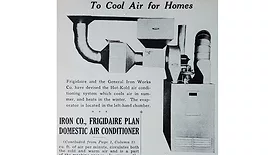
The Hot-Kold was the result of a partnership between the refrigeration company Frigidaire and General Iron Works, which made furnaces. Unaffordable for most people during the Great Depression, it didn’t last long.
Anecdotes from the era tell of paper that warped, ink that smudged and people who nearly passed out because of stifling heat at the Capitol. The arrival of central a/c changed all that.
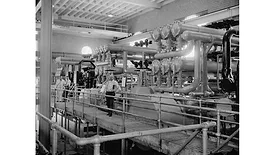
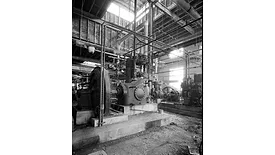
By 1926, ammonia dominated industrial refrigeration. Natural refrigerants enabled the global cold chain and continued driving innovations needed to feed a growing world.
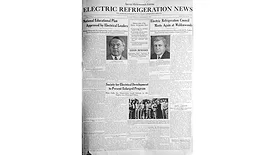
Celebrating 100 years, The ACHR NEWS looks back to its 1926 debut issue, which introduced electric refrigeration as an emerging technology that some viewed with suspicion
 RSS
RSS