1950s: Heat Pump Growth Shapes Today’s HVAC Market
Heat pump shipments rose from 958 to 3,550 in two years
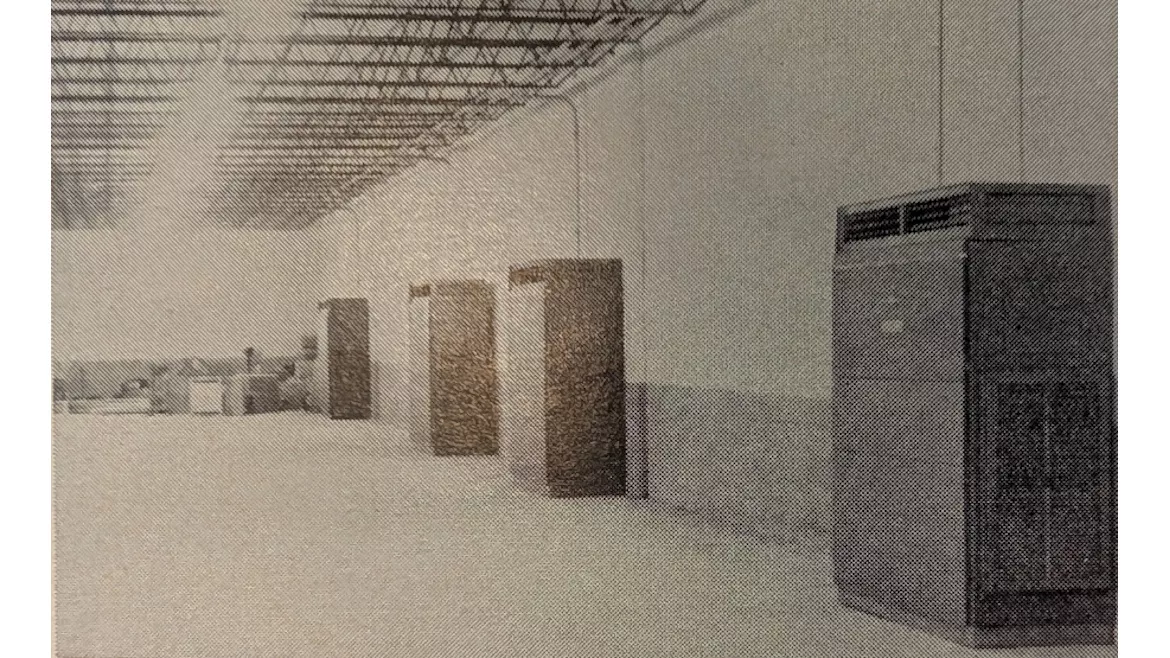
HEAT PUMP SUCCESS: In 1954, the Virginia Shoe Co. in Fredericksburg, Virginia, used 17 heat pumps for cooling and heating in an all-electric plant.
Heat pumps are among the most popular pieces of equipment today, outselling warm air furnaces and narrowing the gap with a/c shipments in recent years. But they took quite the journey to make it to this point.
Looking back at ACHR NEWS archives, several editions of the Air Conditioning & Refrigeration News show heat pumps gaining broader traction in the 1950s, thanks to equipment innovations and educational efforts by both manufacturers and utility companies.
In 1947, the Philadelphia Electric Co. teamed up with a/c manufacturers to obtain first-hand information on heat pumps to support commercial development. Heat sources considered for the units included the earth, water, and air.
At the time, water was considered unsuitable due to limited availability, while cold temperatures delayed any testing in the winter. Even so, air was determined to be the most favorable external source, though difficulties persisted.
“For heating minimum winter temperatures, the capacity would have to be doubled, either by increasing the size, or, as in the case of some packaged heat pump units, by supplementing it with … resistance heaters which automatically cut in or out as required,” reads an article about the study from Feb. 2, 1957.
In 1953, the Census Bureau collected statistics for manufacturers’ shipments of heat pumps for the first time, according to an article from Aug. 2, 1954. In 1953, manufacturers shipped 986 heat pumps valued at $1.61 million ($19.93 million in 2026, adjusted for inflation).
Contentions with Heat Pumps
In the 1950s, the HVAC industry had to overcome several factors to see widespread adoption, many of which sound familiar, even in today’s market.
Looking for quick answers on air conditioning, heating and refrigeration topics? Try Ask ACHR NEWS, our new smart AI search tool. Ask ACHR NEWS
In a multi-part series by K. D. Cunningham of Acme Industries in Jackson, Michigan, he discussed refrigeration-cycle technology being used to heat various types of buildings in colder-climate states like Michigan, Wisconsin, and Washington, where winter design conditions were -30°F. This aimed to show that pumps were viable even in the northern half of the country.
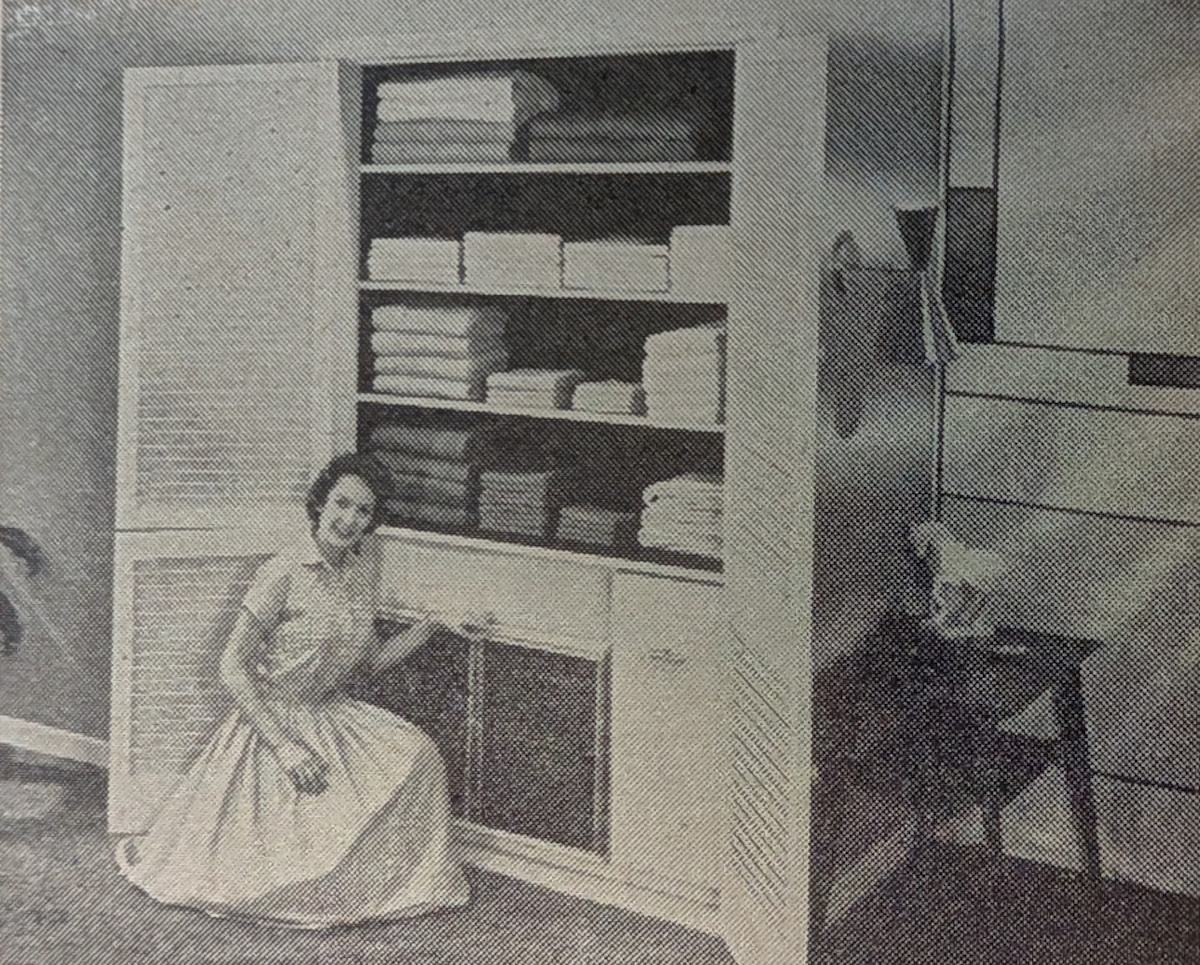
COMPACT SIZING: General Electric debuted a smaller “Weatherman” heat pump at the 1957 Home Builders Show, displayed here in a linen closet to promote its small size. (Staff photo)
There was also the issue of noise. An article about a heat pump dubbed the “Florida Climate King” from 1954 discusses the 2-hp and 3-hp models having a built-in “Noise Silencer.” This brought the level of noise down to what the article described as “that of the latest refrigerators on the market.”
In the Jan. 21, 1957, edition, H.M. Brundage, then-general manager of Weathertron Dept., General Electric Co., highlighted how manufacturers alone couldn’t undertake the job of educating suppliers, architects, engineers, and the public about the central plant heat pump for air conditioning.
He also pointed toward utilities favoring gas, which would hinder adoption. This dynamic differs from today’s electrification-focused policy discussions.
“Almost without exception, combination companies either directly lean to, promote, and advertise the gas business at the expense of the electric approach or are neutral, which is the same as being against it in the first place,” Brundage said. “The gimmick of all-electric is still the strongest element in selling heat pumps today.”
He also listed multiple factors that determined whether utilities would back heat pumps, including load factor, power rates, seasonal peaks, and demand.
“The problem is magnified by the fact that distributors and dealers currently handling local problems of selling and installing central plant heat pumps have no historical affiliation with electric utilities,” he said.
He noted the difference in heating and cooling costs between the north and the south. In southern regions, cooling costs were equal for conventional gas-electric and heat pumps at $200, but heating costs for heat pumps were significantly lower than combustion equipment costs. The opposite occurred in the north, where cooling was $50 a year, gas heating was $200, and heat pumps were $400.
Promoting the Future
Successful applications helped pave the way for acceptance. In the Sept. 13, 1954, edition, The Virginia Shoe Co. in Fredericksburg, Virginia, provided automatic heating and cooling in what was called the world's first truly all-electric factory. It used 17 five-ton units, each with its own thermostatic controls, to keep its 300 employees comfortable.
The local utility company estimated savings of $2,500 ($31,065 in 2026), a 30% advantage over conventional fuel-fired systems.
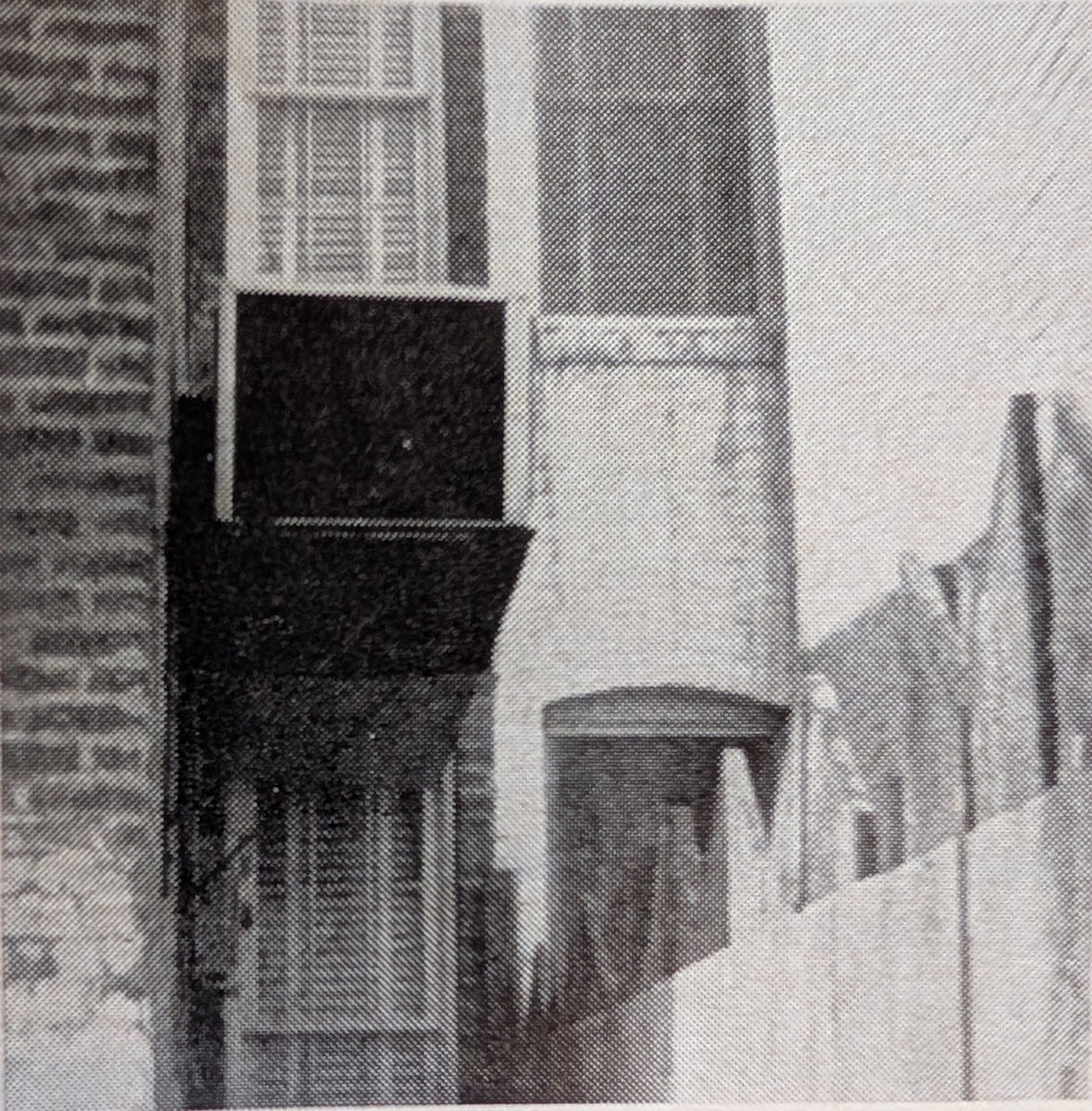
D.C. HEAT PUMP BOOM: Brenner & Arey Enterprises Inc. installed 24 heat pumps in and around Washington, D.C., in the summer of 1956, reportedly doubling the number of units in the region. (Staff photo)
In the July 19, 1954, edition, an article highlights a Westinghouse heat pump that was installed in a “Home of Ideas” in Columbus, Ohio, touting the all-electric, fully automatic 3-h.p. unit depending “solely upon air for its operation.” It cost $2,300 ($28,473) for the model, which was 6 feet high and weighed 1,400 pounds.
The Nov. 22, 1954, edition highlighted efforts to have the electric utility industry “energetically promote” the heat pump to stimulate public acceptance of the equipment.
“Those utilities who are most aggressively promoting the heat pump have realized that while the specific parts of the heat pump are not new, the operating characteristics and application requirements for the unit are new,” said M.S. Angier, then-heat pump product manager of Westinghouse Electric Corp.
Angier noted that the market development of the electric range, water heater, and refrigerator all skyrocketed when utilities aggressively promoted the appliances and aimed to do the same for heat pumps.
According to the Census Data reported by Air Conditioning & Refrigeration News, in 1954, manufacturers shipped 1,900 heat pumps. By 1955, that number was 3,551.
As of Dec. 31, 1955, there were over 8,000 central heat pumps installed, both residential and commercial. Of them, 3,077 were water source, and 4,931 were air source.
In a 1957 article, Brenner & Arey Enterprises Inc. bragged about installing 24 heat pumps in and about Washington, D.C., the previous summer. This nearly doubled the number of heat pumps previously installed in the area.
Heat pump advancements continued. General Electric debuted a “Weatherman” heat pump at the 1957 Home Builders Show that was 50% smaller in size and one-third less in weight than previous models. It also had 32% more cooling efficiency and 17% more heating efficiency.
By Jan. 21, 1957, Thomas R. Kroeschell, then an executive with the Commonwealth Edison Co. in Chicago, pointed to four factors heat pumps had over other heating and air conditioning: economy of installation; compact installation; layout flexibility; and single utility usage for homes.
“The future of the heat pump seems bright,” said Kroeschell. “Both industry and the residential user should derive great benefits from the development of this device.”
Looking for a reprint of this article?
From high-res PDFs to custom plaques, order your copy today!