AHRI Data Shows Heat Pumps Drove Growth in March 2026
Demand for heat pumps rose nearly 10% while furnaces remain volatile

Shipments of cooling HVAC technology are on the rebound in March 2026, while furnaces remain volatile and water heaters decline.
Broader nationwide adoption of heat pumps drove growth in the Air-Conditioning, Heating, & Refrigeration Institute’s March 2026 shipment report, though oil furnaces also saw a massive spike compared to March 2025.
The numbers reflect broader trends seen over the years, with heat pumps consistently growing since the 2020s while both furnaces and water heaters have experienced significant swings due to policy changes and pushes toward electrification.
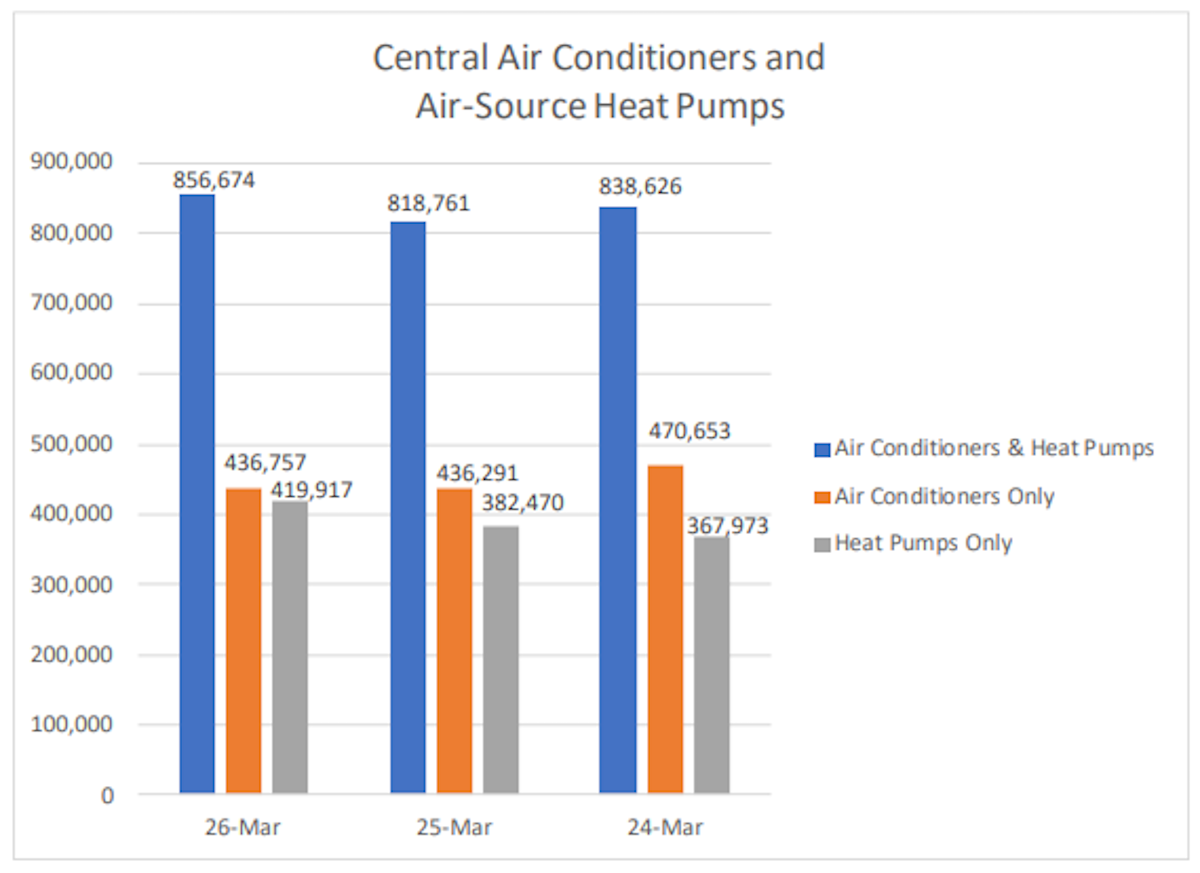
MARCH 2026 A/C AND HEAT PUMPS: Heat pump shipments rose nearly 10% from March 2025 to March 2026, while a/c shipments remained stagnant. (Courtesy of AHRI)
Air Conditioners and Heat Pumps
Shipments of a/c units and heat pumps improved in March 2026 compared to the same time last year. While a/c shipments saw incremental increases, heat pumps drove nearly all the year-over-year growth.
The slowdown in a/cs doesn’t necessarily indicate long-term reductions in demand. Distributors and contractors may still be working through inventory and adjusting in a post-refrigerant-transition market.
Heat pumps again outsold combined warm-air furnaces in March, indicating that contractors investing in heat pump training and dual-fuel sales are on the right track.
Here’s how March 2026 shipment data compared to the same time last year:
Looking for quick answers on air conditioning, heating and refrigeration topics? Try Ask ACHR NEWS, our new smart AI search tool. Ask ACHR NEWS
- Air conditioners and heat pumps: 856,674, up 4.6% from 818,761
- Air conditioners only: 436,757, up 0.1% from 436,291
- Heat pumps only 419,917, up 9.8% from 382,470
Even with shipping numbers bolstered by heat pumps, the year-to-date totals for 2026 have mostly declined from 2025’s totals:
- Air conditioner units and air-source heat pumps: 1.9 million, down 6.8% from 2.08 million
- Air conditioners only: 975,764, down 13.4% from 1.13 million
- Heat pumps only: 960,570, up 0.9% from 951,774
Warm-Air Furnaces
Gas furnaces saw a sharp decline last March, while oil furnaces had big gains, though their volumes still pale in comparison to gas units.
- Gas warm-air furnaces: 252,982 units, a 15.3% decrease from 298,639
- Oil warm-air furnaces: 2,863 units, up by 37.5% from 2,082
When compared to March 2025 year-over-year totals, March 2026 saw mixed results:
- Gas warm-air furnaces: 715,518, down 13.7% from 829,424 units
- Oil warm-air furnaces: 8,442, up 6.5% from 7,924 units
It’s difficult to pinpoint this slowing demand for more traditional heating methods. Factors from a frontloaded 2025 to the growing interest in hybrid and heat pump heating all play a role.
Residential Storage Water Heaters
Gas and electric water heater shipments decreased from March 2025 to March 2026. Of the two, electric units declined more than gas:
- Residential gas storage water heaters: 410,647 units, down 2.9% from 422,815
- Residential electric storage water heaters: 466,223 units, down 5.7% from 494,206
Despite electric water heaters seeing larger declines, they have been the go-to unit in the post-pandemic years, mirroring the industry’s shift toward electrification.
Overall, both categories saw year-to-date declines compared to March 2025:
- Residential gas storage water heaters: 1.08 million units, down 7.7% from 1.17 million
- Residential electric storage water heaters:1.22 million, down 7% from 1.31 million
Quarterly Results
Carrier said in its Q1 2026 earnings report that residential sales were down 12%, which was driven by unit volume from distributors to dealers, which was down 8%. Field inventories were down 35% year over year. The type of work completed by contractors has also shifted in response to the housing market.
“There is clearly pent-up demand both at a housing level — there's 4 million too few homes in the United States — and for HVAC replacements, because there was probably a bit of repair over replace last year,” said CEO Dave Gitlin.
Meanwhile, revenue for Lennox’s Home Comfort Solutions was down 10%, and organic volumes dropped 21%, though it’s better than the 32% drop in 2025. CEO Alok Maskara also touched on repair versus replace, saying this seems to be evening out as the refrigerant transition continues.
“Last year, we were hearing a lot more hesitancy, even within our contractors, to recommend replacement versus repair. They were short on [refrigerant] canisters, and they were not fully trained on R-454B,” he said. “Now the contractors are more confident, and consumers are going back to making the economic decision, which is not repairing a 10- or 12-year-old system, but replacing it.”
Overall Trends
Looking back at AHRI’s March data going as far back as 2010, the shipments continue to tell the tale of how state and federal regulations are impacting the market more than the weather. As noted in last month’s report, shipments from 2010 to 2016 appear to track more closely with weather patterns, housing activity, and replacement cycles.
From the onset of the COVID pandemic in 2020 onwards, major developments like refrigerant transitions, supply chain shortages, energy credits from policies like the Inflation Reduction Act, and increased interest in efficiency and decarbonization have stronger influences than the weather.
The Trump administration has taken steps to support natural gas as an option for homeowners. It recently backed trade associations asking to strike down a Biden-era ruling affecting gas-powered water heaters and furnaces. The Department of Housing and Urban Development and the Department of Agriculture are also rescinding a Biden-era policy affecting housing affordability and the types of HVAC installed in homes.
As such, contractors need to pay attention to the latest legislation affecting their markets. They must also keep good relations with their distributors to improve the management of inventory, thereby lessening the impact of price increases.
Looking for a reprint of this article?
From high-res PDFs to custom plaques, order your copy today!