Report Shows Heat Pumps Viable in Commercial and Industrial Markets
Heat pumps can provide efficiency, but complexities may hinder adoption
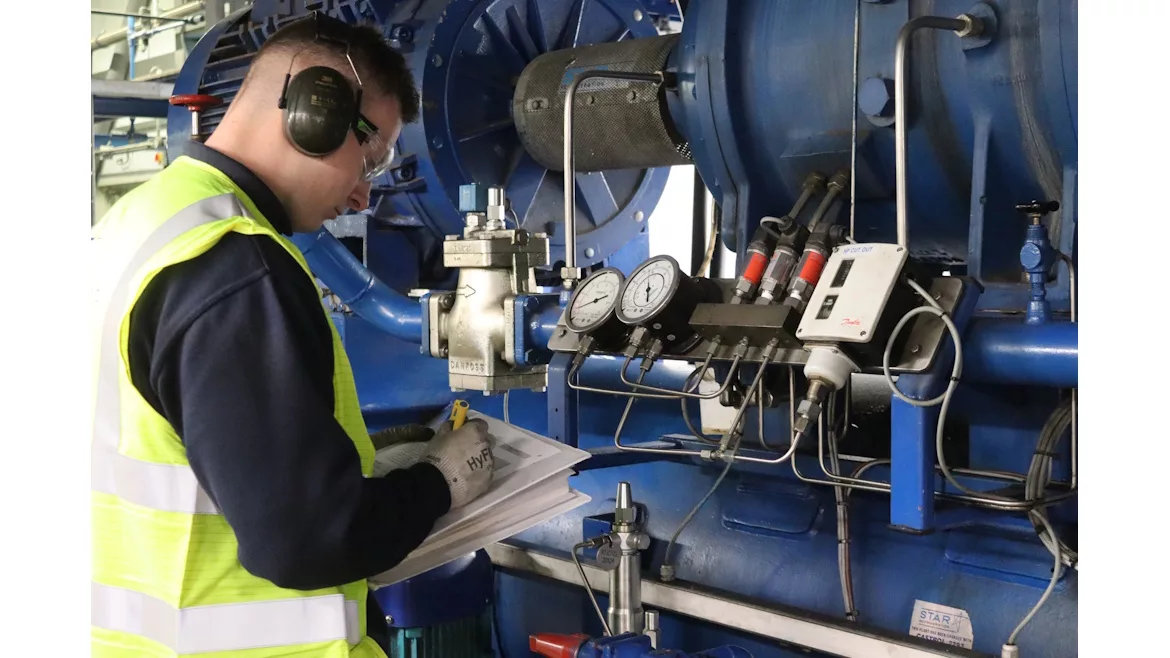
HEAT PUMP APPLICATIONS: A report from the Oil and Gas Climate Initiative indicates there are opportunities for contractors to enter the commercial and industrial heat pump market.
Heat pumps are often associated with moves toward residential electrification, but a new study shows they may be beneficial for light commercial and industrial retrofits.
A report from the Oil and Gas Climate Initiative states that heat pumps can be applied to oil and gas upstream and downstream operations, delivering from two to four times more efficiency than fossil fuel systems.
“The report aims to help companies identify where heat pump technologies can deliver efficiency gains and emissions reductions across their operations, in support of OGCI’s strategic focus on solutions to help decarbonize society,” the OGCI said in a press release.
Heat pumps transfer heat from lower-temperature sources to higher-temperature applications using electrical energy. As such, they convert waste heat into a usable resource, thereby increasing overall system efficiency and reducing the need for additional energy input.
The OGCI used real-world examples to support its findings, including offshore heating, crude stabilization processes, and operations in remote or unconventional fields. A variety of systems were examined as well, from mechanical vapor compression to hybrid configurations.
According to the report, high-lift heat pumps beyond 212°F of lift remain small-scale and economically unattractive against larger, lower lift applications. An exception is steam production, where post-heat pump compression can be cheaply employed.
“Utilization of water and steam as the working fluid in a closed loop, where appropriate, was shown to produce an economic advantage via decreased [capital expenditure] due to cheaper compression technology,” the report said.
Looking for quick answers on air conditioning, heating and refrigeration topics? Try Ask ACHR NEWS, our new smart AI search tool. Ask ACHR NEWS
Applications for up to 446°F outlet temperature can be obtained with a mechanical vapor recompression system provided with a heat source of “sufficiently high temperature, such as column overheads,” according to the report.
The report concludes that heat pumps, by and large, outperform electrode boilers in most applications, opening the door for commercial and industrial use. These include offshore oil heating, onshore heavy oil recovery, de-ethanizer reboilers, and steam generation, among others.
“The heat pump shows strong economics for this application despite a high capital cost and mediocre COP due to the moderate lift required,” the report says. “By comparison, the electrode boiler is much cheaper, but results in a lower [net present value] and slightly lower [internal rate of return] over the project due to a much greater power consumption.”
Barrier to Entry
There are still barriers to overcome. High upfront costs and limited installer familiarity may hinder adoption, while infrastructure and electrical capacity constraints may further stifle widespread implementation.
The report goes out of its way to note that many applications require a custom process design, meaning projects will be highly engineered and process-specific.
Refrigerant transitions also play a role. The report indicates that a variety of refrigerants are needed for scaling heat pump adoption, so contractors will need to stay up to date on refrigerant regulations.
“A diverse range of refrigerants offers various options for heat pump applications, each with specific advantages and considerations regarding efficiency, environmental impact, and operational characteristics,” the report says.
Most heat pumps operate efficiently in low- to medium-temperature ranges below 212°F. Those that reach higher temperatures aren’t as widely deployed. As such, proper system sizing is crucial to obtain efficient operations.
Despite these challenges, the report highlights an opportunity for HVAC contractors looking to rise above the competition. Industrial heat demand is a large share of global energy use, and heat pumps could address this gap.
The report suggests areas where energy prices are high, and policies that offer strong support for heat pumps and electrification are prime markets for these applications.
“The top economic performers were large, mostly downstream, distillation columns that could be integrated with low or low-moderate lifts between overheads and reboilers,” the report said. “Upstream heating was shown to also have feasible economics and an attractive scale.”
Looking for a reprint of this article?
From high-res PDFs to custom plaques, order your copy today!