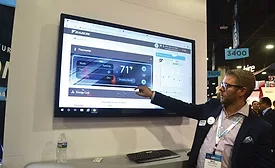
Every HVAC manufacturer, distributor, and contractor is aware of the growing labor shortage within the skilled trades industries. Most have been working to combat the shortage by getting creative in recruitment efforts — much like Daikin Applied did at the 2019 AHR Expo.
At the AHR Expo, Carrier led off its booth display with the 3- to 6-ton WeatherMaker packaged rooftop unit (RTU) with EcoBlue technology, something that Mark Rabbia, product business manager, Carrier Commercial Systems, said sets the tone for Carrier’s upcoming product releases.
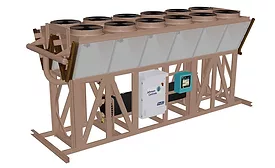
The video begins by showcasing the sizes of the three cooling tower models side-by-side with computer-generated schematics of the towers and a life-size human figure standing next to each tower to provide context.
We recently calculated that an energy-intensive manufacturer could achieve about 80 percent of its targeted energy savings just through HVAC optimization. To achieve results like that, though, facility managers must ensure the equipment operates efficiently at all times and in all situations.
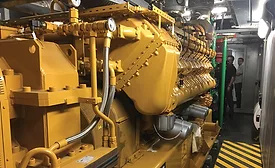
A one-paragraph, simple overview of the basic CHP approach reads like this: A building’s (or campus’) system uses fuel to make its own electricity, and then it applies the waste heat from that process toward its HVAC needs.
It is difficult to imagine a city running out of water, but it’s no longer impossible. Water conservation is getting more important in the U.S., and HVAC systems on a large scale represent a chance to make an impact (or not).
A total of 328,963 cinder blocks, 22,000 cubic yards of concrete, 5,000 tons of steel, 25 miles of total piping, 3,000 lineal feet of refrigeration pipe, 7 acres of roofing, and…
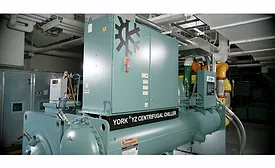
Chillers, much like the rest of the HVAC world, have seen a push to increase operational efficiency. These increasingly energy-efficient products, along with the need to replace aged units, have steadily driven growth in the chiller market. In fact, the global chiller market is projected to reach $11.33 billion by 2022.
 RSS
RSS