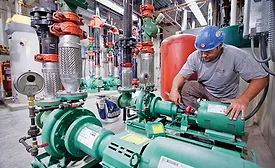
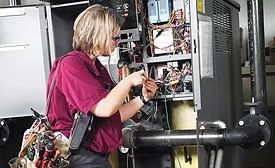
The following case studies highlight several ways in which HVACR solutions have been implemented to help various buildings in these three markets meet their energy-efficiency and comfort goals.
Can repair and alter boilers and pressure vessels, and more
October 27, 2016
Murphy Co. has announced the addition of the following American Society of Mechanical Engineers (ASME) code stamps for its Colorado office: R stamp - repairs/alterations of boilers and pressure vessels; U stamp - manufacture of pressure vessels; and PP stamp - fabrication/assembly of pressure piping.
If a boiler is not serviced regularly, products of combustion may build up on the heat exchanger, which may reduce heat transfer and result in lower energy efficiency and less comfort.
The Arsenal is one of only two parks department buildings that take heat from the district steam system run by Consolidated Edison. The problem was it was taking two hours for steam to reach the radiators once it had passed through the PRV station, which had people very upset.
Finland system uses waste energy from computing center to heat 1,500 homes
October 10, 2016
A district heating scheme in Finland has harnessed waste heat generated by a computer center to heat homes. The project uses an advanced heat pump system based on high-performance Bitzer compressors.
For large residential or light commercial applications requiring a multiple boiler setup, the Evergreen provides ZoneStacking™— the capability to operate 24 zones without an additional external third-party control.
This boiler offers 2.5- to 5-MMBtuh input capacity. It features a heat exchanger with a double row of swept fins and includes the Smart Touch Control™ and CON·X·US® remote connect.
Heating equipment introduced for commercial buildings
October 3, 2016
Each year, The NEWS spotlights the industry’s latest commercial heating products. The manufacturers provided us with a brief description of features included with each product.
BSRIA Inc. reports that from 2012 to 2016, sales of condensing boilers grew from 30 percent of the commercial market to over 60 percent, and that number is expected to climb to 80 percent by next year.
 RSS
RSS