Refrigerant Transition Brings Practical Challenges to Refrigeration
System design decisions balance performance, safety, and sustainability
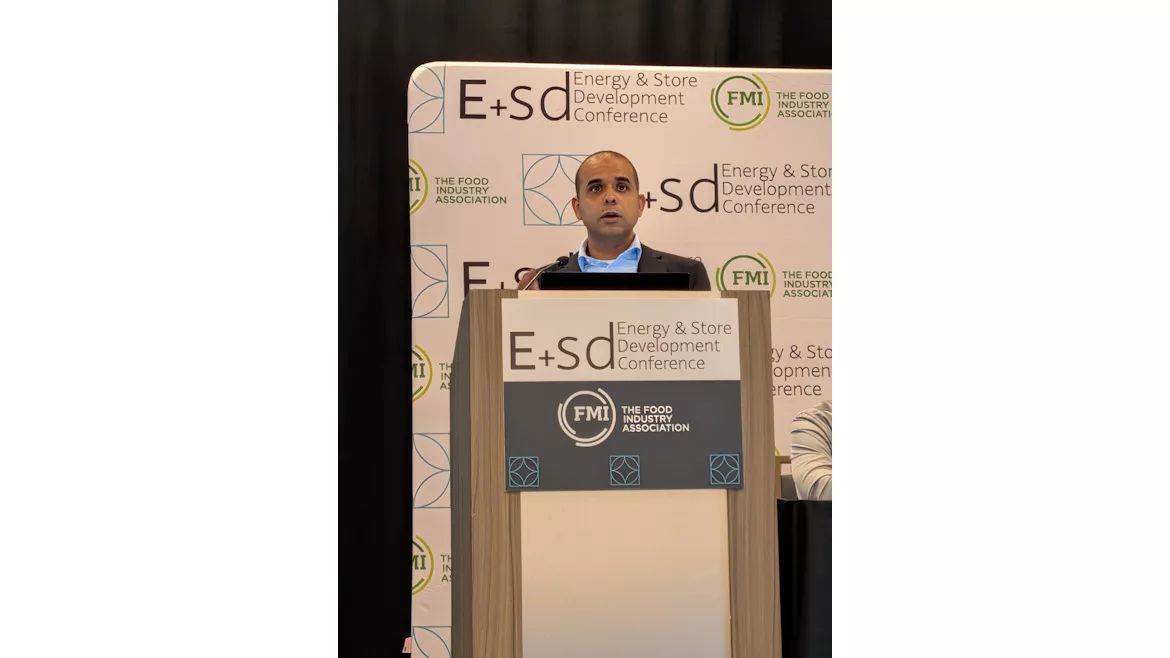
DEEP DIVE: At the recent FMI conference, Vishal Sharma from Oak Ridge National Laboratory offered a deep dive into the future of refrigeration technology. (Staff photo)
Speaking at the FMI Energy & Store Development conference last fall in San Diego, California, Vishal Sharma, research and development staff at Oak Ridge National Laboratory, offered a deep dive into the future of refrigeration technology — and the practical challenges that come with transitioning to new refrigerants and system architectures.
Refrigerant Types
Sharma explained that refrigerants generally fall into two categories: synthetic — including A2Ls such as R-454C, R-455A, and R-457A — and natural refrigerants such as CO₂ and propane. Each presents distinct opportunities and challenges for the refrigeration market. Synthetic refrigerants, he noted, continue to face environmental scrutiny, particularly as regulations evolve in North America and Europe.
“We have EPA regulations for synthetic refrigerants that manufacturers must comply with,” he said, adding that while PFAS is an environmental concern in Europe, the EPA does not currently include refrigerants on its PFAS list.
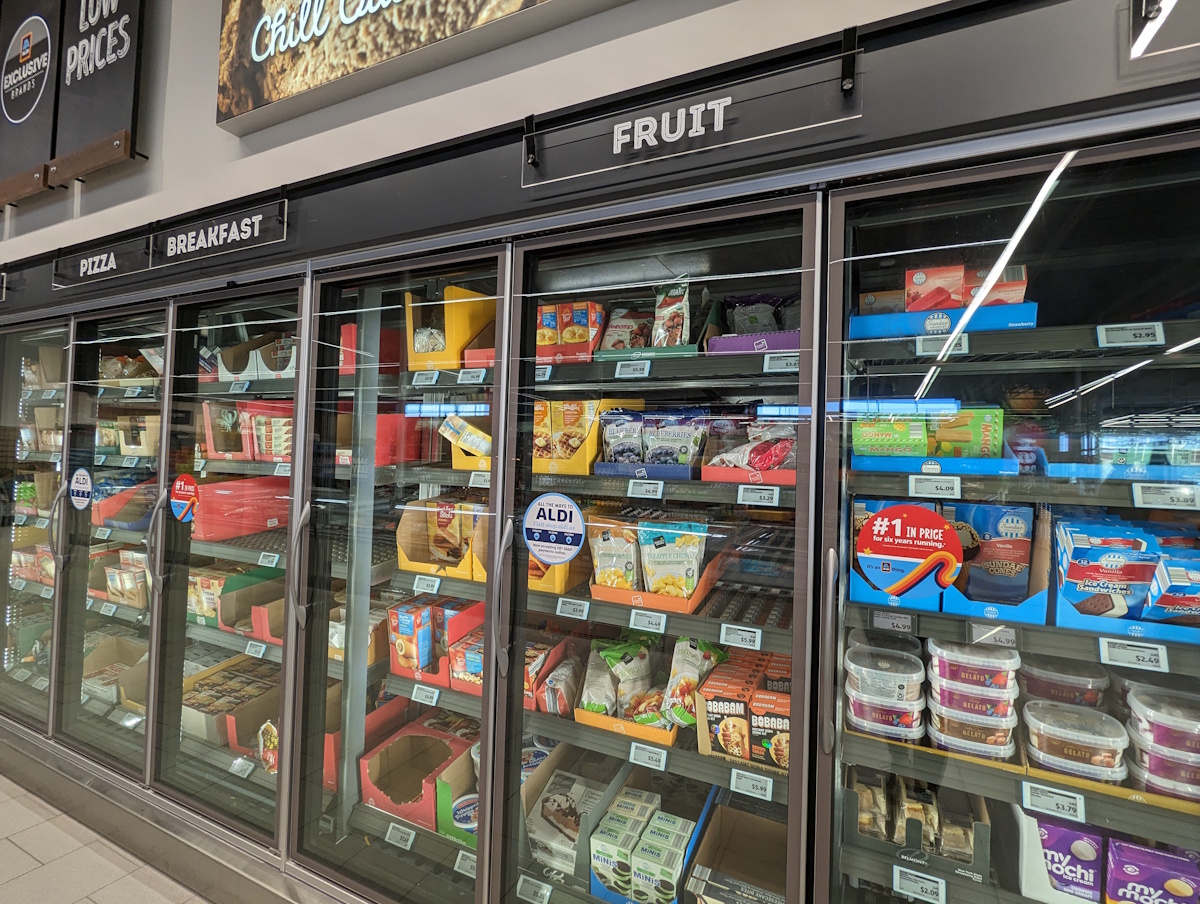
REFRIGERANT EVALUATION:The refrigerant transition is driving changes in refrigeration system design, with grocers evaluating tradeoffs between natural and synthetic refrigerants. (Staff photo)
Natural refrigerants remove the environmental burden but introduce their own complexity — namely, safety and flammability concerns. Propane and isobutane (A3 refrigerants) are highly flammable, while the popular synthetic blends like R-454C and R-455A are classified as mildly flammable A2Ls. That flammability leads to restrictions on charge limits, system design, and building code compliance.
“The standards are still evolving, and the building codes are evolving, so it's slowing down the process,” he said.
As for performance, Sharma noted that most synthetic refrigerants have high temperature glide, which requires redesigned heat exchangers, while lower volumetric capacity refrigerants often necessitate compressor redesigns. With propane, indirect systems incur an efficiency penalty due to the added heat exchanger, which reduces overall performance. However, for small, limited-charge applications — such as vending or ice cream machines — direct propane systems are viable as long as the charge remains within limits (around 300 grams).
Synthetic Architectures
With synthetic refrigerants, Sharma noted that there are generally two types of systems that can be used: centralized direct expansion (DX) systems and distributed DX systems.
Looking for quick answers on air conditioning, heating and refrigeration topics? Try Ask ACHR NEWS, our new smart AI search tool. Ask ACHR NEWS
Centralized systems are located in a machine room, with long refrigerant piping runs to the sales floor and rooftop condensers. This design results in large refrigerant charges and a higher risk of leaks, said Sharma, noting that “a typical supermarket can leak up to 20% to 30% annually in a centralized DX system.” He added that compressors in centralized systems are typically sized for the lowest-temperature application in the group, which can compromise overall efficiency.
The alternative is a distributed DX system, which spreads the equipment throughout the sales area. Instead of a central rack system, multiple smaller racks are located closer to the loads, resulting in shorter refrigerant lines, smaller charge sizes, and reduced leak rates. In addition, Sharma noted that suction groups are more evenly distributed in a distributed system, which can further improve system performance.
Sharma's modeling showed that regardless of refrigerant type — whether R-404A or A2Ls like R-454C or R-455A — distributed DX systems consistently outperformed centralized DX systems in efficiency.
Natural Architectures
For natural refrigerants in commercial refrigeration, Sharma said that CO₂ transcritical booster systems have emerged as a frontrunner. Unlike conventional synthetic DX systems, CO₂ transcritical systems use a two-stage compression process, which helps them achieve high efficiency in cooler climates. In fact, Sharma presented experimental and modeling results demonstrating that at lower ambient temperatures, CO₂ transcritical boosters deliver significantly higher COPs than DX systems using R-404A. However, CO₂ struggles as ambient temperatures rise above its critical point.
“As the temperature increases, the performance of CO2 takes a dip, and then the crossover happens somewhere around 87°F,” said Sharma.
However, with system optimizations like ejectors, adiabatic coolers, or pressure recovery devices, he noted that “the performance of CO2 system is even better than the distributed system, and the crossover line moves closer to 90°F.” That means CO₂ can be viable not just for northern climates, but for warmer regions as well.
A second type of natural refrigerant architecture is the water-cooled propane (R-290) system. The primary challenge with propane systems is the strict limitation on allowable refrigerant charge, which requires a chiller to be connected to indoor units within the store, said Sharma. On the positive side, he said these indoor units operate under steady conditions on both the evaporator and condenser sides, and when the system is properly optimized for those fixed conditions, it can deliver consistent and strong performance.
However, secondary loops introduce efficiency penalties, and today’s propane compressors still fall short of optimal performance. Sharma said there is significant room for improvement, noting that higher allowable charges would enable better heat exchanger designs and the use of receivers, unlocking greater efficiency in water-cooled propane systems. For now, he added, propane systems still underperform R-404A and closing that gap will “require higher-efficiency compressors to offset the penalties.”
Ultimately, Sharma said that the choice of refrigerant will influence the system architecture. For natural refrigerants, CO₂ is a well-established option. With propane, the choice depends largely on system size: Small-capacity applications are best served by self-contained units, while whole-store applications typically rely on water-cooled propane systems.
For synthetic refrigerants, the focus moving forward is on reducing refrigerant leakage and improving overall performance, making micro-cascade and micro-booster configurations attractive options, said Sharma.
“There is also potential to improve both water-cooled propane systems and CO₂ systems, which can be optimized to operate efficiently even in hotter regions of the country,” he said.
All of these approaches represent viable paths forward, he said, adding that “the bigger question will be how to tackle the flammability, with all these A2L- and A3-based systems.”
Looking for a reprint of this article?
From high-res PDFs to custom plaques, order your copy today!