ACHR News
search
Ask ACHR NEWS AI
cart
facebook twitter instagram linkedin youtube
  • Sign In
  • Subscribe
  • Sign Out
  • My Account
ACHR News
  • NEWS
    • Breaking News
    • New HVAC Products
    • Featured Products
    • Manufacturer Reports
    • HVAC Data
    • Legislation
    • ACHR NEWS Centennial
  • RESIDENTIAL
    • Air Conditioners
    • Furnaces
    • Residential Heat Pumps
    • Ductless
    • Residential IAQ
    • Testing, Monitoring, Tools
    • Components & Accessories
  • COMMERCIAL
    • Air Handlers
    • Rooftop Units
    • Chillers and Cooling Towers
    • Commercial Heat Pumps
    • Boilers and Hydronics
    • VRF/Ductless
    • Commercial IAQ
  • REFRIGERATION
    • Refrigerants
    • Refrigerant Regulations
    • Leak Management
  • CONTRACTOR PRO
    • Geothermal
    • Homeowner Study
    • VRF and VRV Ductless
    • Unitary Trends
  • EDUCATION
    • Training and Education
    • Business Management
    • Service and Maintenance
    • Continuing Education
    • Market Research >
      • HVAC Brand Awareness Report
      • VRV, VRF, VRVZ Report
      • Unitary Trends Report
      • Water Heat Professionals Report
    • Webinars
    • Sponsor Insights
    • eProducts Info
    • White Papers
  • EVENTS
    • HVAC Contractor Forum
    • Industry Events and Webinars
  • MEDIA
    • Videos
    • AHR Expo 2025 Videos
    • Podcasts >
      • ACHR News Podcast
      • HARDI Podcasts
      • AHR Expo Podcasts
      • ACCA Podcasts
    • Interactive Spotlights
    • Quizzes
    • eBooks
    • HVAC Talkback
  • HVAC GROUP
    • ACHR NEWS >
      • Current Issue
      • Digital Edition
      • Subscribe
    • Distribution Trends
    • SNIPS NEWS >
      • Join SNIPS NEWS
    • Engineered Systems News >
      • Join ES News
    • HVACR Directory
    • Contests
    • Newsletters
    • Contact
    • Advertise
    • My Account
NewsRefrigerationRefrigerants

Comparing CO₂ Refrigeration Architectures

The pros and cons of cascade, booster, and secondary loop systems
By Don Fort
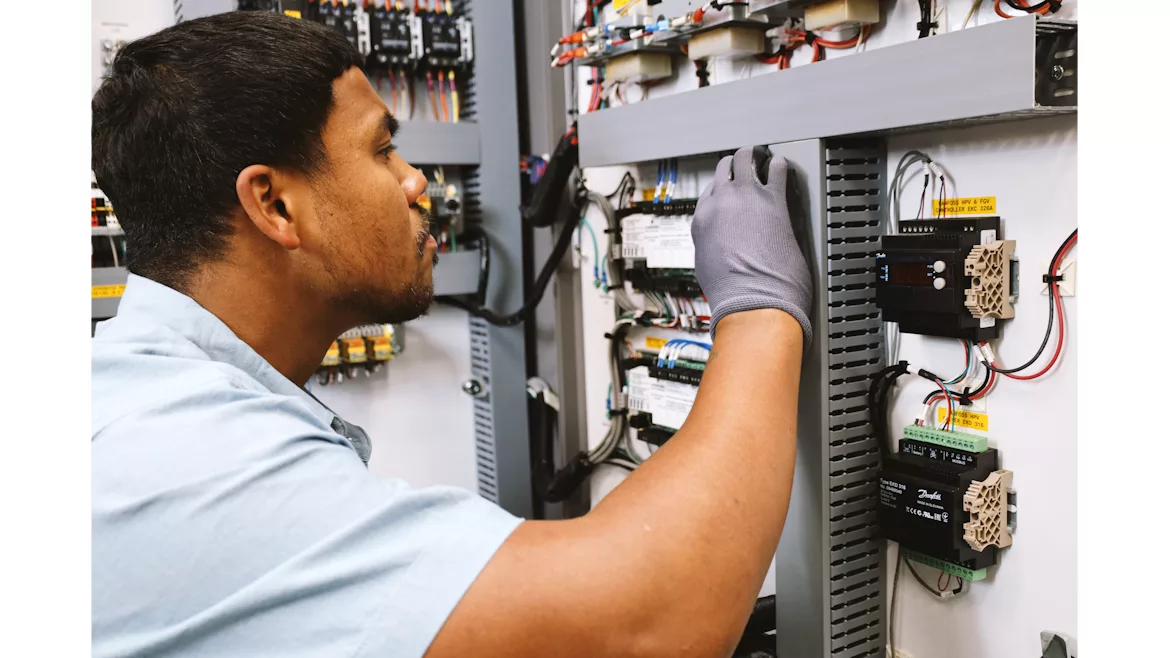
Heatcraft Refrigeration Technician 1170x658
Heatcraft Refrigeration
November 4, 2025
✕
Image in modal.

As the refrigeration industry confronts mounting environmental regulations and a global push for sustainability, carbon dioxide (CO₂, R-744) has reemerged as a leading natural refrigerant. With a GWP of just 1, CO₂ offers a climate-friendly alternative to synthetic refrigerants — but its adoption hasn’t come without resistance. High operating pressures, a low critical temperature, and unfamiliar system behavior have made some technicians hesitant to embrace it. Overcoming these challenges requires not just technical skill, but a deeper understanding of CO₂-specific strategies that can unlock its full potential across a range of commercial and industrial applications.

CO₂ refrigeration systems — cascade, booster, and secondary loop — are increasingly being deployed across supermarkets, cold storage facilities, and industrial plants. Yet no single architecture fits every climate or application. Each system presents its own set of strengths and limitations, and understanding those trade-offs is key to making informed, site-specific decisions.


Cascade Systems

A cascade system design typically uses two refrigerants in separate circuits that cascade the load from one lower-temperature circuit to another higher-temperature circuit through a heat exchanger. For example, CO₂ may be used inside a building to handle refrigeration loads, while another refrigerant, such as ammonia, HFC, or HFO, is used outside the building to reject heat to the environment.

Here are some of the pros and cons of these systems:


Pros

  • Highly efficient for low-temperature (LT) applications like freezers;
  • Keeps CO₂ confined to the low side, avoiding extreme pressures above the critical point, which is very desirable;
  • Limits CO₂ to sales floor areas, while the high-temperature (HT) refrigerant stays in the machine room; and
  • Reduces the amount of synthetic refrigerant needed if HFC/HFO is used.


Cons

  • Requires two refrigerant types, making the system more complex due to multiple layers of controls and the components that must be managed; and
  • Higher upfront installation and ongoing maintenance costs.


Booster Systems

A booster system is 100% CO₂ and handles both LT and medium-temperature (MT) loads. Since CO2 LT discharge gas is only compressed to an intermediate pressure, LT compressors discharge into the MT suction line, so the MT compressors can further compress the gas to “boost” it to a usable pressure. The now-boosted-pressure gas can reject heat at the gas cooler. This is a transcritical system that will operate as subcritical or supercritical, depending on the ambient temperature of the gas cooler location.

Here are some of the pros and cons of these systems:


Pros

  • Uses only natural refrigerant (CO₂), eliminating HFCs/HFOs, which is better for the environment;
  • Simplifies refrigerant management with a single fluid;
  • Proven efficiency in cold to moderate climates; and
  • Already widely adopted in supermarkets and retail settings.


Cons

  • Efficiency drops in hot climates without advanced features (parallel compression, ejectors, subcooling, etc.);
  • High operating pressures require specialized components; and
  • Control strategies can be more complex than cascade systems.


Secondary Loop Systems

Secondary loop systems use CO₂ as a pumped liquid. A primary refrigeration system (HFC, HFO, ammonia or even CO₂) chills the CO₂ to a subcritical liquid state, which is then pumped through insulated piping to cases or coolers. The CO₂ absorbs heat and returns to a central heat exchanger.

Here are some of the pros and cons of these systems:


Pros

  • Very low charge of HFC/HFO or ammonia in the primary loop;
  • CO₂ has high cooling capacity, allowing smaller pipes and pumps compared to glycol/brine, offsetting some upfront cost while increasing efficiency; and
  • Improved safety on sales floors (low pressure and contained charge).


Cons

  • A primary chiller/refrigeration plant is still required;
  • Typically, less efficient than direct expansion systems; and
  • Risk of dry ice forming if pressures get too low.


Comparison

Each CO₂ refrigeration architecture presents specific advantages and limitations. Cascade systems deliver reliable performance and maintain CO₂ in subcritical operation but require two refrigerants and higher system complexity. Booster systems use only CO₂, offering efficiency and sustainability in cold and moderate climates, though advanced strategies such as parallel compression, ejectors, and subcooling may be needed for efficiency in warm conditions. Secondary loop systems improve safety and minimize primary refrigerant charges but introduce additional pumping energy and lower overall efficiency.

Feature Cascade System Booster System Secondary Loop System
Refrigerants Used CO₂ (LT) + another (HT) 100% CO₂ CO₂ (secondary) + another (primary)
Application Subcritical CO₂ for LT MT + LT with CO₂ only CO₂ pumped as coolant
Complexity Medium–High (two circuits) High (multi-stage compression, controls) Medium (pumps + HX)
Best Climate All climates Cold to moderate (hot climates require add-ons) All climates
Efficiency Good for LT Very good in cold climates Lower (due to pumping)
Refrigerant Management Two types Single refrigerant Two types (but primary charge is minimized)

System selection depends on climate conditions, facility type, sustainability objectives, and capital investment. With ongoing advances in CO₂ technology, booster systems are gaining wider adoption, while cascade and secondary loop designs continue to serve niche and application-specific roles. Together, these three CO₂ strategies form a critical foundation for understanding CO₂ architecture — an increasingly vital component as the industry accelerates its shift toward sustainable refrigeration solutions.

Looking for quick answers on air conditioning, heating and refrigeration topics? Try Ask ACHR NEWS, our new smart AI search tool. Ask ACHR NEWS →

KEYWORDS: chiller systems CO2 refrigeration FROSTlines GWP (Global Warming Potential) refrigerants HFC refrigerants Sustainability and HVACR

Share This Story

Looking for a reprint of this article?
From high-res PDFs to custom plaques, order your copy today!


Don fort
Don Fort, senior technical trainer for Heatcraft Refrigeration Products, has nearly 40 years of HVACR industry experience — with 25 of those years focused on technical training and education. To contact Don, email don.fort@heatcraftrpd.com.

Recommended Content

JOIN TODAY
To unlock your recommendations.

Already have an account? Sign In

  • HVAC-enrollment

    The Trades Are Back: HVACR Programs See Nearly 30% Enrollment Spike

    A new wave of future technicians is entering the pipeline.  
    Training and Education
    By: Matt Jachman
  • 2025 Top 40 Under 40

    2025 Top 40 Under 40 HVACR Professionals List

    The 11th annual Top 40 Under 40 list highlights those...
    HVAC Residential Market
    By: Hannah Belloli-Oster
  • LG Ductless Mini-Split Systems

    The 9 Types of Heat Pumps

    As the U.S. moves toward electrification, heat pumps are...
    Ground Source Heat Pumps
    By: Joanna R. Turpin
Subscription Center
  • Create an Account
  • Start a Subscription
  • Manage My Account
  • Sign Up for Newsletters
  • Visit Customer Service
  • Update Preferences

More Videos

Sponsored Content

Sponsored Content is a special paid section where industry companies provide high quality, objective, non-commercial content around topics of interest to The News audience. All Sponsored Content is supplied by the advertising company and any opinions expressed in this article are those of the author and not necessarily reflect the views of The News or its parent company, BNP Media. Interested in participating in our Sponsored Content section? Contact your local rep!

close
  • Piggy Bank
    Sponsored byWatercress Financial

    Energy Prices, Inflation, and HVAC: What Today’s Homeowners Care About

  • Refrigerated Food
    Sponsored bySolstice Advanced Materials

    R-455A Refrigeration: A Cold Storage Solution for the Future

  • Airex Rooftop Units
    Sponsored byAirex Manufacturing Inc

    Consolidating Roof Penetrations: A Growing Trend in Multifamily HVAC Design

Popular Stories

HVAC-Price-Increase-graphic

HVAC Price Increase List: June 2026

Trump-Section-232.jpg

Trump Reduces Section 232 Tariffs on HVAC Equipment to 15%

Refrigerants-and-gauge.jpg

HVAC Industry Warns of Counterfeit Refrigerants Entering U.S. Supply Chain

Midea-training.jpg

HVAC Workforce Crisis Expands Beyond Technicians to Instructor Shortages

U.S. Supreme Court building

95% Furnace Efficiency Rule to Get New Hearing

View The ACHR NEWS
Centennial Anniversary Timeline

The ACHR News Timeline Chart
Submit a Letter
Submit a letter to our editors.

Events

November 6, 2025

Next-Gen Data Center Cooling: HVAC Innovation and Real-World Solutions

On Demand As AI workloads and high-density computing push traditional cooling methods to their limits, the data center industry is accelerating the adoption of next-generation HVAC technologies.

June 17, 2026

Decarbonization Without Disruption

This webinar will explore practical HVAC decarbonization strategies that minimize disruption while maximizing long-term performance and ROI.

View All Submit An Event

Poll

Summer Staff

Are you fully staffed for the summer season?
View Results Poll Archive

Products

BNI Mechanical/Electrical Square Foot Costbook, 2026 Edition

BNI Mechanical/Electrical Square Foot Costbook, 2026 Edition

See More Products
Decarbonization Without Disruption - Free Webinar - 6/17/2026

Related Articles

  • Hussmann’s microdistributed (MD) system.

    A Deep Dive Into Five Refrigeration Architectures

    See More
  • CO2 Refrigerant Container

    6 Essential Steps for Teaching CO₂ Refrigeration

    See More
  • Joanna POV Frostlines

    Grocers Not Yet Sold On CO₂ Refrigeration Systems

    See More

Related Directories

  • Architectural Louvers Co.

    Wall louvers manufacturer specializing in architectural and hurricane aluminum wall louvers, louvered sunshades, solid metal awnings, sun control devices, louvered roof top equipment screens, visual barriers and vents.
  • NDL Industries Inc.

    A trusted HVAC-R, CO2 Refrigeration, and Hydronics component manufacturer offering CO2/ACR/PAC/Press Copper Fittings, NBV/CO2 Ball Valves, and Filter Driers--committed to top-quality products and exceptional customer service.
  • Advanced Architectural Grilleworks

    Advanced Architectural Grilleworks is an industry leading choice for the highest quality architectural grilles, decorative metal panels, HVAC grilles, floor registers, Plaster J-Bead® frame grilles and more.
×

Sign Up. Stay Informed.

The #1 trusted source for the HVACR industry since 1926

SUBSCRIBE
  • RESOURCES
    • Advertise
    • Contact Us
    • Advisory Board
    • Classifieds
    • Submit a Letter
    • Directories
    • Store
  • ACCOUNT CENTER
    • Create an Account
    • Start a Subscription
    • Manage My Account
    • Sign Up for Newsletters
    • Visit Customer Service
    • Update Preferences
  • SERVICES
    • Marketing Services
    • Reprints
    • Market Research
    • List Rental
    • Survey/Respondent Access
  • STAY CONNECTED
    • LinkedIn
    • Facebook
    • Instagram
    • YouTube
    • X (Twitter)
  • PRIVACY
    • PRIVACY POLICY
    • TERMS & CONDITIONS
    • DO NOT SELL MY PERSONAL INFORMATION
    • PRIVACY REQUEST
    • ACCESSIBILITY

Copyright ©2026. All Rights Reserved BNP Media, Inc. and BNP Media II, LLC.

Design, CMS, Hosting & Web Development :: ePublishing