ACHR News
search
Ask ACHR NEWS AI
cart
facebook twitter instagram linkedin youtube
  • Sign In
  • Subscribe
  • Sign Out
  • My Account
ACHR News
  • NEWS
    • Breaking News
    • New HVAC Products
    • Featured Products
    • Manufacturer Reports
    • HVAC Data
    • Legislation
    • ACHR NEWS Centennial
  • RESIDENTIAL
    • Air Conditioners
    • Furnaces
    • Residential Heat Pumps
    • Ductless
    • Residential IAQ
    • Testing, Monitoring, Tools
    • Components & Accessories
  • COMMERCIAL
    • Air Handlers
    • Rooftop Units
    • Chillers and Cooling Towers
    • Commercial Heat Pumps
    • Boilers and Hydronics
    • VRF/Ductless
    • Commercial IAQ
  • REFRIGERATION
    • Refrigerants
    • Refrigerant Regulations
    • Leak Management
  • CONTRACTOR PRO
    • Geothermal
    • Homeowner Study
    • VRF and VRV Ductless
    • Unitary Trends
  • EDUCATION
    • Training and Education
    • Business Management
    • Service and Maintenance
    • Continuing Education
    • Market Research >
      • HVAC Brand Awareness Report
      • VRV, VRF, VRVZ Report
      • Unitary Trends Report
      • Water Heat Professionals Report
    • Webinars
    • Sponsor Insights
    • eProducts Info
    • White Papers
  • EVENTS
    • HVAC Contractor Forum
    • Industry Events and Webinars
  • MEDIA
    • Videos
    • AHR Expo 2025 Videos
    • Podcasts >
      • ACHR News Podcast
      • HARDI Podcasts
      • AHR Expo Podcasts
      • ACCA Podcasts
    • Interactive Spotlights
    • Quizzes
    • eBooks
    • HVAC Talkback
  • HVAC GROUP
    • ACHR NEWS >
      • Current Issue
      • Digital Edition
      • Subscribe
    • Distribution Trends
    • SNIPS NEWS >
      • Join SNIPS NEWS
    • Engineered Systems News >
      • Join ES News
    • HVACR Directory
    • Contests
    • Newsletters
    • Contact
    • Advertise
    • My Account
HVAC ContractingNewsTechnicalRefrigerationGuest ColumnRefrigerantsTraining and EducationTraining and Education for Contractors

FROSTlines

6 Essential Steps for Teaching CO₂ Refrigeration

A practical guide to instructing technicians about this low-GWP refrigerant
By Don Fort
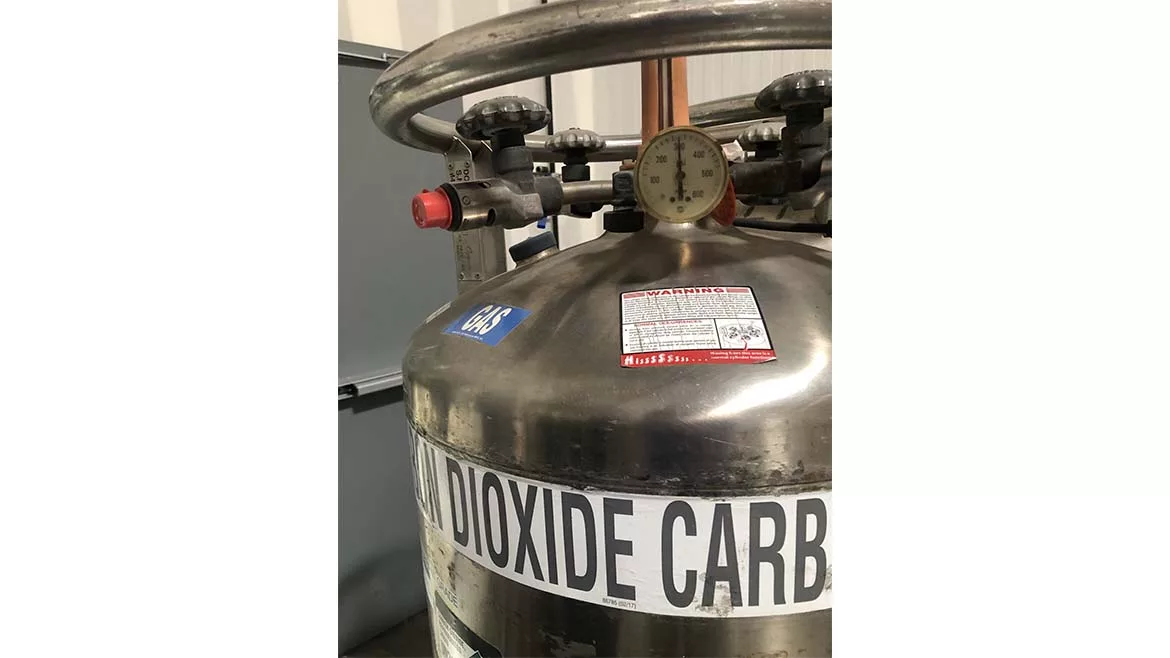
CO2 Refrigerant Container
SAFETY FIRST: Given its extremely high pressures, students must understand how to work with CO2 safely. (Courtesy of Heatcraft)
October 6, 2024
✕
Image in modal.

Last month’s article on CO2 introduced readers to the properties of this low-GWP refrigerant, which has been around for a very long time and can keep food cold without harming the environment. There was also a discussion about some of the modifications that are needed when working with this high-pressure gas.

This article is directed at those who are teaching students and technicians about CO2 and other refrigerants. It will help connect what students already know about the properties of HFC and HFO refrigerants with CO2 as a refrigerant. HFC and HFO blends have very high GWPs, while CO2 has a GWP of 1. And yet, many similarities exist between these gases.


Step One: Compare Systems

When teaching students about CO2, the first step should be to compare the basic refrigeration cycle with the CO2 system. With their much higher pressures, CO2 systems may seem daunting to students, which is why every effort must be made to explain the similarities between the two systems.

First, cover the basic refrigeration cycle using HFC/HFO refrigerants and the associated high- and low-side pressures that cause change of state. Then, walk students through the entire cycle for a CO2 system, comparing the pressures in each system type. Explain what must be done to provide a sealed environment that produces sufficient liquid to do the work of removing heat from a conditioned space so it can be rejected into the outdoor ambient or reclaimed in some way to heat water or be used for another purpose.

Although they have different names, all system components are basically located in the same areas (see Figure 1 below). Explain to students that with the CO2 booster, we are not changing what they have learned about how heat is removed; we are using a different refrigerant but similar components. For instance, the condenser in the R-404A diagram is doing a similar job as the gas cooler in the CO2 booster diagram. However, because the pressures are so high with CO2, the change from a vapor to a liquid must take place downstream.
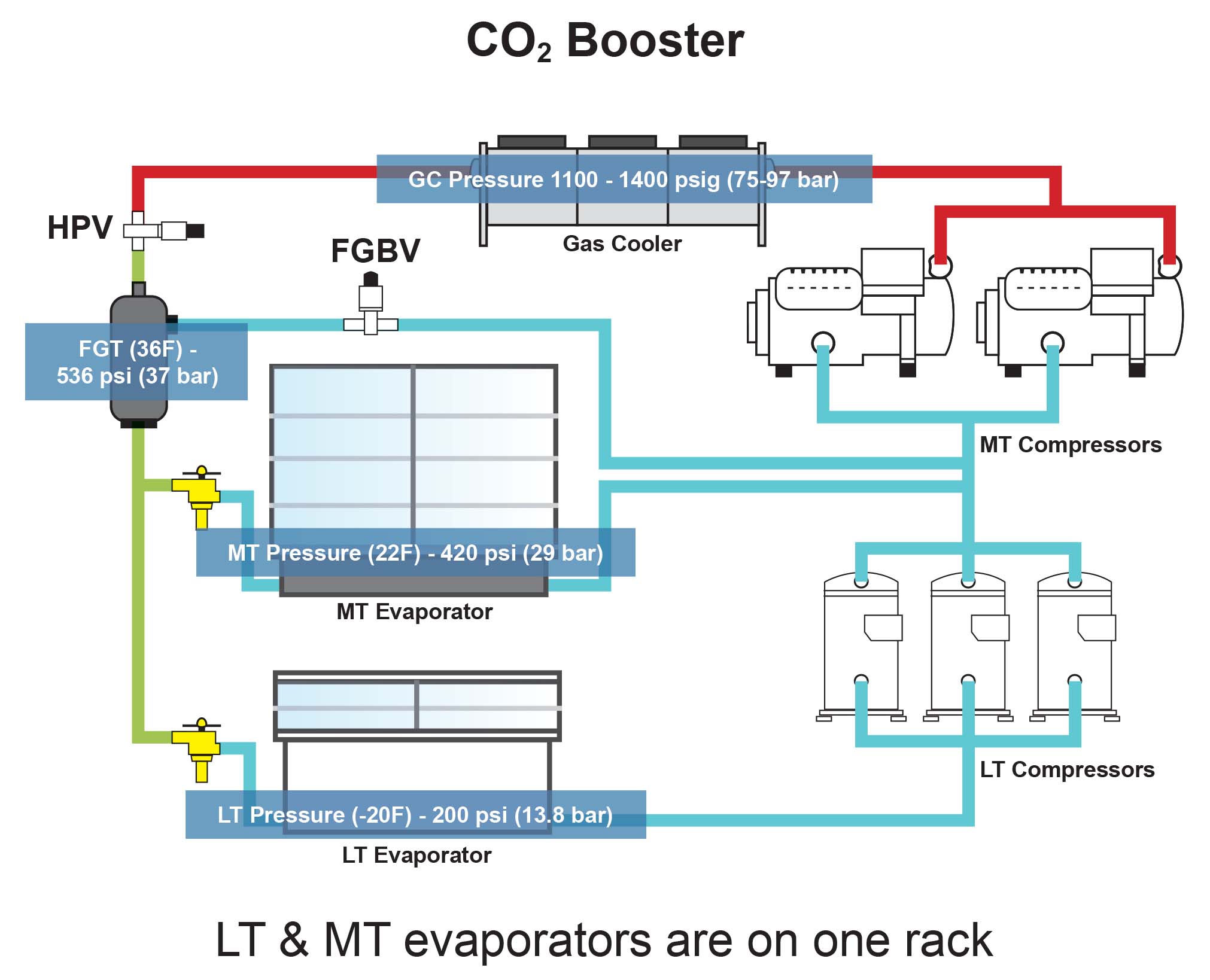
CO2 Booster Diagram.

Click diagram to enlarge

FIGURE 1: The R-404A DX uses a condenser, while the CO2 booster system uses a gas cooler. (Courtesy of Heatcraft)

One difference between an HFC unit and a CO2 booster unit is the rack system — with the HFC refrigerant system, the low- and medium-temperature rack systems are not combined. With the CO2 booster, both the low- and medium-temperature loads can be supplied by the same booster rack.


Step Two: Emphasize Safety

The next step in teaching students about CO2 is to talk about safety. In any service or repair refrigeration work, emphasize the necessity for personal protective equipment, including gloves, glasses, and safety shoes. The safety instructions for working with CO2 are the same as they are for other refrigerants:

  • Prevent liquid from reaching the compressor;
  • Provide a pressure relief valve (PRV) for overpressure protection;
  • Prevent excessive vibration;
  • Ensure proper alignment of piping to prevent connection stress;
  • Protect external surfaces from corrosion; and
  • Take precautions to avoid refrigerant contact with skin due to risk of frost or burn.

It cannot be overstated that students must know and understand how to work with CO2 safely. Because CO2 has no odor, a gas detection device is paramount. Warning signs — and sometimes respirators — will be installed wherever CO2 systems are located. The equipment, too, comes with safety features, such as high-pressure relief valves (HPRVs). Most importantly, those working on CO2 units must follow the rules and keep their eyes open.


Step Three: PID Diagram

The piping and instrument diagram (PID) is a roadmap that identifies every component, sensor, and safety and bypass valve in a working CO2 system, so it is important that the service technician understands how to navigate it. For instance, the included engineering notes in this troubleshooting tool even explain what type of piping should be used, as well as the bypass locations, allowing technicians to only shut down that part of the system that needs repair.

Looking for quick answers on air conditioning, heating and refrigeration topics? Try Ask ACHR NEWS, our new smart AI search tool. Ask ACHR NEWS →


Step Four: Learn the SOO

Students need to understand the sequence of operation (SOO), so they know what to expect when the system actually starts to cool. Take for example, a fairly simple refrigeration system, where the medium-temperature compressors push the gas up to the gas cooler. From there, it goes to the high-pressure expansion valve (HPEV), which brings the pressure (and temperature) down. When the pressure is low enough, it changes to a liquid and is stored in the flash tank.


Step Five: Discuss Major Components

Be sure to allocate time to discuss the construction, installation, operation, and basic troubleshooting of all the components and the role they play in a system. This includes the CO2 compressor, temperature sensors, HPEVs, pressure sensors, and HPRV valves.


Step Six: Identify Best Practices

It is important for students to understand the best practices that should be employed when installing, starting up, and commissioning a CO2 system. Under this general topic, instructors must stress the tasks that are similar to those involved with installing and servicing HFC systems. However, students should understand that all tools, test devices, and valves must be pressure-rated for use on CO2 equipment.

Piping, brazing, and evacuation practices are virtually the same, but charging must be more deliberate at the flash tank. For example, the service technician must be careful to avoid the triple point. This means that only CO2 vapor should be introduced into the system until the pressure rises above 75.1 psia. If liquid CO2 is introduced into the system before this pressure is achieved, dry ice can form in the sealed system. Solids in a sealed refrigeration system are never a good idea.

When charging the system, a safe pressure to begin the switchover from vapor to liquid charging could be in the 100 to 150 psia range — a range in which no dry ice can form. If the rack being started is a medium-temperature/low-temperature (MT/LT) transcritical booster system, the MT compressor(s) must be started first, giving the MT loads time to stabilize. Then the LT compressor(s) can be brought online. Once the mid-tank sight glass clears, the startup technician can begin checking the loads as they begin pulling down to the set temperature.

Note that the controllers for CO2 systems are quite complex, and they will likely be handled by an HVACR controls specialist or integrator. The installing technician will need to verify that all temperature and pressure sensors are located properly throughout the system and that the leak detection probes are properly placed and wired. Students will also need to learn about the different types of copper that may be used on the same job — sometimes, even stainless steel piping is employed on the same rack.

Learning about refrigerants such as CO2 in the classroom will teach students why each component does what it does, and overall, that makes for better troubleshooters and better servicers of the equipment. Still, there’s simply no substitute for experience. While we, as instructors, can philosophically talk about installing a unit, on-the-job training is essential, and it is the final best practice for all of our students to follow.
KEYWORDS: CO2 refrigeration FROSTlines GWP (Global Warming Potential) refrigerants refrigerant management training technicians

Share This Story

Looking for a reprint of this article?
From high-res PDFs to custom plaques, order your copy today!


Don fort
Don Fort, senior technical trainer for Heatcraft Refrigeration Products, has nearly 40 years of HVACR industry experience — with 25 of those years focused on technical training and education. To contact Don, email don.fort@heatcraftrpd.com.

Recommended Content

JOIN TODAY
To unlock your recommendations.

Already have an account? Sign In

  • HVAC-enrollment

    The Trades Are Back: HVACR Programs See Nearly 30% Enrollment Spike

    A new wave of future technicians is entering the pipeline.  
    News
    By: Matt Jachman
  • 2025 Top 40 Under 40

    2025 Top 40 Under 40 HVACR Professionals List

    The 11th annual Top 40 Under 40 list highlights those...
    News
    By: Hannah Belloli-Oster
  • LG Ductless Mini-Split Systems

    The 9 Types of Heat Pumps

    As the U.S. moves toward electrification, heat pumps are...
    Air Source Heat Pumps
    By: Joanna R. Turpin
Subscription Center
  • Create an Account
  • Start a Subscription
  • Manage My Account
  • Sign Up for Newsletters
  • Visit Customer Service
  • Update Preferences

More Videos

Sponsored Content

Sponsored Content is a special paid section where industry companies provide high quality, objective, non-commercial content around topics of interest to The News audience. All Sponsored Content is supplied by the advertising company and any opinions expressed in this article are those of the author and not necessarily reflect the views of The News or its parent company, BNP Media. Interested in participating in our Sponsored Content section? Contact your local rep!

close
  • Piggy Bank
    Sponsored byWatercress Financial

    Energy Prices, Inflation, and HVAC: What Today’s Homeowners Care About

  • Refrigerated Food
    Sponsored bySolstice Advanced Materials

    R-455A Refrigeration: A Cold Storage Solution for the Future

  • Airex Rooftop Units
    Sponsored byAirex Manufacturing Inc

    Consolidating Roof Penetrations: A Growing Trend in Multifamily HVAC Design

Popular Stories

HVAC-Price-Increase-graphic

HVAC Price Increase List: June 2026

Trump-Section-232.jpg

Trump Reduces Section 232 Tariffs on HVAC Equipment to 15%

R410A-Refrigerant-Cylinder.jpg

Refrigerant Recovery is a Revenue Opportunity

Heat-pump-cutaway.jpg

PFAS Rules and A2L Building Codes Continue to Evolve

Kroger.jpg

Kroger to Spend $100 Million to Reduce Refrigerant Leaks

View The ACHR NEWS
Centennial Anniversary Timeline

The ACHR News Timeline Chart
Submit a Letter
Submit a letter to our editors.

Events

November 6, 2025

Next-Gen Data Center Cooling: HVAC Innovation and Real-World Solutions

On Demand As AI workloads and high-density computing push traditional cooling methods to their limits, the data center industry is accelerating the adoption of next-generation HVAC technologies.

June 9, 2026

Before You Go All In on AI: Set Up Your Business to Actually Win

In this webinar, we'll walk you through exactly what to get in place before you add AI to your business. You'll leave with a clear picture of where you stand today and a practical action plan to set yourself up for real results.

View All Submit An Event

Poll

Summer Staff

Are you fully staffed for the summer season?
View Results Poll Archive

Products

BNI Mechanical/Electrical Square Foot Costbook, 2026 Edition

BNI Mechanical/Electrical Square Foot Costbook, 2026 Edition

See More Products
A2L Refrigerants - Free Webinar - May 21, 2026

Related Articles

  • CO detection

    6 Essential Steps to Handling a Carbon Monoxide Alarm Call

    See More
  • Heatcraft Refrigeration Technician 1170x658

    Comparing CO₂ Refrigeration Architectures

    See More
  • Compressors on a CO2 System

    Why CO₂ Refrigeration Training is a Critical Investment for HVACR Contractors

    See More

Related Products

See More Products
  • Refrigeration Fundamentals for HVAC/R Technicians DVD

  • Tech_CommRef_Guide_Small.jpg

    Technician’s Guide & Workbook for Quality Maintenance on Commercial Refrigeration Equipment

  • HVACR-Troubleshooting-Fundamentals-Cover-Image-One-Sheet.jpg

    HVACR Troubleshooting Fundamentals - Refrigeration & Air Flow Systems Training Package for Instructors & Service Managers

See More Products

Related Directories

  • NDL Industries Inc.

    A trusted HVAC-R, CO2 Refrigeration, and Hydronics component manufacturer offering CO2/ACR/PAC/Press Copper Fittings, NBV/CO2 Ball Valves, and Filter Driers--committed to top-quality products and exceptional customer service.
  • Energy Recovery

    Energy Recovery's PX G1300 pressure exchanger for CO2 refrigeration systems lowers operating costs and energy consumption, increases efficiency, and reduces emissions.
×

Sign Up. Stay Informed.

The #1 trusted source for the HVACR industry since 1926

SUBSCRIBE
  • RESOURCES
    • Advertise
    • Contact Us
    • Advisory Board
    • Classifieds
    • Submit a Letter
    • Directories
    • Store
  • ACCOUNT CENTER
    • Create an Account
    • Start a Subscription
    • Manage My Account
    • Sign Up for Newsletters
    • Visit Customer Service
    • Update Preferences
  • SERVICES
    • Marketing Services
    • Reprints
    • Market Research
    • List Rental
    • Survey/Respondent Access
  • STAY CONNECTED
    • LinkedIn
    • Facebook
    • Instagram
    • YouTube
    • X (Twitter)
  • PRIVACY
    • PRIVACY POLICY
    • TERMS & CONDITIONS
    • DO NOT SELL MY PERSONAL INFORMATION
    • PRIVACY REQUEST
    • ACCESSIBILITY

Copyright ©2026. All Rights Reserved BNP Media, Inc. and BNP Media II, LLC.

Design, CMS, Hosting & Web Development :: ePublishing