FROSTlines
How Contractors Can Help Small Grocers Keep Their Cool
Strategies for deciding when to repair, retrofit, or replace their refrigeration systems
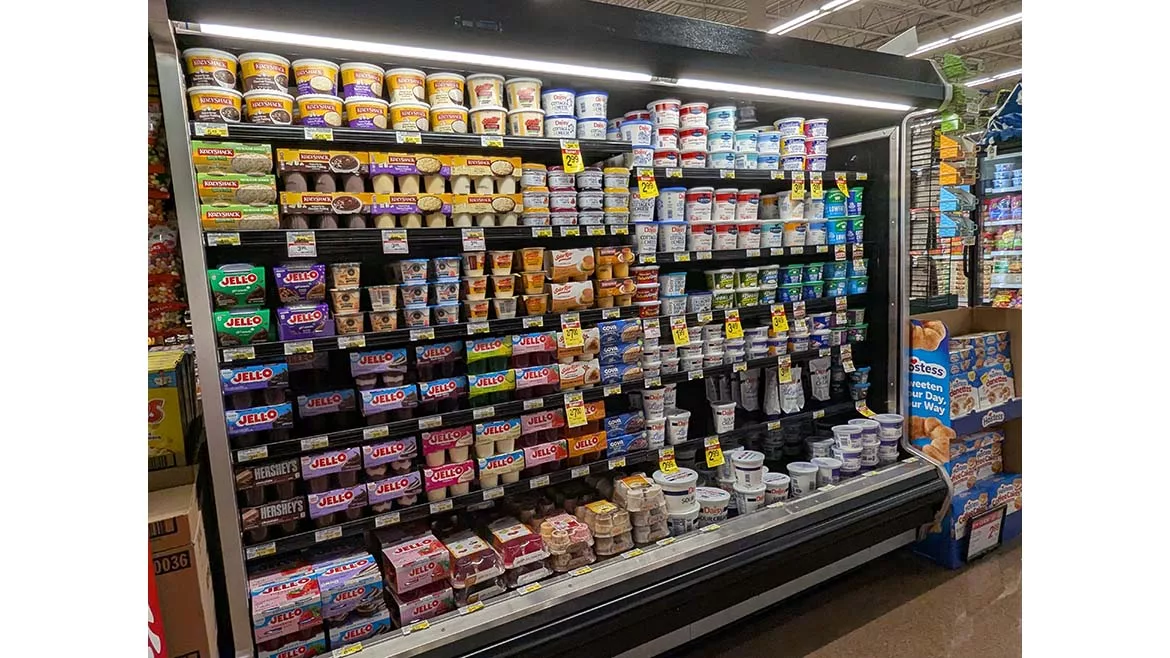
An industry-wide refrigerant transition is underway in the food retail sector, with far-reaching impacts felt by both large retail chains and small independent grocers. Although many large retailers with access to corporate resources have made significant progress on their journeys, many small grocers still lack a clear action plan.
Most large retailers have conducted low-GWP refrigeration trials and worked with original equipment manufacturer (OEM) technology partners to understand the dynamic regulatory landscapes. They’re assembling dedicated teams to guide their transitions and have even constructed next-generation refrigerant stores.
However, this transition can be stressful for many smaller independent retailers and typically does not proceed along the same manageable timelines. They know their legacy refrigeration systems won’t last forever, but the prospect of making changes is overwhelming from both cost and implementation perspectives. As the HFC phasedown progresses over the next several years, rising prices of legacy refrigerants (i.e., R-404A) will place additional financial burdens on retail operations.
Seeking Support
Small independent grocers typically operate from one to 20 stores. Their physical footprints range from 10,000 to 30,000 square feet, often enabling them to fit into small urban or rural settings. Keeping these small players in business is critical to the food retail landscape, as many are frequently located in disadvantaged areas where store closures could create food deserts.
Fortunately, there’s good news for small retailers who perceive the refrigerant transition as an existential threat to their survival. By tapping into available resources and employing strategic equipment end-of-life strategies, they can minimize the negative impacts on their businesses and start making plans for a successful future.
According to Pete Savage, director of the EMS/controls division for AAA Refrigeration Services Inc. in Bronx, New York, small grocers seek support from their refrigeration contractors during this challenging transition. AAA has helped many small retailers successfully navigate the journey -- from evaluating their current systems to selecting a lower-GWP refrigerant architecture to capturing available rebates and incentives.
“Small grocers are often at a disadvantage and need our help. It’s our responsibility to help guide them through every stage of the transition process,” he said.
Looking for quick answers on air conditioning, heating and refrigeration topics? Try Ask ACHR NEWS, our new smart AI search tool. Ask ACHR NEWS
Keep It Running
The good news for small grocers is that they can still use their current systems after the GWP limits take effect. Maintained properly, most commercial refrigeration systems will provide at least two decades of service. If they’re not currently using a preventive maintenance program and only call when they need critical repairs, contractors might want to recommend strategic investments to keep their current systems tuned up and running optimally.
If they do decide to keep their current systems running, then be sure to advise them to follow refrigerant management best practices and protect their businesses from HFC supply challenge and the potential for rising prices by:
- Identifying and repairing refrigerant leaks. Copeland has robust leak detection solutions and supporting software that can help to quickly identify leaks and even provide early detection of slow leaks.
- Recovering and reclaiming refrigerant whenever possible (i.e., banking refrigerant for use in future charging).
Contractors can also reassure grocers that service part availability will not be a concern for the foreseeable future. For peace of mind, check with OEMs and wholesale network partners to confirm their stock of replacement compressors and components for use in legacy systems.
Repair Or Replace
Small grocers can also find it challenging to decide when to repair, retrofit, or replace their refrigeration systems. Have they run out of capacity? How can they expand capacity without adding to the load of their existing HFC racks? Or could they upgrade compression on their existing racks to prolong their system’s lifespan? It’s essential for contractors to help them understand that next-gen refrigerants -- CO2, A2Ls, and R-290 -- cannot be used in their existing HFC systems.
Self-contained R-290 units are a good option for adding needed capacity, as are A2L or CO2 remote condensing units -- all of which could operate independently. If grocers are unsure about which next steps to take, contractors can start by helping them evaluate the viability of their existing systems:
- Conduct an objective inventory assessment of the system components they currently have (e.g., racks, cases, etc.), including their age, condition, and expected lifespan;
- Suggest an end-of-life strategy for these assets and determine which could be repurposed; and
- Help them develop an iterative equipment upgrade and/or replacement plan that first addresses the most critical areas.
For example, it may be possible to decommission the most underperforming sections of their system and replace them with distributed condensing unit architectures. Following the example set by larger retailers, they might also consider retrofitting to a lower-GWP HFC, such as R-448A, as an interim step.
Some OEMs are making dual-refrigerant compatible cases, enabling the use of R-448A today, while supporting a future upgrade to a next-gen refrigerant, such as an A2L. As a more modern yet familiar HFC option, R-448A may not be subject to the same availability and inflation challenges the industry anticipates with legacy HFCs. If grocers have phased out R-404A or R-22 in one store but still use it in another, bank that refrigerant for future repairs.
Depending on the condition of their existing systems, it may be the perfect opportunity to recommend migrating to a next-gen, lower-GWP system. Savage noted how important it is for contractors to explain all available options to retailers clearly. “In layman's terms, you have to be able to explain to them the pros and cons of each option, weighing the short- and long-term cost and performance implications,” he said.
Copeland, for example, is developing equipment to support leading low-GWP equipment scenarios, including:
- R-290 compression for stand-alone units;
- A2L compression and condensing units; and
- Integrated CO2 booster compression, controls, and system components that support smaller, centralized refrigeration strategies and the emergence of distributed CO2 condensing units.
Capitalize On Industry Resources
Many small grocers are unaware of industry resources and state programs that could help ease the financial burdens associated with the refrigerant transition. For example, the California Air Resources Board’s (CARB) F-Gas Incentive Program (FRIP) is designed to promote the use of ultra-low-GWP (i.e., <10 GWP) refrigerants and remove barriers to the adoption of climate-friendly technologies.
FRIP funding is available for existing and new facilities; in some instances, those in low-income, disadvantaged communities receive preference. It recently announced a second round of funding, allocating $38.5 million for commercial and industrial refrigeration upgrades in existing facilities with more than 50 pounds of refrigerant.
Nonprofit organizations (NPOs) such as the North American Sustainable Refrigeration Council (NASRC) can provide training, education, and information on emerging refrigeration strategies and system retrofit options. Grocers of all sizes are welcome and encouraged to join NASRC. As of year-end 2024, its membership network comprised more than 190 companies, including over 55,000 food retail locations. NASRC membership could help small grocers find paths to available funding and/or resources, including its significant incentive programs.
In addition, some regional utilities also provide rebates to retailers for upgrading refrigeration systems to improve energy efficiency.
Savage explained that most grocers are solely focused on running their day-to-day business, so it’s the contractors’ responsibility to make them aware of what funding and rebates are available. “We need to be in continual education mode to stay informed of what’s happening and recommend programs to our retail customers,” he said.
By making strategic upgrades to existing systems, combining the wise use of industry resources, and accessing opportunities for funding and/or incentives, contractors can help small grocers successfully navigate the inevitable changes coming to their operations.
“The refrigerant transition is an opportunity for contractors to become trusted partners to small grocers,” said Savage. “We’re the experts, not the retailers. It’s a disservice to our customers to not be educated on every aspect.”
Key Regulatory Dates for Food Retailers
The EPA’s Technology Transition Rule (2023) mandates refrigerant GWP limits in the following new commercial refrigeration equipment categories:
- January 1, 2025: self-contained refrigeration, 150 GWP limit;
- January 1, 2026: remote condensing units (>200 lbs. of charge), 150 GWP limit;
- January 1, 2026: remote condensing units (<200 lbs. of charge), 300 GWP limit;
- January 1, 2027: rack systems (>200 lbs. of charge), 150 GWP limit; and
- January 1, 2027: rack systems (< 200 lbs. of charge), 300 GWP limit.
The EPA follows the HFC phasedown schedule established in the Kigali Amendment to the Montreal Protocol, which is as follows:
- January 1, 2024: EPA restricted HFC production and consumption by 40% of its baseline.
- January 1, 2029: EPA will increase HFC restrictions to 70% of baseline.
In 2023, the EPA introduced a proposal to enforce refrigerant management. If approved, it will require and/or enable:
- Repair of refrigerant leaks on existing systems;
- Compliance with standards for refrigerant recovery and practices;
- Automatic leak detection (ALD) on new and existing systems containing more than 1,500 lbs. of refrigerant; and
- Usage of reclaimed HFCs in several sectors for initial charge and/or use in service.
Looking for a reprint of this article?
From high-res PDFs to custom plaques, order your copy today!