How Contractors Can Help the UA Recruit 30,000 Technicians — and Build Their Own Pipeline
Inside the UA’s strategy to connect trade schools, manufacturers, and contractors
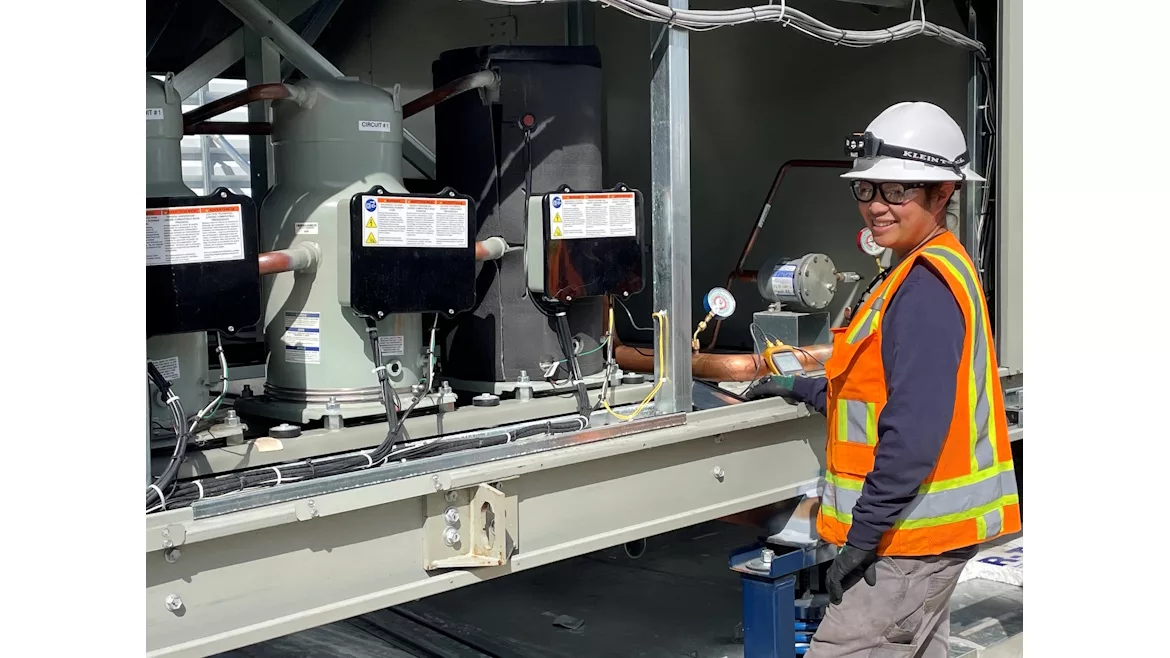
CAREER READY: With many HVACR programs already operating, there’s only one question that remains for these students who’ve already decided on the trade: Which employer will offer the best path for me going forward?
Across the country, HVACR contractors are struggling to fill open service trucks — and the United Association (UA), which represents more than 390,000 plumbers, pipefitters, welders, and HVACR service technicians, knows the solution isn’t coming unless the industry builds it. That’s why UA general president Mark McManus stood before 3,000 industry leaders during the association’s Instructor Training Program in Ann Arbor, Michigan, with a bold target: 30,000 new recruits in one year.
That number may sound ambitious, but it reflects a larger reality: The HVACR workforce is shrinking fast. The U.S. Department of Labor projects that 40% of the skilled trades workforce will retire within the next decade — roughly 150,000 HVACR technicians among them. With the average number of children per couple now only 1.6, “we’re not even replacing ourselves,” said Howard Weiss, president of ESCO Institute and HVAC Excellence.
According to Brian Kelly, director of HVACR services for the United Association of Union Plumbers, Fitters, Welders and Service Techs, the initiative isn’t new — it’s simply more visible.
“The call to action has always been the same,” Kelly said. “The phaseout of HFCs, the move toward heat pumps, an aging workforce, and just attrition in general — folks retiring and new technologies coming into the mix — that’s what’s really driving this. I’ve heard far too many times that the United Association is the best-kept secret when it comes to jobs in skilled trades, and for me, as the director, that's the last thing in the world I want to hear. I want this opportunity to be open to as many folks as possible.”
For contractors, that call to action isn’t just about helping the union — it’s a roadmap to building their own technician pipeline through local partnerships with trade schools, community colleges, and UA apprenticeship programs.
Connecting Industry And Education
To meet this goal, contractors can play a critical role by engaging with local trade programs through Program Advisory Committee (PAC) meetings — a key way to identify, mentor, and recruit the next generation of skilled technicians. These advisory meetings allow contractors to evaluate programs, connect with instructors, and help shape training that matches real-world job needs.
“What it boils down to is getting the message out there that our contractors, who are looking for these folks, they need to spend a little bit of time and get involved with the respective HVAC schools in their area,” Kelly said. “They need to be willing to sit on the advisory boards and not only help the schools stay up-to-date with new technologies, but also be a mechanism or an avenue for helping their graduate students get good-paying jobs with really good benefits.”
Looking for quick answers on air conditioning, heating and refrigeration topics? Try Ask ACHR NEWS, our new smart AI search tool. Ask ACHR NEWS
Participating in PAC meetings also gives employers an early look at — and “first dibs” on — the next generation of HVACR talent.
There are roughly 26,000 high schools, 1,000 community colleges, and 8,500 trade schools across the U.S. Approximately 1,400 HVACR programs alone are already operating in high schools, colleges, and trade schools. That’s thousands of students who have already decided to join the trade and have just one question remaining: “Which employer will offer me the best path going forward?”
This is where relationships with program instructors come into play.
“If you have a long-standing relationship with somebody that's actively employing your graduates, clearly you're going to want to steer your students and your graduates to the folks that have been standing shoulder to shoulder with you,” Kelly said. “At the same time, not only do we want to help the schools employ their graduates, but we want the schools to be the best that they can be, so they're turning out the very best product for our contractors.”
Through articulation agreements with ESCO Institute and HVAC Excellence, students in accredited HVACR programs can earn credit toward the UA’s five-year registered apprenticeship — much like Advanced Placement (AP) exams in academia. Graduates who hold ESCO certifications can also qualify for direct employment with UA signatory contractors.
“It helps with direct employment for our signatory contractors, and it also rightfully gives previously earned credit for advanced entrance into our apprenticeship training programs as well — because we fully understand that when you’re in the HVAC trade, your education is never quite complete,” Kelly said.
Finding The Right Program
To strengthen the technician pipeline, the UA, MCAA, and MSCA have adopted a “farm system” approach to evaluate and support HVACR training programs across the country — similar to how professional baseball develops players through its minor leagues.
Weiss explained that schools are being “scored” based on several factors, including programmatic accreditation, state recognition, instructor qualifications, curriculum quality, industry engagement, funding, placement rates, and instructor continuing education. Top-performing “AAA” schools earn 75 points or higher, while “AA,” “A,” and “rookie” programs fall below that.
So, how can contractors efficiently evaluate these meetings and decide which one is the best fit for them, and get this talent straight into their pipeline? Research.
During the meeting, contractors should use their time wisely by asking the right questions. Specifically, according to the UA and ESCO, contractors should look for the following details:
- Program length
- Courses offered
What subjects are covered, and what are the course outcomes? Find out the class size and instructor-to-student ratio.
- Credentials, certifications, and licenses
Is the program accredited? Do graduates receive a certificate, diploma, or degree? Do students take any industry certification or licensing exams?
- Curriculum content
- Textbook and supply lists, instructional materials
Reading the entire textbook isn’t necessary, but contractors should check the publication date and ensure the table of contents reflects the curriculum. Also, take a tour of the facilities lab to ensure the equipment is modern.
- Program costs
- Graduate outcomes
Are there success stories? What’s the student retention and job placement rate?
- Instructor bios
Take time to learn who’s teaching the program. When the UA is identifying who they want to partner with, Kelly said the No. 1 quality they look for is the instructors who teach the courses.
The instructor is often the single biggest factor in whether a program produces job-ready technicians. When evaluating a school, contractors should look for instructors with strong hands-on experience — people who have actually worked in the field and understand the real-world challenges technicians face.
“Always ask for instructor credentials — have they worked directly in doing what they are teaching for a number of years?” Weiss said. “I see this stuff every day — running into people teaching HVAC who have never worked in HVAC. How’s that gonna work out?”
- Employer testimonials
What do past and current partners say?
“Am I the only one at the meeting? Is there a waitlist to join the program?” Weiss said.
Manufacturers Step Up
While contractors are forging partnerships with schools and apprenticeship programs, manufacturers are expanding their own training initiatives to support the same goal — ensuring enough skilled labor to design, install, and service next-generation HVAC systems.
Carrier, for example, launched its TechVantage Initiative to hire 1,000 new service techs and train 100,000 HVAC professionals through partnerships with schools and workforce organizations. Efforts like these mirror the UA’s call for stronger collaboration between manufacturers, schools, and contractors — ensuring the next generation of technicians is ready for advanced systems and emerging technologies.
Through strategic alliances with technical schools, partnerships with organizations like the TechForce Foundation, and its TechVantage Ignite program blending classroom, online, and on-the-job instruction, Carrier aims to better prepare the next generation of commercial HVAC technicians.
“We recognize that Carrier cannot address these industry-wide challenges on its own and are actively engaged in expanding our partnerships with third parties, such as technical institutes and workforce development organizations … These partners will have a shared commitment to high-quality and innovative training,” said Jay Hoarell, managing director, Carrier Commercial Service. “[Manufacturers] can provide next-generation equipment, unique hands-on training opportunities, and access to accredited HVAC curriculum with the goal being to address the shortage of skilled technicians while also promoting the profession to youth and underrepresented groups.”
Looking for a reprint of this article?
From high-res PDFs to custom plaques, order your copy today!