Using Static Pressure to Pinpoint Air Upgrade Opportunities
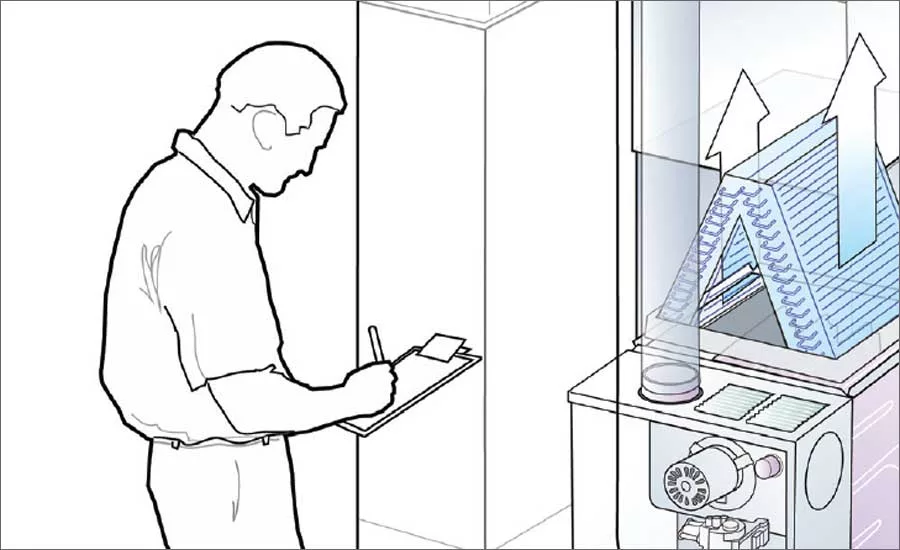
Last year, I wrote about five popular ways HVAC professionals across the country correct airflow issues. These corrections are commonly referred to as air upgrades and are basic duct repairs that lower total external static pressure (TESP) and improve fan airflow. Let’s look at how you can use a quick static pressure test to pinpoint air upgrade opportunities for your customers.
WHY TEST FIRST?
You might wonder, “Why can’t I just use a duct calculator and tape measure to identify duct repairs?” You could, but that means making a lot of assumptions and wasting valuable time.
When you skip testing, there is no way to confidently recommend the right duct repairs. You won’t know where to start or what to do to successfully complete them. It doesn’t have to be that way.
There is a pattern you can follow, but that requires the right skills and test instruments. Otherwise, you’re just guessing, and the result will be disappointment and frustration. Start with static pressure and then progress to airflow measurement.
GATHER EQUIPMENT INFORMATION
Before you test, gather some essential information from the indoor and outdoor equipment. Use this data to establish static pressure and airflow targets before you measure. The basic equipment information you’ll need includes:
- Equipment type and location;
- Indoor model numbers;
- Fan speed settings;
- Maximum rated TESP;
- Outdoor model number; and
- Outdoor unit tonnage.
Once you have this information, you’re ready to test the system. We’ll now look at how each piece of information applies to testing and diagnostics.
STATIC PRESSURE TESTING
Static pressure testing is the first diagnostic test to perform. It indicates the overall health of the system and identifies which side of the duct system is most restrictive. Without it, you won’t know where to focus your attention.
Make sure you have the right test instruments, report forms, and test procedures before you begin. They are the foundation to gather, record, and diagnose your test results. Without them, you could end up with inconclusive measurements, calculations, and diagnosis.
Looking for quick answers on air conditioning, heating and refrigeration topics? Try Ask ACHR NEWS, our new smart AI search tool. Ask ACHR NEWS
STATIC PRESSURE TEST INSTRUMENTS
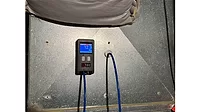
To measure static pressure, you will need a pressure testing kit that includes the following:
- Manometer (analog or digital);
- Static pressure tips and tubing (neoprene or silicone);
- 3/8-inch test port plugs;
- Small drill/impact gun with a unibit and 3/8-inch drill bit with a sheath/stop; and
- Thin screwdriver for cleaning out internal duct insulation.
A complete kit with all these items can typically be put together for less than $200. You might be tempted to remove some of them, but don’t. They all have a purpose.
STATIC PRESSURE MEASUREMENTS
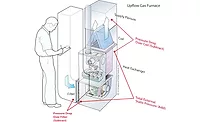
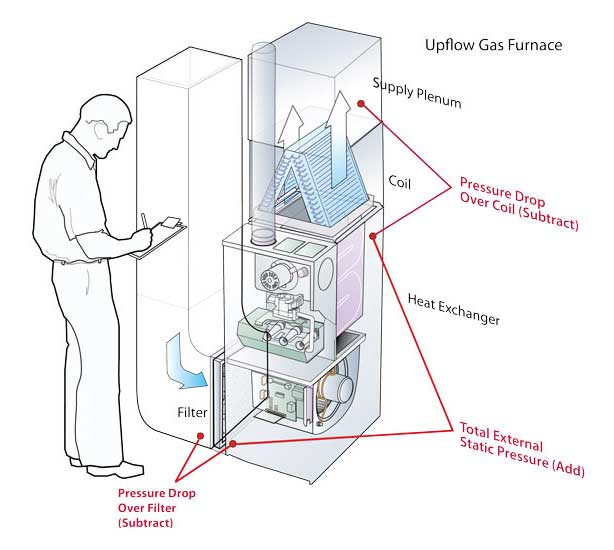
To uncover air upgrade opportunities, you’ll need to take four pressure readings. To properly diagnose the system, measure the following:
- TESP;
- Filter pressure drop (∆p);
- Coil pressure drop (∆p); and
- Supply and return duct pressures.
FANTASTIC FOUR: To pinpoint air upgrade opportunities, measure and diagnose four static pressure readings.
The type and location of your air-handling equipment determines your test port installation and how you will obtain these four readings.
STATIC PRESSURE DIAGNOSTICS
The four pressure measurements each have a diagnostic meaning and identify potential airflow restrictions in a duct system.
You will compare the pressures you measure against a pressure budget to pinpoint restrictive system components.
The components with pressures that exceed their corresponding pressure budget are where restrictions are probably hiding.
STATIC PRESSURE BUDGETS
To help you diagnose static pressure reading, National Comfort Institute (NCI) created pressure budgets. They are a simple diagnostic tool that uses the equipment’s maximum-rated TESP as a baseline value. System components are then given a percentage of the maximum-rated pressure for a pressure budget.
Look at Table 1 for an example of how pressure budgets work on a gas furnace with an external coil and rated TESP of .50 inches of water column.
| System Component | Pressure Budget | Measured Pressures |
| Total External Static Pressure | .50 | .91 |
| Return Duct Pressure | .10 | .35 |
| Filter Pressure Drop | .10 | .30 |
| Coil Pressure Drop | .20 | .18 |
| Supply Duct Pressure | .10 | .08 |
Table 1: This is an example of how pressure budgets work on a gas furnace with an external coil and rated TESP of .50 inches of water column.
You’ll notice TESP is the baseline for the budgets. If you add up the system component pressure budgets, they equal .50.
As you diagnose your pressure readings, look for any numbers that exceed the budget. They indicate areas you should focus on.
Let’s say you take the following pressure measurements and record them in the third column of Table 1.
The first indicator that this system needs an air upgrade is the .91 TESP reading. It exceeds the .50 maximum-rated TESP but doesn’t tell you where the problem is.
You need to look at the other pressure measurements to identify the high TESP measurement. The return duct pressure measures .35, and its pressure budget is .10. That’s 250 percent higher than the budget. This should be an area of concern that you would focus your attention on.
As you continue down the tables and compare measured pressures to pressure budgets, you’ll see that the filter also has a much higher pressure drop than the budget. This is another area that needs further investigation.
The coil and supply duct pressure measurements are lower than the budget. If you see these pressures, check out the return duct system and the air filter. They need return duct and air filter repairs to lower return side pressures. This is where the air upgrade begins.
CAUSE AND EFFECT
It’s important to note that any duct repairs to reduce return duct and air filter pressure will increase supply duct and coil pressure. This happens because equipment airflow increases.
As you add fan airflow to your static pressure readings, you get a better feel for how repairs will impact the system.
Air upgrades can fail if you only use static pressure and ignore fan airflow. If you resize the duct system and install it to industry standards but the blower is weak, it still won’t move proper airflow. A quick review of static pressure measurements and equipment fan tables will prevent this issue.
TAKE SMALL STEPS
Start with static pressure testing as your first small step to determine the need for air upgrades. After you master this skill, add fan airflow and then system airflow to your diagnostic arsenal. It’s important to give yourself time to learn these skills, understand their context, and use them to identify potential airflow issues.
If you run into challenges, don’t give up after the first few attempts. To build your confidence, test and diagnose your own installations first. Next, implement the tests into your maintenance calls, then emergency service calls. If you find issues with your systems, document them and look for ways to solve them.
When you measure static pressure, you’ll find a lot of systems that badly need air upgrades. You’ll need a way to keep track of them and follow up with the customer as you add this skill to your problem-solving abilities.
If you’re an HVAC contractor or technician interested in learning more about air upgrades, contact David at davidr@ncihvac.com or call him at 800-633-7058. NCI’s website, www.nationalcomfortinstitute.com, is full of free technical articles and downloads to help you improve your professionalism and strengthen your company.
Publication date: 10/22/2018
Want more HVAC industry news and information? Join The NEWS on Facebook, Twitter, and LinkedIn today!
Looking for a reprint of this article?
From high-res PDFs to custom plaques, order your copy today!