Five Issues That Cause Static Pressure Readings to Look Great
Several situations can cause readings to look better than they really are
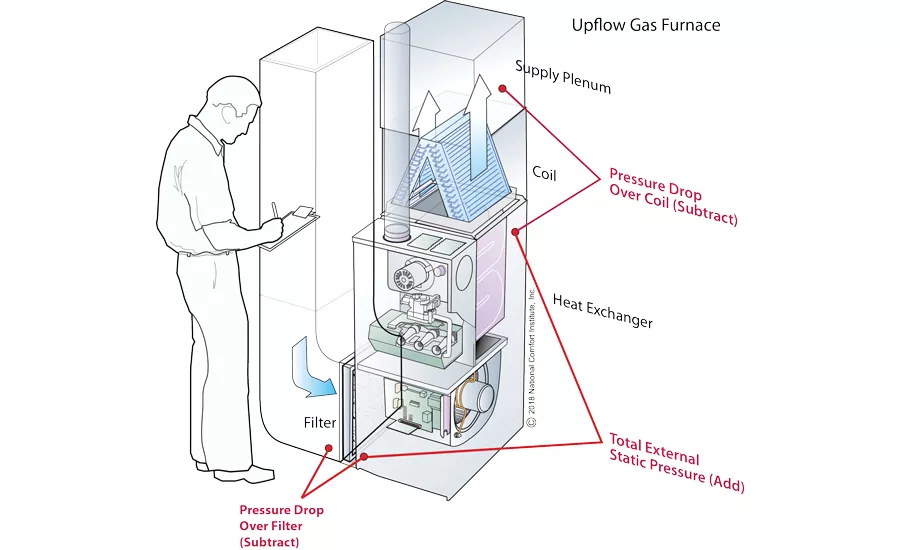
X MARKS THE SPOT: A firm understanding of proper test locations will cure one of the top issues that cause deceptive static pressure readings.
As more technicians measure static pressure, they need to be aware of situations that cause readings to look better than they really are. This leads some techs to assume all is well with a system when it isn’t. It can also cause frustration about readings that don’t make sense.
Many of the calls I receive about goofy static pressure readings typically tie into one of five issues. Let’s look at these issues and how you can be sure they don’t affect your measurements.
TESTING IN THE WRONG LOCATION
The top issue is measuring in the wrong locations. While filter and coil pressure drop measurements are pretty straightforward, total external static pressure (TESP) is often confusing.
To help technicians understand where to measure TESP, Scott Johnson, a trainer at National Comfort Institute (NCI), introduced the “as-shipped” concept. Think about how air-moving equipment comes from the factory as shipped in the box. When you unpackage it, what’s included? These are the components the manufacturer includes in its TESP measurement — everything else is external.
Consider a gas furnace unboxed on the job site. The only thing included in the box is the furnace. The indoor coil, air filter, and duct system are all external to the as-shipped furnace. This is why TESP on a gas furnace is measured after the filter, as air enters the equipment, and before the coil, as air leaves the equipment. When you remember this, it makes the TESP measurement much clearer.
If you’re in doubt about test locations, record multiple pressures. Aim to measure and record four pressures on each system. On gas furnace systems, take these four measurements before the filter, after the filter, before the coil, and after the coil. On air handlers and package units, the measurements are typically before the filter, after the filter, after the coil, and in the supply duct. Documenting multiple pressures allows you to go back and find any mistakes if there is a question or dispute.
DIRTY BLOWER WHEEL
A dirty blower wheel is another issue that makes static pressure measurements look better than they are. Think of blower wheel vanes like snow shovels. When a snow shovel is clean, you can scoop and move a lot of snow with it. When the shovel gets compacted with snow, you don’t move nearly as much.
Looking for quick answers on air conditioning, heating and refrigeration topics? Try Ask ACHR NEWS, our new smart AI search tool. Ask ACHR NEWS
Blower wheels “scoop” air from the return duct system and throw it into the supply duct system. When the vanes are clean, a properly designed and installed system moves the right airflow. If the vanes are compacted with dirt, airflow decreases substantially. It’s estimated that a 1/8-inch coating of dust on blower wheel vanes reduces fan capacity by as much as 30 percent. As airflow is reduced through the equipment, so is static pressure.
Remember this the next time you see static pressure readings that look great, but the cooling system you’re testing is flooding back refrigerant to the compressor. A quick inspection of the blower will eliminate one potential suspect. If it’s dirty, clean it. Once the blower wheel is clean, expect an increase in static pressure from the fan moving more air. You might uncover another issue once the dirty blower is corrected.
PLUGGED SECONDARY HEAT EXCHANGER
Another issue is a plugged secondary heat exchanger in a condensing furnace. This problem can be harder to determine, as the visual clues are often hidden and require a lot of work to discover. Anyone who has laid on their back with their upper body inside the furnace blower compartment understands what I’m talking about.
When this issue exists, static pressure readings look great. In fact, they may be much lower than the equipment nameplate maximum rated TESP. Don’t depend on a visual inspection of the filter or blower wheel to make your diagnosis though.
I’ve been on jobs where the filter and blower wheel are clean, but the testing technician is following behind another technician or company. The previous technician cleaned the blower wheel but forgot to check the secondary heat exchanger condition. This is the main reason the second technician got involved: The furnace wouldn’t stay lit.
You’ll need to add temperature readings to your diagnostics to discover this problem. Supply air and flue gas temperatures are both indicators. When they are high, they can exceed the furnace manufacturer’s nameplate temperature rise and flue gas temperature ranges. In this scenario, the furnace will likely trip the high-limit switch, causing intermittent lockouts. Pull the blower assembly and clean the secondary heat exchanger when you encounter this issue.
BLOWER OPERATING SPEED
Another common issue resulting in false static pressure readings is failing to pay attention to blower operating speed and equipment setup details. This is often tied to improper setup or not understanding the equipment’s sequence of operation. Easily-made mistakes include using the “fan on” switch on the thermostat, not letting the fan fully ramp up on variable-speed equipment, testing in first stage on two-stage equipment, and not paying attention to the fan speed setting used.
The fan should operate at its highest airflow, and the coil should be fully wet to see how the system operates at its highest load. Testing static pressure as mentioned above could result in pressures that look much better than they really are.
You can correct this by knowing the operation sequence for the equipment you’re testing and checking the fan speed settings. If unsure of the equipment delays and staging, wait about 15 minutes after it turns on to take measurements.
DUCT LEAKAGE
Duct leakage is an issue beyond the equipment that makes static pressure readings look great. The leakier a duct system is, the better the static pressure readings appear. Think of duct leakage as pressure relief for a duct system. The larger the opening, the greater the relief.
Anyone sealing existing duct systems should be concerned about this. When a duct system is sealed, static pressure increases. If the duct system is really leaky, static pressure could increase substantially. This can be a recipe for disaster on systems with weak blower motors.
A quick check of equipment airflow requirements and existing duct sizes can help you head off a problem before it is created. Static pressure is a duct sealing pre-qualifier that must be kept in context. If an undersized duct system is sealed, the resulting headaches will offset any benefits from tight ducts.
LEARNING EXPERIENCES
The good news is these issues are easy to fix if you know what to look for up front. If they happen to you, you’ll never forget the experience. Begin by getting everyone on your team up to speed on the fundamentals of static pressure and move forward from there.
Make sure your technicians have access to documents that promote measurement consistency and proper documentation. You can help them by assuring they have the right materials. To help get you started, I would like to offer an NCI Static Pressure Quick-Start Guide and the Air Upgrade Reports.
If you would like PDF copies, send me an email request at davidr@ncihvac.com.
Start testing and begin to uncover and solve what your competition is afraid to address.
Publication date: 8/20/2018
Want more HVAC industry news and information? Join The NEWS on Facebook, Twitter, and LinkedIn today!
Looking for a reprint of this article?
From high-res PDFs to custom plaques, order your copy today!