ACHR News
search
Ask ACHR NEWS AI
cart
facebook twitter instagram linkedin youtube
  • Sign In
  • Subscribe
  • Sign Out
  • My Account
ACHR News
  • NEWS
    • Breaking News
    • New HVAC Products
    • Featured Products
    • Manufacturer Reports
    • HVAC Data
    • Legislation
    • ACHR NEWS Centennial
  • RESIDENTIAL
    • Air Conditioners
    • Furnaces
    • Residential Heat Pumps
    • Ductless
    • Residential IAQ
    • Testing, Monitoring, Tools
    • Components & Accessories
  • COMMERCIAL
    • Air Handlers
    • Rooftop Units
    • Chillers and Cooling Towers
    • Commercial Heat Pumps
    • Boilers and Hydronics
    • VRF/Ductless
    • Commercial IAQ
  • REFRIGERATION
    • Refrigerants
    • Refrigerant Regulations
    • Leak Management
  • CONTRACTOR PRO
    • Geothermal
    • Homeowner Study
    • VRF and VRV Ductless
    • Unitary Trends
  • EDUCATION
    • Training and Education
    • Business Management
    • Service and Maintenance
    • Continuing Education
    • Market Research >
      • HVAC Brand Awareness Report
      • VRV, VRF, VRVZ Report
      • Unitary Trends Report
      • Water Heat Professionals Report
    • Webinars
    • Sponsor Insights
    • eProducts Info
    • White Papers
  • EVENTS
    • HVAC Contractor Forum
    • Industry Events and Webinars
  • MEDIA
    • Videos
    • AHR Expo 2025 Videos
    • Podcasts >
      • ACHR News Podcast
      • HARDI Podcasts
      • AHR Expo Podcasts
      • ACCA Podcasts
    • Interactive Spotlights
    • Quizzes
    • eBooks
    • HVAC Talkback
  • HVAC GROUP
    • ACHR NEWS >
      • Current Issue
      • Digital Edition
      • Subscribe
    • Distribution Trends
    • SNIPS NEWS >
      • Join SNIPS NEWS
    • Engineered Systems News >
      • Join ES News
    • HVACR Directory
    • Contests
    • Newsletters
    • Contact
    • Advertise
    • My Account
HVAC Residential MarketVentilationDuct Products

Duct Dynasty: Ducts — To Seal or Not to Seal?

Where Do You Stand in this Debate?

By David Richardson
April 13, 2015

A subject that is sure to get some hearty debate going is whether ducts inside a conditioned space should be sealed or not. What is your opinion on this sticking point of energy efficiency?

No Sealing Needed
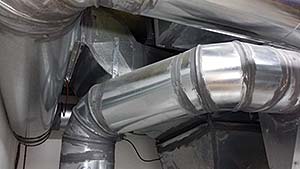
Can you really be sure airflow is making it to the proper areas if a duct system is unsealed?

On one side of this debate, you have those who adamantly proclaim that sealing a duct system located inside the conditioned space has little impact on energy savings since any leakage is inside the conditioned space. After all, any air leakage is still within the conditioned space and technically not being lost to the outside.

Many are going to take this side of the debate, as the energy code doesn’t mandate duct leakage testing on systems that have all ducts located within the conditioned space. If code doesn’t mandate duct leakage testing on ducts within a conditioned space, it must not be a big deal, right?

Seal the Ducts

On the other side of this debate, you have those who are just as passionate, claiming every duct system needs to be sealed as close to 100 percent airtight as possible, regardless of the duct location. After all, if the air is being lost through duct leakage to a space it isn’t supposed to be going, how can you ensure proper airflow delivery to every room?

Both sides of the debate bring up some great points, but who is right? Let’s examine the facts, and then you can decide whether a duct system inside the conditioned space should be sealed or not.

Basic Rules of Airflow

Although airflow is often invisible and can’t be physically handled, it follows some very basic rules that allow us to predict its properties and characteristics. By examining a few of these basic rules, we can begin to determine if ducts in a conditioned space really do need to be sealed, or if leaving them unsealed is perfectly acceptable.

Rule No. 1: Air will always follow the path of least resistance. Air is pretty lazy when it comes to how it moves around inside a duct system. When a nice large opening close to the equipment is available, air will gladly go through that opening instead of bypassing it to head to the appropriate supply register. This rule may sound simple, but it’s often forgotten and its impact minimized.

Looking for quick answers on air conditioning, heating and refrigeration topics? Try Ask ACHR NEWS, our new smart AI search tool. Ask ACHR NEWS →

Rule No. 2: One cfm of airflow into a fan equals 1 cfm of airflow out of the fan. Airflow is measured in cfm or cubic feet per minute. For every 1 cfm that is pulled into the blower wheel of the fan in the air-handling equipment, there is 1 cfm coming out of the blower wheel.

Let’s say you have a 3-ton system that’s operating in cooling mode. You measure the actual fan airflow at the air-handling equipment and determine you are moving 1,210 cfm through the fan. This means you have 1,210 cfm of air being pulled into the blower wheel of the fan and 1,210 cfm of air being discharged from the fan. This doesn’t mean you have 2,420 cfm of total airflow though; you’re only working with 1,210 cfm. The fan is only moving that amount of airflow from the inlet of the fan to the outlet of the fan. The fan doesn’t create additional airflow.

Rule No. 3: Airflow is always highest at the fan, just as static pressure will always be highest at the fan. As air moves down the duct system and farther away from the fan, airflow begins to decrease as it is delivered through individual branch runs to rooms of a building.

Now, let’s apply these fundamental aspects of airflow to determine if ducts in conditioned space should be sealed.

Duct Leakage Impacts

A complaint that many of us have received is that a certain room at the farthest end of a home isn’t getting comfortable. During the winter, this room is just too cold, and in the summer, this room is too hot. Sound familiar?

There is a good possibility we can apply a couple of basic airflow rules here to determine what is going on in this scenario. Since air takes the path of least resistance (rule No. 1), it’s much easier for it to pass through an unintended leak in the duct system than to travel all the way through the duct system, to a problem room at the farthest end of a home.

In the previous example I gave of the 3-ton system moving 1,210 cfm of air, for that system to function as designed, it’s important to get as close to 100 percent of that 1,210 cfm from the fan in the equipment to the intended points of delivery (individual rooms).

There is only so much fan airflow to deal with from the air-handling equipment. If it’s being lost through duct leakage, you’ll never be able to have true control over the air in the duct system.

To control air, you first have to contain it. This becomes a very painful truth to anyone who has attempted to air balance a duct system that has not been sealed.

You just can’t air balance a leaky duct system. This is true regardless of the duct system location. Because our industry has a tendency to assume performance instead of measuring it, this fact often gets overlooked and is instead assumed.

When a duct system hasn’t been sealed, you have no way of controlling where the air in the ducts will go. If conditions exist in a duct system that allows air to bypass its intended delivery point, it will take the path of least resistance all day long. Airflow is one of the key components of the Btu formulas. In order to have proper Btu delivery to individual rooms, the first item that has to be considered is whether the proper amount of airflow is being delivered into the building.

You might be wondering how this could affect energy efficiency. Uncomfortable occupants typically adjust the thermostat to become comfortable in those farthest rooms. By adjusting the thermostat, the equipment now runs longer in an attempt to achieve comfort.

This adjustment of the thermostat directly affects energy efficiency, as Btu delivery isn’t being achieved where it’s needed. Even with the Btu being lost into a conditioned space, the occupants don’t directly benefit from that loss in relationship to their comfort. They don’t feel the Btu lost to a basement from that farthest room.

Pressure imbalances are another issue created by duct leakage that can occur with ducts in a conditioned space. Unless air is contained and controlled in a duct system, it can change the pressures in a home drastically, even if all ducts are inside the home.

The safety impacts associated with this are often forgotten, as imbalanced pressures can cause combustion appliances in a home to spill flue gases into the living area. Depressurization in homes with attached garages can lead to carbon monoxide from auto exhaust being pulled into the home for occupants to breathe.

Is your position on this debate the same, or has it changed any? Ultimately, the real answers to this debate are found through performance testing of the systems you install. Unless you’re testing your systems, you’ll never see these types of interactions. This isn’t about whether the ducts in a particular location need to be tested for leakage or not based on energy code manadates. It’s about doing the right thing for your customers and verifying your systems truly do what you promised they would.

Publication date: 4/13/2015

Want more HVAC industry news and information? Join The NEWS on Facebook, Twitter, and LinkedIn today!

KEYWORDS: airflow management Duct Dynasty duct sealing National Comfort Institute (NCI)

Share This Story

Looking for a reprint of this article?
From high-res PDFs to custom plaques, order your copy today!


David richardson
David Richardson serves the HVAC industry as Vice President of Training for National Comfort Institute, Inc. (NCI). NCI specializes in training focused on improving, measuring, and verifying HVAC and Building Performance. If you’re an HVAC contractor or technician interested in learning more about building science applied to HVAC, contact David at ncilink.com/ContactMe.

Recommended Content

JOIN TODAY
To unlock your recommendations.

Already have an account? Sign In

  • HVAC-enrollment

    The Trades Are Back: HVACR Programs See Nearly 30% Enrollment Spike

    A new wave of future technicians is entering the pipeline.  
    News
    By: Matt Jachman
  • 2025 Top 40 Under 40

    2025 Top 40 Under 40 HVACR Professionals List

    The 11th annual Top 40 Under 40 list highlights those...
    HVAC Contracting
    By: Hannah Belloli-Oster
  • LG Ductless Mini-Split Systems

    The 9 Types of Heat Pumps

    As the U.S. moves toward electrification, heat pumps are...
    HVAC Commercial Market
    By: Joanna R. Turpin
Subscription Center
  • Create an Account
  • Start a Subscription
  • Manage My Account
  • Sign Up for Newsletters
  • Visit Customer Service
  • Update Preferences

More Videos

Sponsored Content

Sponsored Content is a special paid section where industry companies provide high quality, objective, non-commercial content around topics of interest to The News audience. All Sponsored Content is supplied by the advertising company and any opinions expressed in this article are those of the author and not necessarily reflect the views of The News or its parent company, BNP Media. Interested in participating in our Sponsored Content section? Contact your local rep!

close
  • Piggy Bank
    Sponsored byWatercress Financial

    Energy Prices, Inflation, and HVAC: What Today’s Homeowners Care About

  • Refrigerated Food
    Sponsored bySolstice Advanced Materials

    R-455A Refrigeration: A Cold Storage Solution for the Future

  • Airex Rooftop Units
    Sponsored byAirex Manufacturing Inc

    Consolidating Roof Penetrations: A Growing Trend in Multifamily HVAC Design

Popular Stories

HVAC-Price-Increase-graphic

HVAC Price Increase List: July 2026

Trade groups challenge EPA refrigerant rule

HVACR Trade Groups Challenge EPA Refrigerant Rule in Federal Court

heat-pump-tech-customer.jpg

DOE Updates $8.8B Home Energy Rebate Program Guidance

US-capitol-building-south.jpg

How the Bipartisan Housing Affordability Bill Impacts the HVAC Industry

Avant Bai and John Herrington

Leadership Transition Under Way at Midea America Corp.

View The ACHR NEWS
Centennial Anniversary Timeline

The ACHR News Timeline Chart
Submit a Letter
Submit a letter to our editors.

Events

November 6, 2025

Next-Gen Data Center Cooling: HVAC Innovation and Real-World Solutions

On Demand As AI workloads and high-density computing push traditional cooling methods to their limits, the data center industry is accelerating the adoption of next-generation HVAC technologies.

July 22, 2026

Designing VRF Systems Using A2L Refrigerant

In this session, we will cover how to design VRF systems for the U.S. market using new A2L refrigerants. These systems provide an advanced zoning solution by using inverter technology to deliver precise heating and cooling control across multiple zones and spaces.

View All Submit An Event

Poll

Summer Staff

Are you fully staffed for the summer season?
View Results Poll Archive

Products

BNI Mechanical/Electrical Square Foot Costbook, 2026 Edition

BNI Mechanical/Electrical Square Foot Costbook, 2026 Edition

See More Products
Designing Systems Using A2L Refrigerant - Free Webinar - 7/22/2026

Related Articles

  • Duct Dynasty: 6-inch Ducts Don’t Always Deliver 100 cfm

    See More
  • New technology, opportunities beckon contractors to seal ducts

    See More
  • Here's how to seal ducts

    See More

Related Products

See More Products
  • 0880690186-228x228.jpg

    Airflow in Ducts

  • HVAC/R Electrical Troubleshooting: Deciding where to begin DVD

  • A-Heat-Pump-Thats-Not-Delivering-Any-Air-DVD-Cover-218x300.jpg

    A Heat Pump That’s Not Delivering Any Air

See More Products

Events

View AllSubmit An Event
  • June 23, 2026

    HVAC Duct Sealing Mastics: Why Selection Matters

    On Demand In this webinar we will detail what HVAC material buyers and technicians need to know when selecting duct mastics, including matching mastic to substrate, alternatives to liquid mastic, and where UL 181 Listings fit into real world installations.
View AllSubmit An Event

Related Directories

  • Gustafson Duct

    Gustafson is a leading spiral duct and fitting manufacturer that markets to wholesalers and dealers. The company offers conventional air duct systems, as well as self-sealing and high velocity HVAC duct systems.
  • Seal-Tite LLC

    Sheet metal duct, pipe and fittings for the HVAC industry.
×

Sign Up. Stay Informed.

The #1 trusted source for the HVACR industry since 1926

SUBSCRIBE
  • RESOURCES
    • Advertise
    • Contact Us
    • Advisory Board
    • Classifieds
    • Submit a Letter
    • Directories
    • Store
  • ACCOUNT CENTER
    • Create an Account
    • Start a Subscription
    • Manage My Account
    • Sign Up for Newsletters
    • Visit Customer Service
    • Update Preferences
  • SERVICES
    • Marketing Services
    • Reprints
    • Market Research
    • List Rental
    • Survey/Respondent Access
  • STAY CONNECTED
    • LinkedIn
    • Facebook
    • Instagram
    • YouTube
    • X (Twitter)
  • PRIVACY
    • PRIVACY POLICY
    • TERMS & CONDITIONS
    • DO NOT SELL MY PERSONAL INFORMATION
    • PRIVACY REQUEST
    • ACCESSIBILITY

Copyright ©2026. All Rights Reserved BNP Media, Inc. and BNP Media II, LLC.

Design, CMS, Hosting & Web Development :: ePublishing