ACHR News
search
Ask ACHR NEWS AI
cart
facebook twitter instagram linkedin youtube
  • Sign In
  • Subscribe
  • Sign Out
  • My Account
ACHR News
  • NEWS
    • Breaking News
    • New HVAC Products
    • Featured Products
    • Manufacturer Reports
    • HVAC Data
    • Legislation
    • ACHR NEWS Centennial
  • RESIDENTIAL
    • Air Conditioners
    • Furnaces
    • Residential Heat Pumps
    • Ductless
    • Residential IAQ
    • Testing, Monitoring, Tools
    • Components & Accessories
  • COMMERCIAL
    • Air Handlers
    • Rooftop Units
    • Chillers and Cooling Towers
    • Commercial Heat Pumps
    • Boilers and Hydronics
    • VRF/Ductless
    • Commercial IAQ
  • REFRIGERATION
    • Refrigerants
    • Refrigerant Regulations
    • Leak Management
  • CONTRACTOR PRO
    • Geothermal
    • Homeowner Study
    • VRF and VRV Ductless
    • Unitary Trends
  • EDUCATION
    • Training and Education
    • Business Management
    • Service and Maintenance
    • Continuing Education
    • Market Research >
      • HVAC Brand Awareness Report
      • VRV, VRF, VRVZ Report
      • Unitary Trends Report
      • Water Heat Professionals Report
    • Webinars
    • Sponsor Insights
    • eProducts Info
    • White Papers
  • EVENTS
    • HVAC Contractor Forum
    • Industry Events and Webinars
  • MEDIA
    • Videos
    • AHR Expo 2025 Videos
    • Podcasts >
      • ACHR News Podcast
      • HARDI Podcasts
      • AHR Expo Podcasts
      • ACCA Podcasts
    • Interactive Spotlights
    • Quizzes
    • eBooks
    • HVAC Talkback
  • HVAC GROUP
    • ACHR NEWS >
      • Current Issue
      • Digital Edition
      • Subscribe
    • Distribution Trends
    • SNIPS NEWS >
      • Join SNIPS NEWS
    • Engineered Systems News >
      • Join ES News
    • HVACR Directory
    • Contests
    • Newsletters
    • Contact
    • Advertise
    • My Account
VentilationDuct Products

Duct Dynasty: Verifying Proper Design through Performance Measurements

Tips to Ensure the Accuracy of Your HVAC Installations

By David Richardson
February 16, 2015
airflow testing
It’s your job to test systems and ensure customers are getting the best system available. Make sure, as a professional, you’re providing what you really intend to provide.

A couple of months ago, I addressed the topic of how proper HVAC system design could not guarantee the installed performance of a system. Since that article, I have received a number of emails requesting I go into further detail about the measurements I mentioned and how to verify the installed performance of a system.

These measurements enable an individual to verify whether or not the installed system actually performs as the design said it should. This is accomplished by measuring static pressure, airflow, temperature changes, and delivered Btu. Once these basic measurements are obtained, you can begin to determine if the system is operating as designed.

Moving from Design to Reality

Many in our industry tend to place emphasis on proper system design, yet never verify the end result. Beyond the important starting point of ensuring the design software was used correctly, the next step involves looking beyond the software’s produced values and quantifying those values were accurately delivered inside the customer’s home.

This may take an installer to an uncomfortable place, as he or she now has to question the installation practices. If there are deficiencies in the installed system, testing will identify them.

Verification is a huge turning point in the lives of many HVAC professionals. They either see it as an opportunity or ignore it and continue forward with business as usual. Let’s take a brief look at the measurements that can help you determine if your designs really deliver what you promised.

Static Pressure

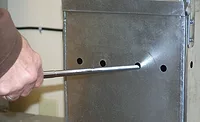
Static pressure is one of the foundations of airflow and should be one of the first test readings taken on any HVAC system. Think about that last visit to the doctor’s office. Regardless of whether you had a cut finger or a broken leg, one of the first readings taken was blood pressure. Static pressure serves a very similar function when it comes to the performance of an HVAC system. With total external static pressure readings, you can determine if the fan in the equipment is being subjected to excessive pressures that will cause it to function improperly and fail prematurely. The majority of equipment manufacturers’ engineering data list airflow in furnaces and air handlers based on total external static pressure.

The typical furnace is designed to operate at a maximum of 0.5 inch of water column (wc). If the measured total external static pressure is more than the allotted 0.5 inch, the fan is typically unable to move the industry standard airflow of 400 cfm per ton, in cooling mode.

Looking for quick answers on air conditioning, heating and refrigeration topics? Try Ask ACHR NEWS, our new smart AI search tool. Ask ACHR NEWS →

By taking additional pressure readings, you can also compare the actual restriction to airflow of the evaporator coil and the air filter compared to design. This ensures these components are within tolerances specified by the manufacturer. If these pressures exceed listed tolerances, then further investigation is needed to determine the reason for restriction.

Airflow

To verify system performance, you will need to determine airflow at the fan and at the grilles. At the fan, airflow needs to be verified to ensure the proper volume of air is available to be delivered to individual rooms. Total external static pressure, the fan speed being used, and the manufacturer’s fan performance data can be used to approximate the amount of air that is moving through the HVAC equipment.

Verifying delivered airflow from each supply register and return grille ensures the designed amount of airflow is being delivered to the proper areas of a home. This is a complete change from assuming the delivered airflow based on a particular duct size and a duct calculator. The use of a balancing hood allows a technician to verify conditioned air is making it to its intended point of delivery. The delivered airflow readings can then be compared to the design airflow numbers from a load calculation. This will allow you to verify your airflow design was actually achieved. How cool is that?

Temperatures

The next step in verification is to ensure the proper temperatures are being delivered the equipment.

By measuring the supply temperature and return temperature at the equipment, you can obtain a temperature change (delta t) across the equipment. These measurements help in determining the equipment’s performance and isolate the equipment performance from the system performance.

Remember, system temperatures are entirely dependent on the system airflow. Low airflow equals higher temperatures and too much airflow equals lower temperatures. This is why you measure airflow first, so you can correctly interpret your delta T’s.

A crucial set of temperature readings used in determining system performance are average supply register and return grille temperatures. With these temperatures, you can see how much temperature is being lost through the duct system and how much is truly making it into the conditioned space.

Subtract the difference between the average supply register temperature from the average return grille temperature to find the system delta t. Then, compare the equipment delta t to the system delta t. The difference is the amount of heating or cooling you have lost through the duct system. This new test will blow your socks off.

It’s easy to assume ducts inside a conditioned space won’t have much of an impact on comfort. This test helps you see the impact of those duct locations. These temperature readings play a big role in determining delivered Btu.

Delivered Btu

The real truth verifying your design intent has been met or not lies in measuring delivered Btu into the conditioned space. You can calculate system-delivered Btu by multiplying airflow and temperature readings to verify the design was actually achieved. There are two basic formulas typically used to accomplish this feat. There is a formula for cooling, and a formula for heating. (In next month’s article, we’ll examine these formulas in depth.)

Compare the actual system delivered Btu to the required system designed Btu to verify if design intent was met or not. If the calculations are way off, you may need to take a closer look at the installation process. It takes real attention to detail when installing an HVAC system to get close to the manufacturer’s rated output.

It’s your job to test systems and ensure customers are getting the best system available. Make sure, as a professional, you’re providing what you really intend to provide.

Publication date: 2/16/2015

Want more HVAC industry news and information? Join The NEWS on Facebook, Twitter, and LinkedIn today!

KEYWORDS: airflow management Duct Dynasty National Comfort Institute (NCI)

Share This Story

Looking for a reprint of this article?
From high-res PDFs to custom plaques, order your copy today!


David richardson
David Richardson serves the HVAC industry as Vice President of Training for National Comfort Institute, Inc. (NCI). NCI specializes in training focused on improving, measuring, and verifying HVAC and Building Performance. If you’re an HVAC contractor or technician interested in learning more about building science applied to HVAC, contact David at ncilink.com/ContactMe.

Recommended Content

JOIN TODAY
To unlock your recommendations.

Already have an account? Sign In

  • HVAC-enrollment

    The Trades Are Back: HVACR Programs See Nearly 30% Enrollment Spike

    A new wave of future technicians is entering the pipeline.  
    Training and Education
    By: Matt Jachman
  • 2025 Top 40 Under 40

    2025 Top 40 Under 40 HVACR Professionals List

    The 11th annual Top 40 Under 40 list highlights those...
    HVAC Contracting
    By: Hannah Belloli-Oster
  • LG Ductless Mini-Split Systems

    The 9 Types of Heat Pumps

    As the U.S. moves toward electrification, heat pumps are...
    Ground Source Heat Pumps
    By: Joanna R. Turpin
Subscription Center
  • Create an Account
  • Start a Subscription
  • Manage My Account
  • Sign Up for Newsletters
  • Visit Customer Service
  • Update Preferences

More Videos

Sponsored Content

Sponsored Content is a special paid section where industry companies provide high quality, objective, non-commercial content around topics of interest to The News audience. All Sponsored Content is supplied by the advertising company and any opinions expressed in this article are those of the author and not necessarily reflect the views of The News or its parent company, BNP Media. Interested in participating in our Sponsored Content section? Contact your local rep!

close
  • Piggy Bank
    Sponsored byWatercress Financial

    Energy Prices, Inflation, and HVAC: What Today’s Homeowners Care About

  • Refrigerated Food
    Sponsored bySolstice Advanced Materials

    R-455A Refrigeration: A Cold Storage Solution for the Future

  • Airex Rooftop Units
    Sponsored byAirex Manufacturing Inc

    Consolidating Roof Penetrations: A Growing Trend in Multifamily HVAC Design

Popular Stories

HVAC-Price-Increase-graphic

HVAC Price Increase List: July 2026

Trade groups challenge EPA refrigerant rule

HVACR Trade Groups Challenge EPA Refrigerant Rule in Federal Court

heat-pump-tech-customer.jpg

DOE Updates $8.8B Home Energy Rebate Program Guidance

Lovato-refrigerant-rooftop_AC_Units_.jpg

When Refrigerants Change, So Do the Contactors

Martin Hoover

ACCA Leadership Shakeup: Barton James Out, Hoover Named Interim CEO

View The ACHR NEWS
Centennial Anniversary Timeline

The ACHR News Timeline Chart
Submit a Letter
Submit a letter to our editors.

Events

November 6, 2025

Next-Gen Data Center Cooling: HVAC Innovation and Real-World Solutions

On Demand As AI workloads and high-density computing push traditional cooling methods to their limits, the data center industry is accelerating the adoption of next-generation HVAC technologies.

July 28, 2026

How Top Home Services Companies Turn Every Conversation Into Predictable Revenue

In this webinar, we'll outline how top contractors are turning every conversation into predictable revenue by coaching every comfort advisor visit, not just the ones a manager rides along on.

View All Submit An Event

Poll

Summer Staff

Are you fully staffed for the summer season?
View Results Poll Archive

Products

BNI Mechanical/Electrical Square Foot Costbook, 2026 Edition

BNI Mechanical/Electrical Square Foot Costbook, 2026 Edition

See More Products
Designing Systems Using A2L Refrigerant - Free Webinar - 7/22/2026

Related Articles

  • Duct Dynasty: Does Proper Design Guarantee HVAC System Performance?

    See More
  • Duct Dynasty: Duct Design and Proper Airflow

    See More
  • Accurately performing a duct traverse requires confidence, practice, and patience

    Duct Dynasty: What Baseball Teaches Us About System Performance Testing

    See More

Related Products

See More Products
  • DUCT DESIGN.gif

    HVAC Systems Duct Design

  • Manual Q.jpg

    Manual Q - Low Pressure, Low Velocity Duct System Design

  • 1966.gif

    HVAC Duct Construction Standards - Metal and Flexible

See More Products

Related Directories

  • measureQuick®

    measureQuick is an application that technicians use to display measurements from arrayed smart tools, run equipment diagnostics, view just-in-time education and resources, generate easy-to-read homeowner-facing PDF reports and more.
  • Design Polymerics

    Design Polymerics manufactures low VOC, LEED qualified, duct sealants, duct liner adhesives and insulation mastics. We now offer silicones and MS polymer sealants.
  • Building Performance Assn.

    The Building Performance Association is a membership-driven 501(c)6 industry association dedicated to advancing the home and building performance industry by delivering improved energy efficiency, health, safety, and environmental performance of buildings through our members and network.
×

Sign Up. Stay Informed.

The #1 trusted source for the HVACR industry since 1926

SUBSCRIBE
  • RESOURCES
    • Advertise
    • Contact Us
    • Advisory Board
    • Classifieds
    • Submit a Letter
    • Directories
    • Store
  • ACCOUNT CENTER
    • Create an Account
    • Start a Subscription
    • Manage My Account
    • Sign Up for Newsletters
    • Visit Customer Service
    • Update Preferences
  • SERVICES
    • Marketing Services
    • Reprints
    • Market Research
    • List Rental
    • Survey/Respondent Access
  • STAY CONNECTED
    • LinkedIn
    • Facebook
    • Instagram
    • YouTube
    • X (Twitter)
  • PRIVACY
    • PRIVACY POLICY
    • TERMS & CONDITIONS
    • DO NOT SELL MY PERSONAL INFORMATION
    • PRIVACY REQUEST
    • ACCESSIBILITY

Copyright ©2026. All Rights Reserved BNP Media, Inc. and BNP Media II, LLC.

Design, CMS, Hosting & Web Development :: ePublishing