Today, in addition to helping Emerson champion modulation technologies, compressor electronics, and helping contractors sell the concept of comfort, Zellmer is receiving numerous honors, including the inaugural Legends of HVACR Award, which was presented to him at the 2017 Service World Expo.
If you’re reading this article right now, then it’s safe to assume you’ve heard of George “Butch” Welsch. Aside from being a regular contributor to The NEWS, Welsch is president of St. Louis-based Welsch Heating & Cooling Co., and the man…well, he’s a legend. Welsch was recognized at the 2017 Service World Expo as the first of this year’s three inaugural Legends of HVACR Award winners.
Larry Taylor, whose career in the industry exceeds five decades, was honored as an inaugural Legend of HVACR Award winner during the 2017 Service World Expo, Sept. 7-8 at Mandalay Bay Resort and Casino in Las Vegas.
Why on earth am I writing about winter in October? Trust me, I have no desire to see the white stuff go flying by, hear the whistling wails of winter storm winds, or see the ever-present gray skies. But, as they say in my favorite television series, “Game of Thrones (GOT),” “Winter is coming.” And the HVAC Industry needs to get ready.
Converting residential air conditioning equipment that uses R-22 to a replacement refrigerant is seen by many contractors and homeowners as a good way to extend the life of the system while removing R-22 from the picture. There are a number of replacement refrigerants to choose from, but with any replacement, it’s important to remember that the refrigerant is only half of the equation.
Sales of cooling equipment increased this summer, according to the Air-Conditioning, Heating, and Refrigeration Institute (AHRI), whose combined June and July 2017 reports showed that U.S. shipments of central air conditioners and air-source heat pumps were up about 5.7 percent compared to units shipped during the same time frame in 2016.
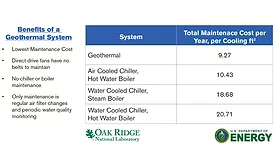
Both the commercial and residential geothermal markets have felt the sting of the loss of federal tax credits for geothermal projects, but contractors on the commercial side remain reasonably upbeat about their market’s outlook.
It’s not unusual for one to wake up with a headache on Jan. 1, but the headache that greeted the geothermal industry on Jan. 1, 2017, wasn’t caused by excessive late-night celebration. On that date, geothermal systems lost their 10 percent investment tax credit under Section 48 of the Internal Revenue Code (which covers energy tax credits).
While geothermal heat pumps may initially seem complicated to service or troubleshoot for some technicians, with the right training, they will find that these systems are similar to conventional air-source heat pumps.
HVAC manufacturers are in an interesting position when it comes to training and educating the industry’s next generation. While there is no black-and-white solution when it comes to addressing the technician shortage and ensuring there are enough people coming into the industry to satisfy demand, many manufacturers are doing their part by providing training opportunities wherever and whenever possible.
 RSS
RSS