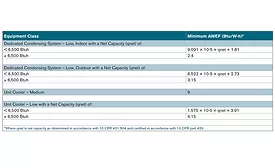
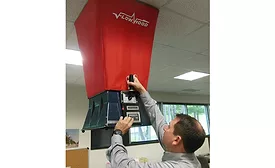
New rules dictating energy usage in walk-in coolers and freezers (WICF) will become law Sept. 7, according to a recently published final rule, courtesy of the U.S. Department of Energy (DOE).
The EPA estimates the annual emissions reductions from this rule will be approximately 7.3 million metric tons of carbon dioxide equivalent (MMTCO2eq) and 114 ozone-depletion weighted metric tons (ODP tons).
The buildings of tomorrow are chock full of Internet of Things (IoT) devices and equipment that connect tenants, mechanical systems, and facility managers to up-to-the-minute data and progress reports.
According to a new market research report by marketsandmarkets.com, the home automation system market was valued at $39.93 billion in 2016 and is expected to reach $79.57 billion by 2022 at a compound annual growth rate (CAGR) of 11.3 percent during the forecast period.
Self-diagnostics are heralded for their ability to save contractors precious time and money and for their ability to communicate a problem before a homeowner even realizes there is one.
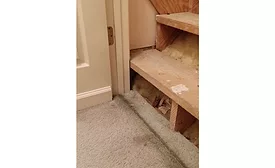
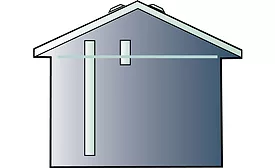
To understand the operation of combustion air openings, it’s a good idea to review some airflow basics. For airflow to move through a duct, there must be a pressure difference across it created by an external source. Traditional installations depend on natural forces to create this pressure difference.
The Sierra Club, a grassroots environmental organization, announced it would be joining nonprofit public interest law organization, Earthjustice; the Consumer Federation of America; the Natural Resources Defense Council (NRDC); and a coalition of state attorneys general in filing a lawsuit against the Trump administration over the U.S. Department of Energy’s (DOE) delays in issuing new energy-efficiency standards for ceiling fans, freezers, boilers, and commercial and consumer goods.
The draw of the event is split equally between the educational value of the speakers and the opportunity to network with other women in the HVACR field.
Retrocommissioning refers to identifying improvements that can increase the energy savings and performance of existing buildings. Considering that about half of all commercial buildings in the U.S. were constructed before 1980, it’s easy to see why there is a growing demand for contractors who offer retrocommissioning.
 RSS
RSS