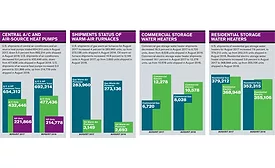
U.S. shipments of central air conditioners and airsource
heat pumps totaled 654,312 units in August
2017, down 5.5 percent from 692,214 units shipped
in August 2016.
It’s human nature to keep at least one eye peeking over the horizon and wonder what may soon be possible, even if it isn’t quite at our fingertips already. Complacency, especially in the evolving world of HVAC, is a path toward consumer abandonment for manufacturers.
According to the U.S. Environmental Protection Agency (EPA), 10,804,918 pounds of ozone-depleting refrigerant was reported as reclaimed by EPA-certified reclaimers in 2016. That total includes 9,409,494 pounds of hydrochlorofluorocarbon (HCFC)-22 or R-22.
Hand tools are an ever-shifting part of the HVAC landscape. Manufacturers are constantly developing new technologies with the goal of making life easier for technicians in the field.
In the world of HVACR, the focus is often directed toward the equipment in the field, such as a/c units, furnaces, boilers, air handlers, and condensing units. However, fleet management is an essential part of the business that cannot be overlooked or forgotten.
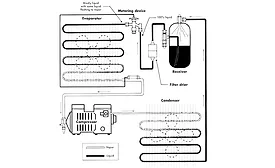
Refrigeration systems are made up of major components in series with one another (see Figure 1). As most of us are well aware, the major components are the compressor, discharge line, condenser, liquid line, metering device, evaporator, and suction line.
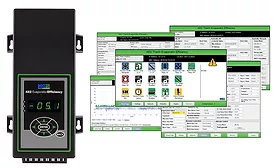
Many of us remember the pre-internet days, when access to information was limited to books, newspapers, and other written materials, and controlling systems or machinery was generally confined to manually turning a dial or flicking a switch.
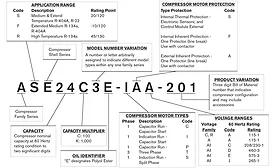
When replacing a failed component or accessory for a compressor, it is always best to use the one specified by the manufacturer. There are some components that may have a universal replacement, but you need to be sure the universal component is the right match for the component that needs to be replaced.
Arkema is widely seen as wearing the black hat in the refrigeration industry right now, thanks to the lawsuit in which it and Mexichem Fluor petitioned a U.S. court of appeals to review the EPA’s 2015 rule in which HFCs were targeted under Section 612 of the Clean Air Act.