What HVAC Contractors Need to Know About the Future of Technician Training
Trane Technologies explains how A2L, AI, and data centers require new methods of training
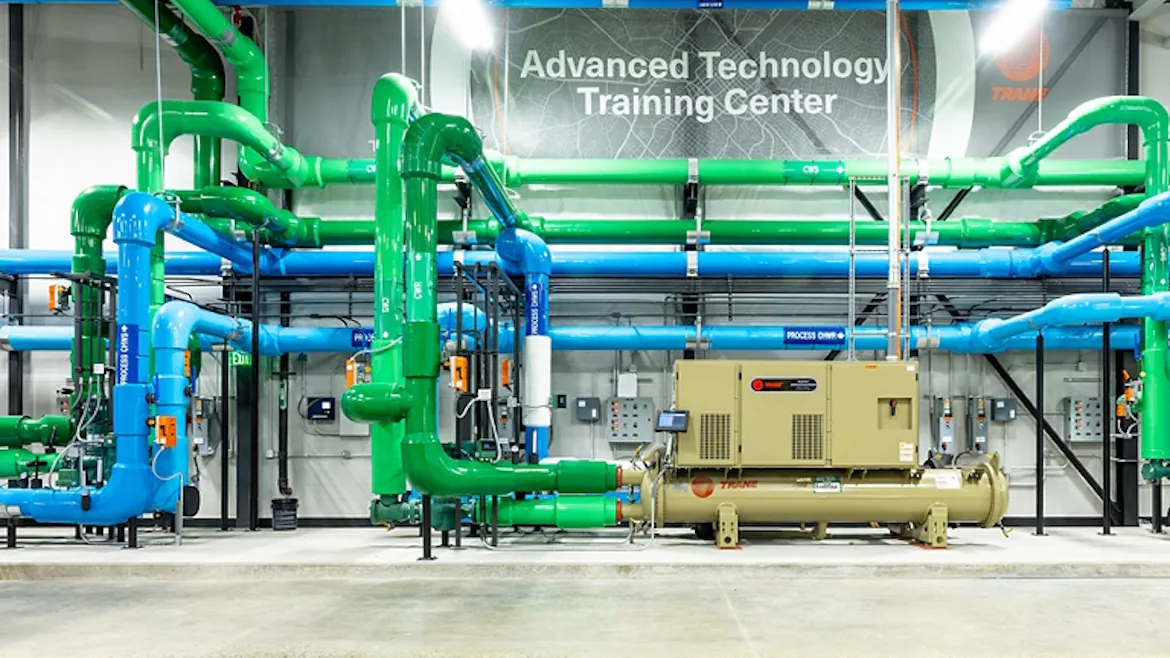
ADVANCED TRAINING: Equipment inside Trane Technologies’ Advanced Technology Training Center, which prepares HVAC techs for working with everything from air-cooled chillers to AI-enabled tools.
Skill gaps continue to exist in the HVAC industry, but not necessarily for lack of trying. Technology is rapidly evolving, and it can be difficult for HVAC technicians to keep up unless they’re constantly training.
Among the latest developments in training and upskilling HVAC professionals is Trane Technologies’ new Trane Advanced Technology Training Center. The 45,000-square-foot facility, located in Davidson, North Carolina, can hold up to 4,500 students per year and includes hands-on experiences to equip technicians with the skills needed to install and maintain complex climate control systems.
The ACHR NEWS spoke with Holly Paeper, president of commercial HVAC Americas, and Jeff Payne, technician training leader of Trane Technologies, on how HVAC training is changing and what contractors should know when looking to level up their workers.
Editor’s Note: Responses have been edited for clarity and brevity.
ACHR NEWS: What workforce challenges convinced Trane to build a center of this scale?
Holly Paeper (HP): The workforce challenge is not only about filling open roles — it is about the scale of the shortage and the pace at which the industry is changing. Demand for HVAC technicians is projected to grow 8% over the next decade, with more than 40,000 openings annually. At the same time, building systems are becoming more connected, intelligent, and sophisticated. Customers need technicians who can work confidently across advanced systems, controls, AI, and digital tools in complex environments.
ACHR NEWS: What do trainers see as the biggest skill gap in today’s technicians?
Looking for quick answers on air conditioning, heating and refrigeration topics? Try Ask ACHR NEWS, our new smart AI search tool. Ask ACHR NEWS
Jeff Payne (JP): Our trainers point less to one single gap than to the broader versatility the market now demands. As buildings become more connected and intelligent, technicians need strong fundamentals alongside growing proficiency in controls, electrical systems, digital tools, and data-driven troubleshooting.
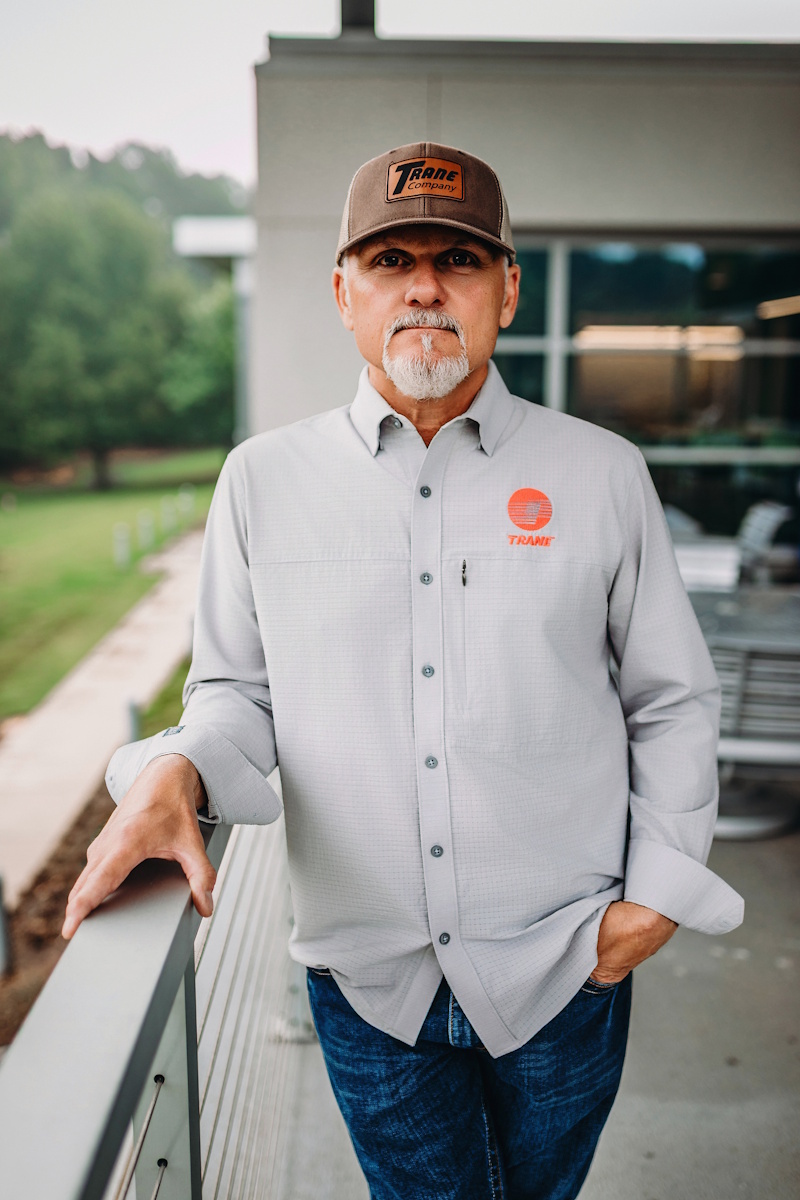
Jeff Payne, technician training leader of Trane Technologies. (Courtesy of Trane Technologies)
They also need to understand how systems interact, pairing technical expertise with clear communication and professionalism to build trust with customers. The ATTC is designed to develop adaptable technicians who can work across increasingly sophisticated systems and newer technologies, including AI-enabled tools.
ACHR NEWS: What role does AI play in today’s HVAC training? In the industry at large?
HP: We view AI as an enabler of better decision-making, diagnostics and building performance to assist our technicians and customers to solve problems faster. By becoming more efficient at solving problems, our technicians can serve even more customers.

Holly Paeper, president of commercial HVAC Americas, Trane Technologies. (Courtesy of Trane Technologies)
The ATTC reflects our investment in preparing technicians for a more connected, data-rich, and AI-enabled industry. We believe AI can help us boldly challenge what’s possible for a more sustainable world. And when you combine that with the most capable team of technicians, it increases the value of the skill and expertise they bring to customers.
ACHR NEWS: How have A2L refrigerants and inverter technology changed the way contractors are trained?
HP: A2L refrigerants and inverter technology have raised the bar for contractor training because they reflect two major shifts in the industry: the move toward refrigerants with lower global warming potential and the growing sophistication of HVAC systems.
With A2L refrigerants, training has to go deeper on safety, handling practices, evolving building codes, and service procedures. Contractors also need to understand why the transition matters. These refrigerants can help reduce the climate impact of HVAC systems, but they also require updated practices and a higher level of confidence in the field.
Inverter technology demands a stronger command of controls, variable-speed operation, diagnostics, and system performance. Training today is becoming more hands-on, more technical, and more focused on helping contractors understand how the full system is operating, not just how to service an individual component.
ACHR NEWS: How does your training center address the growing demand for data center technicians?
JP: Data centers require technicians who can perform in mission-critical environments where uptime, efficiency, and system performance are essential. The ATTC offers a dedicated certification pathway for data center technicians, focused on building the precision, responsiveness, and technical depth those environments demand.
ACHR NEWS: How can the industry bring on more HVAC instructors to help train the next generation?
HP: One of the clearest ways to grow the instructor pipeline is to create stronger pathways for experienced technicians to move from the field into teaching and mentorship roles. We also need stronger collaboration across manufacturers, contractors, educational institutions, and training centers, because no single part of the industry develops talent on its own. Technicians build experience in different settings, and the strongest instructor pipeline comes from connecting those environments more intentionally over time.
That kind of range is exactly what long-term training and development programs are designed to build. At Trane Technologies, the ATTC builds on a broader training foundation that includes apprenticeship programs, other training facilities, in-field training programs, and the Graduate Training Program, which is marking its 100th anniversary.
Looking for a reprint of this article?
From high-res PDFs to custom plaques, order your copy today!