FROSTlines
A2L Mitigation for Refrigeration Systems
Refrigerant charge limits now dictate when detection, isolation, and ventilation are required
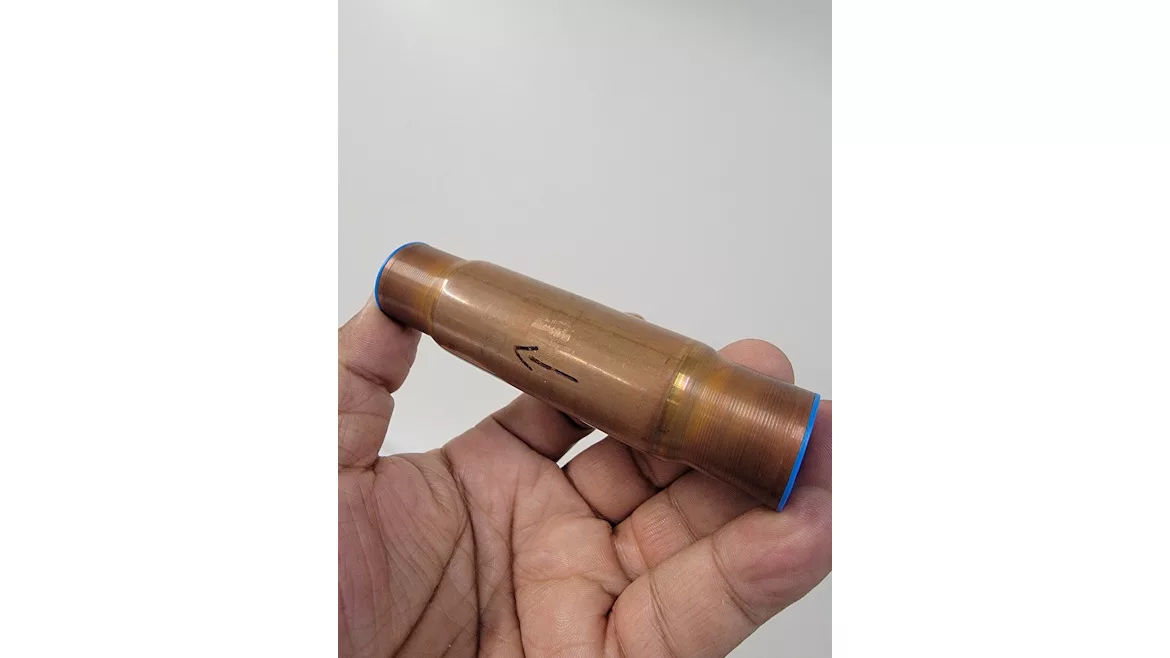
CHECK VALVE: The check valve must be installed on the suction line outside the case.
As the HVAC industry transitions into using A2L refrigerants such as R-454A, R-454C, and R-455A in new refrigeration systems, we will likely need to add some additional components that were not needed in the past. These additional components are necessary to both detect and mitigate the potential flammable issue of the refrigerant if released into a confined space, such as a refrigerated case. These will differ from what is required in a typical residential HVAC system.
ASHRAE’s Standard 15 defines the variables and outlines the required actions necessary for the detection and mitigation of A2L refrigerants when used on refrigeration equipment. These actions are based on a maximum allowable charge (ms) calculated based on a refrigerant's lower flammability limit (LFL) and the effective dispersal volume (Veff) of both the space and the application.
If the charge is below the (m1) calculation, generally no additional mitigation is required. Charges exceeding (m1) but under the (m2) threshold must include a factory- or field-installed refrigerant detection system (RDS), which includes a sensor that activates an alarm at a minimum of 25% of the refrigerant’s LFL. Some manufacturers may even trigger the alarm at a lower level. On activation of the alarm, a field-installed safety shut-off valve (SSOV) — which must be installed in the liquid line outside of the case — will close, causing the system to pump down.
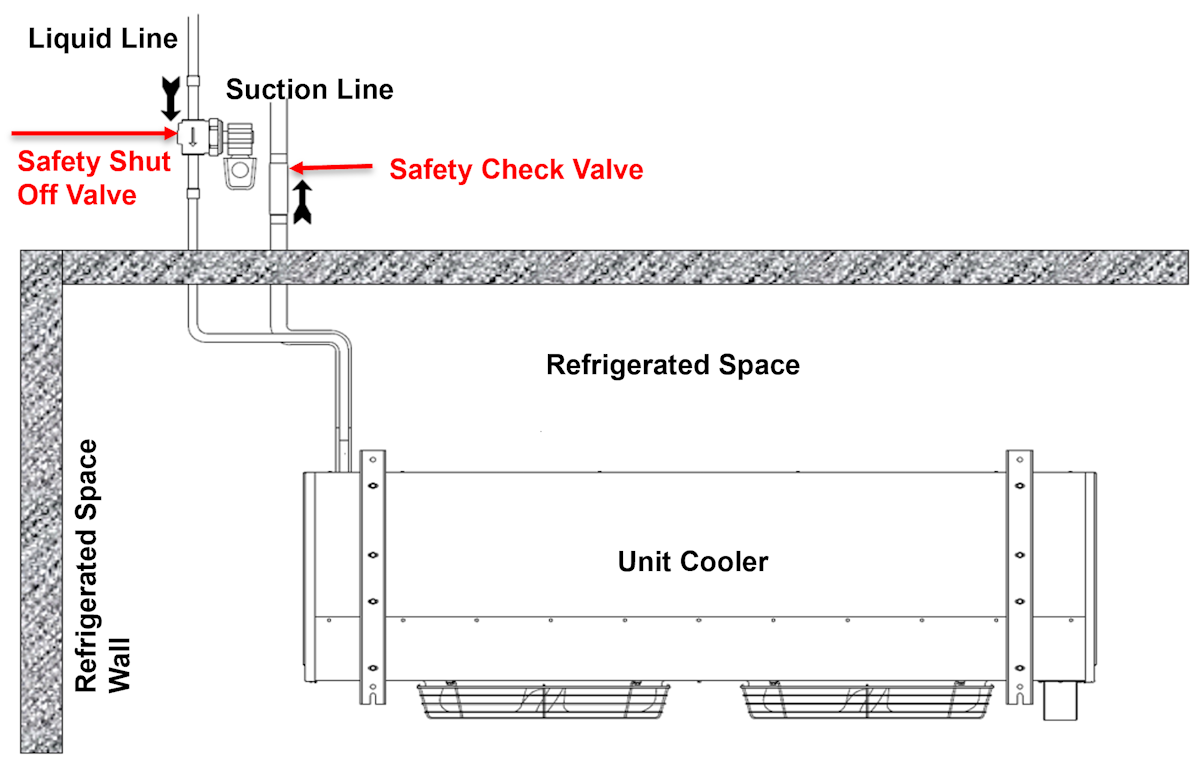
SAFETY SHUT-OFF: The field-installed safety shut-off valve must be installed in the liquid line outside of the case. (Courtesy of Heatcraft)
The SSOV installed must be rated for use as an SSOV. A standard liquid line solenoid, typically used as a pump-down valve, may not meet the requirements needed for the RDS. In addition, the RDS system needs to incorporate a check valve installed on the suction line, which must also be installed outside the case. This will cause the refrigerant to be isolated from the case and mitigate the risk of igniting from a heat source within the case. The RDS will also independently energize the evaporator fan motor(s) to ventilate the area and de-energize any defrost heaters, if used.
Charges exceeding (m2) but under the (m3) threshold require higher levels of mitigation, which include the same shutdown methods used previously, but a more rigorous ventilation requirement, and perhaps the use of additional sensors, depending on the application. Generally, if the refrigerant charge is over the (m3) threshold, the use of an A2L refrigerant is not permitted.
Installing new systems using an A2L refrigerant and the required RDS will require additional time and money. Determining what type of mitigation and which additional components are required may be slightly confusing at first. It is based on the type and amount of refrigerant, the type of application, and the volume of the enclosed space. It is best to consult with your equipment provider or manufacturer of the equipment to obtain guidance about what is required to properly mitigate the loss of an A2L refrigerant within an enclosed space. This will ensure the system is installed properly using the appropriate RDS system, if required.
Looking for quick answers on air conditioning, heating and refrigeration topics? Try Ask ACHR NEWS, our new smart AI search tool. Ask ACHR NEWS
Looking for a reprint of this article?
From high-res PDFs to custom plaques, order your copy today!