FROSTlines
A2Ls Gain Momentum in Supermarket Refrigeration
Food retailers are searching for lower-GWP solutions that are similar to their current systems
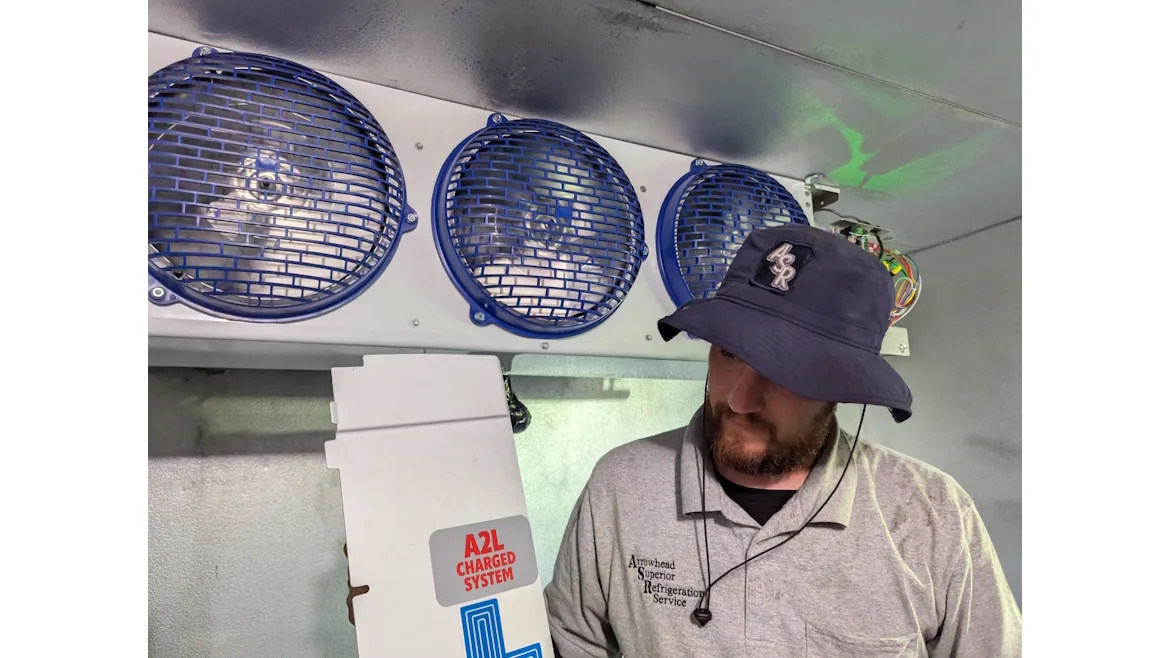
PRACTICAL OPTION: A2L systems often appeal to food retailers who need practical options that fit within their existing budgets.
Food retailers seeking lower-GWP refrigeration solutions are increasingly examining A2L refrigerants. During a session at the FMI Energy & Store Development conference, industry experts discussed why A2Ls are emerging as a practical long-term option for supermarkets.
For K-VA-T Food Stores Inc., the appeal of A2Ls comes down to practicality. As Charlie Lowe, the food retailer’s director of refrigeration, explained, “Our stores are in a very rural part of the country. We’re looking for solutions that are most similar to what we have now, and A2Ls seem to fit that bill.”
While CO2 refrigeration systems have gained traction in many markets, Lowe noted that they may not operate as efficiently in the hot southern climates where K-VA-T stores are located. He added that the systems also require highly trained technicians, something that can be difficult to find in rural areas.
“When you throw in even more complex systems, that narrows the pool of technicians you can hire to do the work,” he said.
Regulations
The movement toward lower-GWP refrigerants is largely driven by the HFC phasedown established under the AIM Act, which is already well underway in the U.S. Andrew Pansulla, technical service engineer at Chemours, noted that the industry has already completed a significant portion of the transition.
“It is important to realize that we are already 40% of the way through the phasedown and the next drop is in 2029,” he said. “So I think one of the questions that it's worth asking yourself is, how do we do that?”
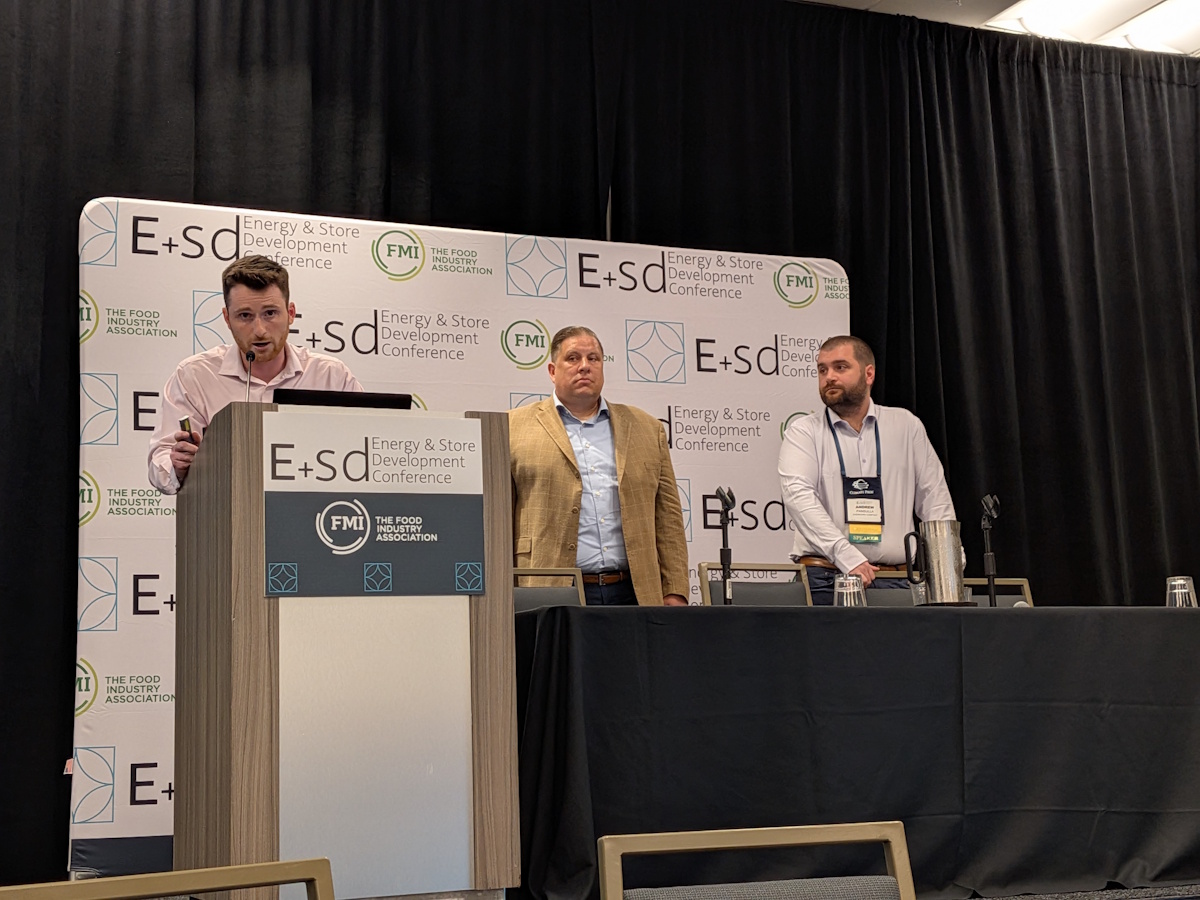
A2L BENEFITS: From left to right, Kyle Klahre, Ron Grabowski, and Andrew Pansulla spoke at the FMI conference about the benefits of A2L refrigeration systems.
Some may think they do not need to tackle this question yet, noting that the EPA’s latest update to the Technology Transitions Rule removed the R-410A install deadline and pushed out the deadline for supermarkets and other retail food refrigeration systems to 2032. That would be a mistake, said Pansulla, as the long-term direction toward lower-GWP refrigerants remains unchanged.
Looking for quick answers on air conditioning, heating and refrigeration topics? Try Ask ACHR NEWS, our new smart AI search tool. Ask ACHR NEWS
“The A2Ls are going to be the future as far as the fluorinated space goes,” he said. He added that R-448A and R-449A will continue to play a role in commercial refrigeration during the transition period, particularly if EPA extends the implementation timelines. However, he cautioned that in the long term, the industry will continue moving toward refrigerants with a GWP below 150.
“There’s no one-size-fits-all solution,” said Pansulla. “There are places where CO2 is going to make sense, and then there are places where it's really not going to be as practical due to cost, availability, and training.”
He added that choosing the lowest-GWP refrigerant that makes sense for a food retailer’s refrigeration system is generally the best option.
Codes
Although A2L systems can closely resemble traditional HFC systems in terms of operation and design, there are challenges to their widespread adoption, said Ron Grabowski, senior product leader at Hussmann. Indeed, one of the biggest hurdles is not necessarily the equipment itself, but the inconsistent building code environment across the U.S.
“This is something new for us that we never had to get involved in,” he said, referring to the intersection of UL standards, ASHRAE Standard 15, the International Mechanical Code, and fire codes.
He added that many jurisdictions still rely on pre-2019 codes that do not adequately address A2L applications, creating confusion among authorities having jurisdiction.
“There are 5,000 municipalities [in the U.S.], and everyone's doing their own thing,” said Grabowski. “States like Missouri and Texas have their own homegrown standards that they use. So there's a lot of learning that needs to go on to get us up to a point where this becomes commonplace.”
That is why education and early communication with local officials are essential for successful A2L adoption, said Kyle Klahre, director of refrigeration at Cuhaci Peterson.
“The most important part to remember here is that your AHJs, your fire marshals, your inspectors are probably not aware about what an A2L is,” he said.
It is also important for contractors and engineers to engage with local jurisdictions before beginning a project.
“The No. 1 thing you guys should take from this is to talk with your jurisdictions early before doing a project,” said Klahre.
He added that code progress is being made at the state level, with 27 states now referencing ASHRAE Standard 15 versions from 2019 or newer, which provide clearer guidance for A2L systems. However, local enforcement still varies widely.
Despite those challenges, Grabowski said that contractors participating in A2L pilot projects often react positively when they see the equipment.
“The first impression they get is that this just looks like an HFC system. There are a lot of benefits that are tied to that,” he said.
A2L systems also appeal to many food retailers who simply need practical options that fit within existing budgets and service capabilities.
“A lot of retailers have limited budgets,” said Grabowski. “They can't spend the money, so they're going to try to find other options. And that's where we think A2Ls will be at play in the space.”
Looking for a reprint of this article?
From high-res PDFs to custom plaques, order your copy today!