FROSTlines
The Business Case for CO2 Refrigeration
These low-GWP systems offer environmental and operational benefits
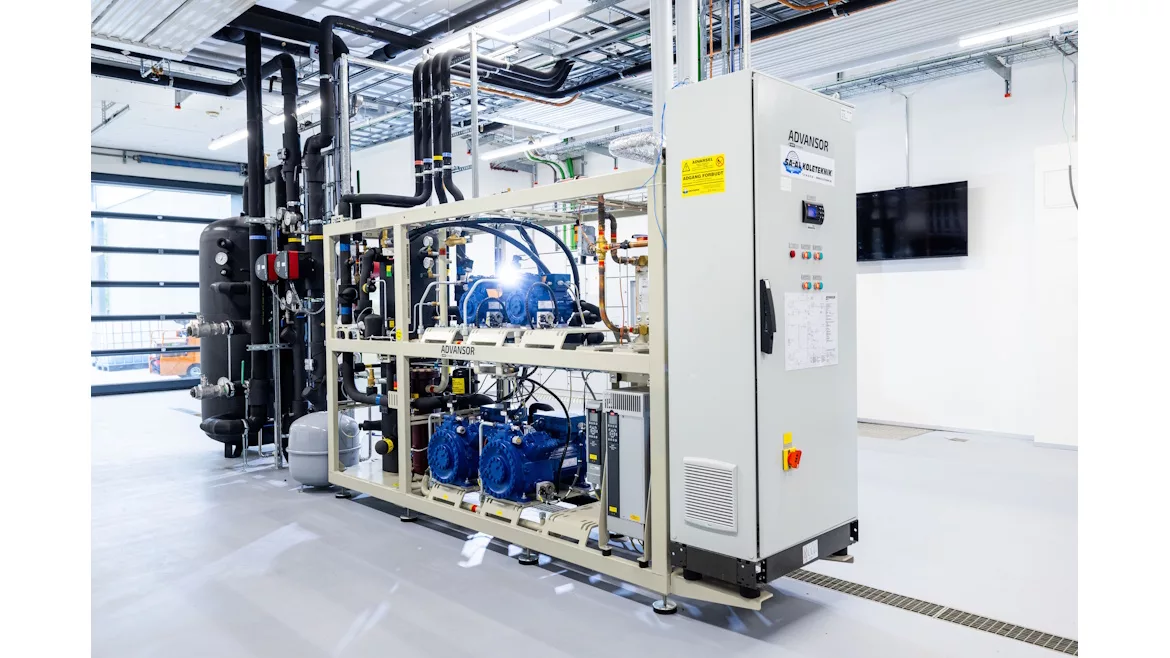
CO2 BENEFITS: Adopting CO2 as a refrigerant provides significant benefits to any commercial, industrial, or food retail business.
According to the North American Sustainable Refrigeration Council, nearly 25% of food retail stores are expected to be using CO2 refrigeration systems by 2028, nearly triple the number of CO2 stores in 2024. A 2024 report from ATMOsphere noted that the number of commercial and industrial sites in North America using transcritical CO2 refrigeration systems increased by around 45% from 2023 to 2024. Much of the adoption has been driven by regulatory changes and the phaseout of HFCs.
But what is the business case for CO2 adoption? Why should business owners consider CO2 as their refrigerant of choice?
Environmental Benefits
With a GWP of 1, CO2, or R-744, has clear environmental benefits, easily satisfying U.S. EPA and AIM Act restrictions, as well as regulations in Canada, the United Kingdom, Japan, and Australia. Reducing carbon emissions is of high importance to companies that have included decarbonization and sustainability in their ESG (environmental, social, governance) goals and/or face investor and customer pressures to reduce their climate impact. And with tightening restrictions and potential bans on HFO refrigerants due to growing PFAS concerns, adopting a natural refrigerant like CO2 ensures the refrigeration system remains compliant for decades, eliminating potential retrofit or replacement costs.
The energy efficiency provided by CO2 vs. HFC/HFO refrigerants results in additional cost savings. Thanks to technologies like ejectors, parallel compression, adiabatic cooling, subcooling, and heat recovery, modern CO2 transcritical systems have become highly efficient in most climates, often outperforming HFC/HFOs in energy consumption. CO2 also has the ability to capture high-temperature waste heat effectively, providing heat for hot water production, storage space heating, and HVAC loads, while reducing gas or electric heating demand by 30% to 60%. With energy expenses typically representing 60% to 70% of total lifetime cost of ownership, heat recovery is a major operational savings driver not available to the same extent with many HFC/HFO systems.
Total Cost Of Ownership (TCO)
While CO₂ transcritical systems historically cost 5% to 15% more than HFC/HFO systems, the upfront costs are approaching parity. Widespread adoption, standardized racks, and competition have significantly reduced this premium, and as a result, in many markets, CO₂ systems are at cost parity with mid-range HFC/HFO racks. In addition to the lifetime energy cost savings noted above, the smaller refrigerant charge vs. large HFC central systems and lack of need for future retrofits caused by phase-down bans offset the slightly higher CAPEX during the first two to four years of operation.
Additionally, the cost of CO₂ refrigerant is 10 to 50 times less per pound than that of HFCs or HFOs. Even though CO₂ systems may have slightly higher leakage rates, given the low refrigerant cost, the financial risk of leakage is minimal compared to HFC and HFO systems. For example, large supermarkets with racks using hundreds of pounds of refrigerant save significant operating expenses.
Another area of savings is maintenance. Maintenance costs for CO2 systems are lower than those for HFC/HFO systems over their lifetime. In addition to significantly lower leak-related costs and lack of need for special handling compared to flammable refrigerants, components for CO2 systems are now commoditized and widely stocked. In fact, the number of manufacturers building CO2 systems has increased significantly in North America over the past decade. CO2 rack manufacturing is now a standard part of production, with many more units being produced annually than in years past, and there is increased time and effort being spent to test and validate new technologies like ejectors. The number of trained and qualified CO2 technicians has also grown sharply, resulting in a maintenance cost advantage.
Looking for quick answers on air conditioning, heating and refrigeration topics? Try Ask ACHR NEWS, our new smart AI search tool. Ask ACHR NEWS
With regulation-related expenses forecast to be a major cost driver for refrigeration systems over the next 10 to 20 years, choosing CO2 as a refrigerant shields system owners from multiple risks, including potential carbon taxes on refrigerants, F-gas quota price spikes, future retrofit requirements, and PFAS/ITA bans. No phaseout risk makes an asset future-proof, with CO2 systems carrying zero compliance cost and no future retrofit risk, making CO2 systems a clear winner in TCO compared to systems using other refrigerants.
The lack of environmental risk, regulatory replacement cycle, a strong OEM ecosystem, and ample technical support result in exceptional value for CO2 refrigeration. With CO2 systems delivering 15 to 20+ years of useful life without forced early replacement, adopting CO2 as a refrigerant provides significant benefit to any commercial, industrial, or food retail business.
Looking for a reprint of this article?
From high-res PDFs to custom plaques, order your copy today!