Study: Rising Pressures Shaping Inventory Management
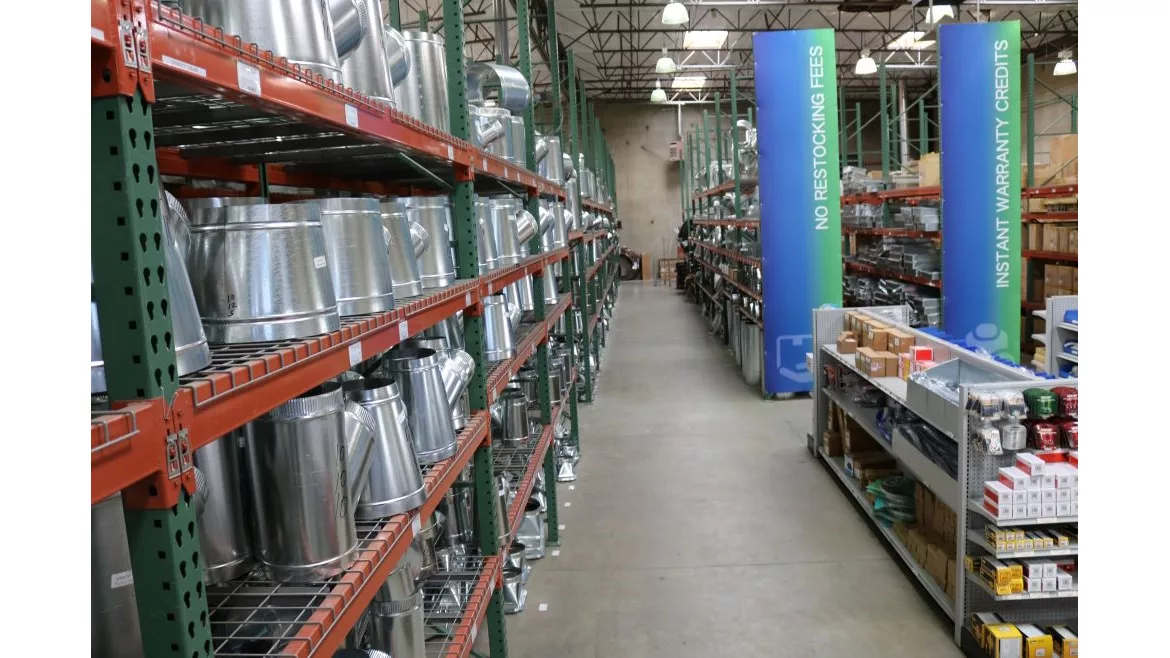
IN STOCK: Distributors seem to be prioritizing product availability. In a global survey of more than 100 distribution professionals, more than six out of 10 said they thought they lose sales when they have inadequate stock.
Competition, supply chain complexity, and economic uncertainty are pushing distributors to look at new ways of using data and managing inventories, according to a recent study.
The report by Phocas, a company that offers a business intelligence software platform for distribution companies, included a survey of more than 100 distribution professionals from around the world. HVACR and plumbing distributors made up 11% of survey respondents, and 33% of respondents were based in North America. Respondents were also headquartered in the Asia Pacific region (48%) and Europe (19%).
The 31-page study identified five key trends in distribution that the authors say are supported by their survey results and research. The trends are:
1. Increasing supply chain complexity due to competitive pressures.
Among the pressures cited were economic uncertainty, which distributors ranked as their top challenge. That was followed by greater competition, supply chain disruption, and demand volatility.
Environmental regulations are further complicating the supply chain picture for U.S. HVACR distributors, Myles Glashier, a co-founder of Phocas and its CEO, said via email.
“Economic uncertainty and trade policy regulations are major challenges for American HVACR distributors this year,” Glashier said. “This industry is the only one in the Phocas wholesale distribution inventory trends survey that cited it must comply with new rules to stock more environmentally approved product lines. This requirement adds another layer of complexity to already strained supply chains.”
2. Openness to new inventory strategies to cope with economic uncertainty.
Looking for quick answers on air conditioning, heating and refrigeration topics? Try Ask ACHR NEWS, our new smart AI search tool. Ask ACHR NEWS
Some 54% of respondents said they planned to take a new approach to demand planning, while 45% said they expected to add data-based and automated warehouse solutions. Some 31% were expecting to adjust safety stock levels.
3. The prioritization of stock availability over cash flow.
More than six out of 10 distributors said they thought they lose sales when stock is inadequate, and 26% reported having deadstock ranging from 6% to 10%. More than 90 days’ worth of stock was being held by 22%.
The emphasis on product availability may be especially pronounced among HVAC distributors.
“The Phocas wholesale distribution inventory trends survey shows the majority of HVAC distributors are holding 61-90 days of stock but are razor-focused on the efficiency of their inventory levels,” Glashier said. “Many are using inventory performance data to ‘re-allocate slower moving inventory’ and to ‘learn what sells and what gives the greatest impact for money spent.’“
4. The use of demand planning as the top performance differentiator.
Of the 11% of respondents who reported their demand planning was “very accurate,” 34% lowered inventory costs, 24% reported improved service levels, and 14% said they increased revenue.
Many HVAC distributors, Glashier said, are doing demand planning without specialty software but are still looking to improve planning accuracy.
“These distributors with limited access to up-to-date sales data are not achieving the same benefits as the other industries in the report,” he said. “However, even this limited demand planning is contributing to inventory cost reductions.”
5. The use of trusted data to improve performance by product suppliers.
Some 31% of responding distributors said their data was “very trusted,” while 49% said it was “mostly trusted.” A large majority, 87%, said using data helps them manage the performance of their suppliers.
“Demand planning is a core need for distributors, yet the industry faces an accuracy gap due to limited access to the right data. Distributors that can keep planning up-to-date with current sales are lowering the cost of inventory and improving service levels,” Glashier said.
Looking for a reprint of this article?
From high-res PDFs to custom plaques, order your copy today!