HVAC Distributors Rethinking Warehousing Amid R-454B Shortages and A2L Rules
Flexibility, communication keys to warehouse efficiency in challenging times, experts say
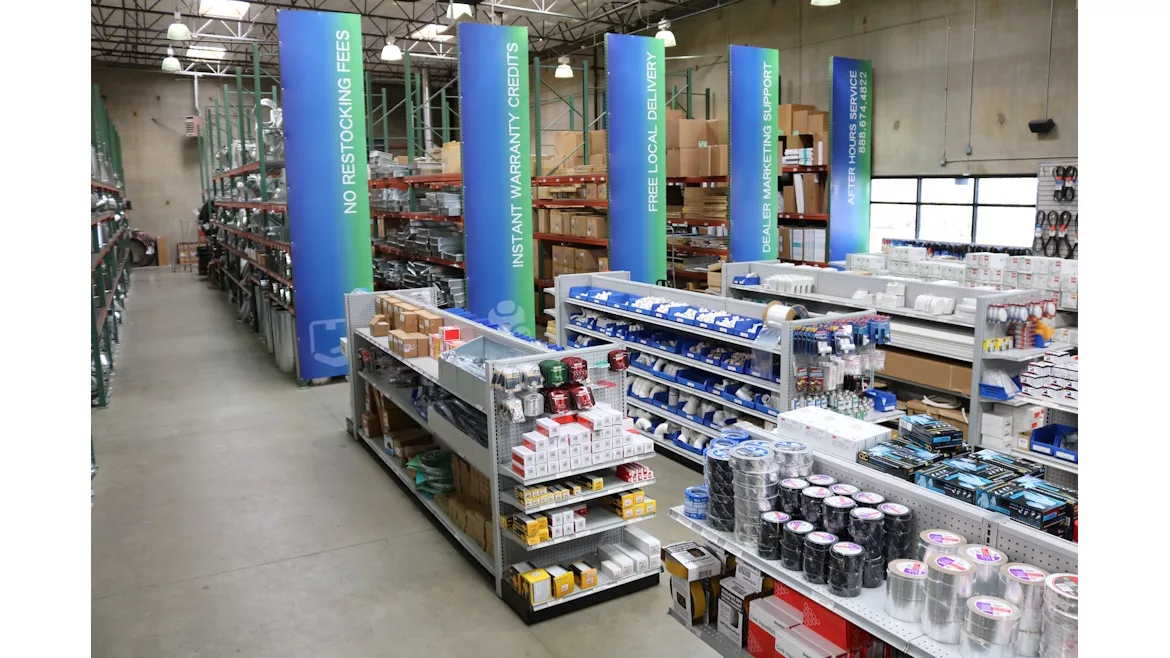
WINNING IN THE WAREHOUSE: Flexibility, and communicating warehouse needs, are important in managing an HVACR distribution warehouse during challenging times, experts say. (Courtesy of AC Pro)
HVACR distribution companies are facing a host of major challenges, from the R-454B refrigerant crisis to the transition to A2L equipment to a tariff policy with more lift hills, dips, and sharp curves than a roller-coaster ride.
How, then, should wholesalers manage their warehouses in a way that best helps them succeed as they face these issues, and more, in a fast-moving global economy? With flexibility and constant communication, distribution professionals say.
“With all the disruption in the HVACR industry, a smart warehouse plan today needs to be prepared for change,” said David Holt, general manager of HVAC Distributor University and Contractor University, which are both part of the Electric & Gas Industries Association. “Things like the R-454B shortage, new equipment rules, and higher prices from tariffs make it hard to know what’s coming next.”
Distributors, Holt added, should be flexible in running their warehouses and keep extra stock of high-risk and hard-to-get items. He also recommended using software tools that can forecast demand and track what’s selling fast.
“The goal is to stay one step ahead, so you don’t run out when customers need it most. Warehouses should become proactive business hubs, not reactive storage units,” Holt said.
Art Osborn, director of residential and light commercial HVAC sales at F.W. Webb Co., an HVACR and plumbing distributor with more than 100 locations in the Northeast, said recent challenges have definitely affected the way warehousing is managed.
The refrigerant transition in particular, Osborn said, caused the company to take a hard look at how it was using its warehouse space, and to get rid of inventory that needed to be “written off” in order to make room for new products.
Looking for quick answers on air conditioning, heating and refrigeration topics? Try Ask ACHR NEWS, our new smart AI search tool. Ask ACHR NEWS
“Knowing that, you know, we don’t have the space, necessarily, to take everything in, trying to get the product mix correct as we’ve gone into this transition has been a little difficult,” Osborn said during a recent ACHR NEWS webinar. “We didn’t have the crystal ball on how soon the 410 (equipment) was going to go out.”
Communication has been key through the process, Osborn said.
“Our products and ops teams have been in constant communication with the manufacturers, the warehousing team,” he said. “The sales team’s been involved.”
“Holding a good inventory budget while maintaining (product turnover) that that, you know, we’re shooting for, is definitely a challenge, and we’re having to communicate with our sales team just as much on inventory strategy as we are on the products and how they’re going about selling,” said Allen Jaedike, corporate HVAC channel manager at First Supply, which has more than 50 locations in the Upper Midwest.
Jaedike, who was also a guest on the webinar, said his company had to rent extra warehouse space during the winter for the storage of R-410A equipment, which the industry is transitioning away from. “We opened a new central distribution center a little over a month ago, so all of our R-454B equipment rolled into there,” he said.
First Supply, Jaedike said, has had to order some products up to nine months out, in part to accommodate growth but also to work around supply-chain threats and vendors that haven’t provided accurate lead times.
“But we learned some good lessons from the pandemic supply-chain nightmare” and have been able to apply those to an A2L transition strategy, Jaedike said. “So it’s worked out well, but space is definitely an issue.”
Also on the webinar was Rhonda Wight, president of Refrigeration Sales Corp., which has 10 locations in Ohio, including two distribution centers, and one in Pennsylvania. Wight cautioned that a warehouse plan now needs to incorporate the storage restrictions on, and warning signage requirements for, A2L refrigerants, because they are considered mildly flammable.
“Local fire departments require different signage,” Wight said. “We’ve got, certainly, limits of how much (A2L) we can store in each of our facilities, and so, really, just having the proper signage and understanding what the local fire, what the state fire codes are, as well as what the local fire departments are requiring, has been challenging.”
Holt, of HVAC Distributor University, said that, if they haven’t already, distributors need to adopt two tools for managing warehouses: a real-time tracking system that shows, on a phone or tablet, what’s in stock and its location; and an artificial intelligence-powered demand-forecasting tool that factors in sales trends, weather patterns, and regulatory changes to predict what products will be selling and when.
“These tools help distributors avoid delays and keep the right products in stock at the right time,” Holt said.
Looking for a reprint of this article?
From high-res PDFs to custom plaques, order your copy today!