HVAC Industry Responds To EPA’s HFC Management Rule
Stakeholders are concerned over issues ranging from training to tracking to reclaim
On October 6, 2023, EPA released a proposed rule to manage the existing stock of HFC refrigerants and their substitutes. This rulemaking is the third component of the AIM Act, which mandates that EPA reduce the production and usage of HFCs by 85% by 2036.
The first component of the Act involved creating a framework for the phasedown and allocation of HFC allowances for imports and production. The second component mandated the transition to lower-GWP alternatives and products and equipment through sector-based restrictions under subsection (i) of the AIM Act, entitled “Technology Transitions.”
This proposed rulemaking focuses on the third objective, “Management of Regulated Substances,” which falls under subsection (h) of the AIM Act. Under this proposed rule, EPA outlines how it plans to bolster the supply of refrigerants in the U.S. by, among other things, supporting HFC recycling and reclamation in the U.S.; mandating leak repair provisions for certain appliances; creating a reclamation standard; and requiring the use of reclaimed HFCs for certain types of equipment in some refrigeration, air conditioning, and heat pump (RACHP) subsectors (see sidebar).
The Agency accepted feedback on the rule until December 18, 2023, and during that comment period, many in the HVACR industry expressed reservations regarding certain aspects of the proposed rule. Some of their concerns are outlined below.
Senior vice president of government affairs
Daikin U.S. Corp.
Reclaim
In their comments to the proposed rule, many HVACR stakeholders expressed concern over EPA’s reclaim mandates. These include requiring the use of reclaimed HFCs by January 1, 2028 for servicing existing equipment, as well as initially charging systems in certain RACHP sectors. Some commenters believe this could wreak havoc on the industry.
“The HFC allowance system all but guarantees a shortage of HFC refrigerants from here on out,” wrote Carl Grolle, president of Golden Refrigerant. “Requiring any certain sector to have to use reclaimed refrigerant as an initial charge will disrupt the normal flow of refrigerant through the service sector and create unneeded tension between different entities. The additional turmoil will not promote better industry practices, will not help create cooperative partnerships, and instead will pit manufacturers, chemical producers, and distributors against each other for the limited supply of reclaimed refrigerant.”
In joint comments from AHRI and the Alliance for Responsible Atmospheric Policy, the groups noted that "AHRI and the Alliance do not believe current data on reclaimed refrigerants supports EPA requiring 100% of initial charge and 100% of servicing in certain sectors to be reclaimed refrigerant. To the contrary, AHRI and the Alliance believe such mandates are unrealistic, contradicted by available data, and unlikely to be practical, achievable, or enforceable due to inadequate supply of reclaimed gas.”
Looking for quick answers on air conditioning, heating and refrigeration topics? Try Ask ACHR NEWS, our new smart AI search tool. Ask ACHR NEWS
To that end, AHRI and the Alliance suggested that EPA develop an alternative to the proposed rule's requirements for reclaimed refrigerant that would align more effectively with realistic assumptions, while optimizing reclamation during the HFC phasedown. Among other issues, this would include:
- Basing reclaim mandates on relevant data to ensure achievability and practicality;
- Phasing in on a gradual basis any reclaim mandates;
- Not requiring initial charge as part of a mandate to use reclaimed refrigerant; and
- Conducting annual reviews of any requirements for reclaimed refrigerant and adjust such requirements in light of market data and other practical considerations to ensure achievability and relevance to the HFC production and consumption phase down.
Chemours also opposes EPA’s proposed mandate for OEMs to buy reclaimed HFCs in order to sell pre-charged HVACR equipment and for technicians and others to buy reclaimed HFCs in order to “first fill” new equipment on-site. Instead, Esther Rosenberg, global regulatory advocacy at Chemours, suggests that EPA should develop a pilot program to gather real-world data on the various issues and costs associated with restricting manufacturers and service technicians from having the option to choose which regulated HFCs to use.
“Such a pilot program might allow EPA to validate its assumptions of reclaim supply versus actual marketplace requirements without risking widespread and adverse consequences, such as new equipment shortages or the premature obsolescence of existing equipment due to lack of reclaim supply,” said Rosenberg. “One option would be for EPA to impose a requirement for the utilization of reclaimed HFCs on federal departments and agencies … EPA could assess the feasibility and resulting costs and compliance with imposing a widespread requirement for the use of reclaimed HFCs during a trial period before attempting to take broader action affecting the entire nation using the authority of the AIM Act.”
The problem is that EPA’s proposal envisions a future supply of reclaimed HFCs that is both arbitrary and likely unachievable, noted David B. Calabrese, senior vice president of government affairs at Daikin U.S. Corp.
“The market for reclaimed HFCs is growing, and Daikin encourages the growth of the reclaimed market,” Calabrese wrote in his comments. “However, we believe that the EPA’s projections for the future availability of reclaimed HFCs is unrealistic and does not match current trends and future demand for reclaimed HFCs.”
After examining the data and assessing the practicality of implementing the proposed rule, “Daikin believes that the EPA should consider a phased regulatory approach for reclaimed HFCs, with initial targets adjusted based on data and industry feedback, that better aligns with the manufacturing process and supply chain realities of both equipment and reclaimed HFCs,” wrote Calabrese.
Recovery
While refrigerant reclaim featured prominently in the proposed rule, Johnson Controls (JCI) noted the absence of any recovery or training mandates for the installing contractor in the proposed rule. Chris Forth, vice president of regulatory, codes, and environmental affairs at JCI, noted that without sufficient quantities of recovered refrigerants, it is unclear how it will be possible to meet all of EPA's proposed reclaim use mandates without increased mandates around recovery.
“JCI feels it is critical that EPA specifically address the contractor and recovery issues, particularly in small charge applications in order to have a successful rule,” wrote Forth. “JCI encourages proper installation and service of its equipment; however, our ability to directly impact this is limited due to our multi-step distribution process, whereas we are multiple levels removed in the RACHP sector. JCI is exploring options to incentivize recovery and training and looks forward to additional dialog on this topic with key industry stakeholders as part of a proposed supplemental rulemaking process.”
HARDI was also disappointed to see that very little language addressed increasing the recovery of refrigerants from existing equipment, said Alex Ayers, director of government affairs at HARDI. He noted that the proposed rule focuses on increasing demand for reclaimed refrigerant when there is no evidence that government mandates are needed to increase demand. Instead, he said that HARDI would like to see EPA find ways to remove some of the barriers that technicians face when recovering refrigerant.
“Some technicians find no value in recovering refrigerant because of issues like the time it takes to evacuate a system, the [negative economic incentives] to return mixed refrigerant, or they don’t believe the environmental impact of venting,” said Ayers. “From HARDI’s perspective, one of the best opportunities to increase refrigerant recovery is to change the culture through consistent communication and reinforcement of proper methods. HARDI believes the EPA should require technician certification and continuing education to accomplish this.”
Technician Certification
Indeed, the need for technician certification was another frequently mentioned issue in the comments. Barton James, president and CEO of ACCA wrote that his organization strongly supports EPA establishing training and certification requirements for technicians who service equipment using A2, A2L, and A3 refrigerants.
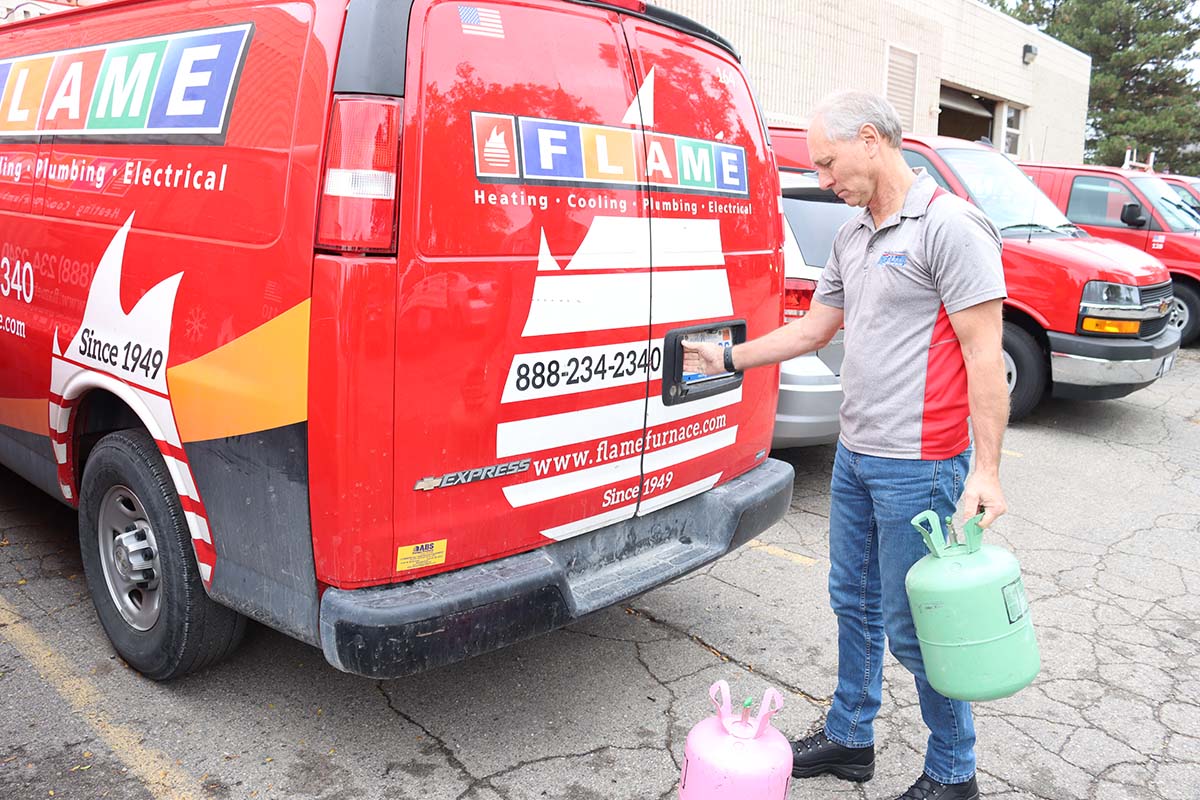
TRAINING AND CERTIFICATION: Many in the HVACR industry believe that EPA should establish training and certification requirements for technicians who service equipment using mildly flammable refrigerants. (Staff photo)
“Given the varying safety and handling characteristics of mildly flammable ASHRAE A2L refrigerants and flammable ASHRAE A3 refrigerants, distinct certifications should be developed for each type,” noted James. “This specialization ensures that technicians are adequately trained in the specific safety protocols and handling procedures relevant to each refrigerant category. These new certifications could be modeled after the existing 608 certification program but should have distinct credentials for each generation of refrigerants.”
Other suggestions James has for EPA include offering a universal certification covering all generations of refrigerants; providing practical, accessible, and standardized testing that establishes minimum requirements for safe handling without being overburdensome; recommending a three- to five-year recertification period with a continuing education component; and offering a less stringent version of the test for those already holding 608 certifications.
Given the difference between previous generations of refrigerants and the next-generation mildly flammable and/or flammable refrigerants, training and certification are imperative to guaranteeing a smooth transition and to ensure technician and customer safety, noted Jason Obrzut, CMHE, director of government and industry relations at ESCO Institute.
“Through the Section 608 program, EPA has the infrastructure in place to accomplish training and certification,” noted Obrzut. “It is our view that EPA mirrors the existing infrastructure of the Section 608 program to establish new training and certification requirements. Requirements that should be replicated include the issuance of credentials, online validation of these credentials, and an established process for replacing lost or damaged credentials.”
Obrzut stressed that while Section 608/609 of the Federal Clean Air Act ensures a minimum understanding of refrigerants and equipment charged with refrigerant, they do not cover specifics of handling, transporting, and servicing equipment designed for use with ASHRAE-classified 2L, 2, or 3 flammable refrigerants that are becoming commonplace in the HVACR industry. He noted that it would not be appropriate to amend Sections 608/609 to include these refrigerants, as they are not ozone depleting substances (ODS).
“Third-party certification guarantees uniformity, consistency, and the ability to assess and compare knowledge on a national scale regarding the safe handling, storage, and transportation of these ASHRAE-classified 2L, 2, and 3 flammable refrigerants,” write Obrzut. “The management structure currently deployed for Section 608 certifications, the EPA-approved testing organizations, and their current requirements, and the existing low-GWP refrigerant training programs should be used as a template for managing and implementing a new training and certification program.”
Cylinder Management and Tracking
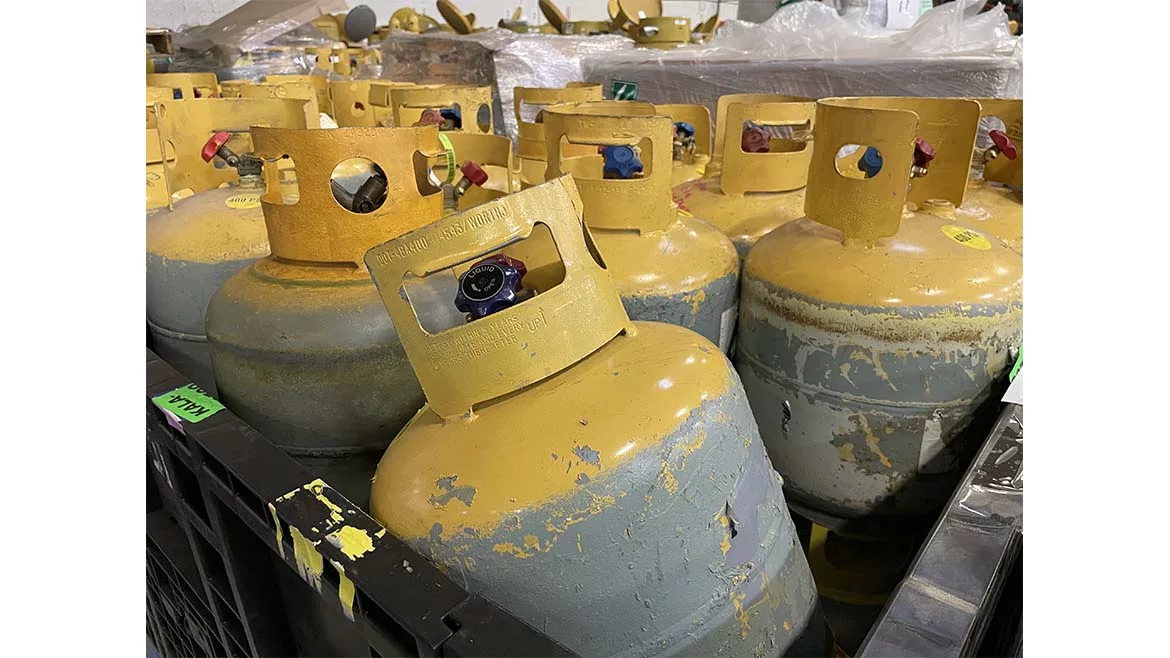
Another issue that featured prominently in the comments was the provision in the proposed rule that would require disposable cylinders containing HFCs be sent to an EPA-certified reclaimer in order to capture any remaining amount after the cylinders are considered empty (the “heel”), prior to cylinder disposal.
“We strongly support any efforts to ensure that any HFC’s including heels from disposable cylinders are not released into the environment,” said Grolle. “Given that, requiring approximately 8 million ‘empty’ disposable cylinders to be shipped around the country to ensure that they have been properly emptied may be the least reasonable way to accomplish this goal.”
Grolle contends that if EPA certification grants permission to technicians to work on and with equipment that contains hundreds or thousands of pounds of refrigerants, it would seem reasonable that those same technicians could also be trusted to empty small cylinders.
The cylinder management provision also poses potentially significant logistical and economic challenges, wrote James.
“The transportation of mostly empty tanks will incur costs and require complex logistics affecting distributors and contractors,” noted James. “Under current circumstances, contractors consolidate recovered refrigerant into larger ‘recovery’ cylinders, which are then transported to a distributor where the refrigerant is further consolidated before being transported to a certified reclaimer for reclamation. Any additional costs that distributors bear because of this rule will ultimately be passed on to contractors.”
In addition, contractors or distributors affected by this rule may not be located near certified reclaimers, leading to longer travel distances, said James. With an estimated 63 EPA-certified refrigerant reclaimers in the U.S., “contractors or distributors in geographic areas with few or no certified reclaimers will be disproportionately affected by this proposal due to longer travel distances, resulting in increased fuel costs and more time that vehicles are in use,” he wrote.
HARDI also believes that EPA’s proposal to send all refrigerant cylinders containing a heel charge that will not be refilled with the same refrigerant to reclaimers for recovery is an untenable and unenforceable requirement, noted Ayers.
“Already, there are multiple avenues for refrigerant recovery from cylinders, such as existing programs to send disposable cylinders to reclaimers, wholesale distribution-operated cylinder recycling programs, and allowing contractors to recover the remaining refrigerant and be compensated for sending the recovered refrigerant to a certified reclaimer,” wrote Ayers. “Requiring all disposable and refillable cylinders that will not be refilled with the same refrigerant be sent to a reclaimer facility is incredibly wasteful.”
Another bone of contention in the proposed rule is the inclusion of a tracking system for specific HFC containers. This would require manufacturers and importers to incorporate machine-readable tracking identifiers (e.g., QR codes) on all HFC containers used for equipment service, repair, or installation.
HARDI is opposed to the proposed tracking requirements, as the organization contends that EPA lacks statutory authority under the AIM Act to enact them. According to AIM Act's Subsection (h), Ayers noted that EPA's regulatory power is limited to practices directly related to maximizing reclamation and minimizing HFC release from serviced equipment. The proposed tracking rules extend beyond this scope, regulating all HFC containers, including those not used in servicing, and therefore, fail to align with the statutory purpose.
In addition, noted Ayers, “the proposed tracking requirements are unnecessary, unduly burdensome, undesirable from a policy perspective, illogical in light of the realities of the distribution and supply chain, and will not help to maximize reclamation and minimize release of HFCs from practices, processes, or activities regarding the servicing, repair, disposal, or installation of equipment.”
That said, “the HVACR industry cannot have a successful phase-down of high-GWP refrigerants and an eventual phaseout of equipment to transition to low-GWP refrigerants without proper refrigerant management,” wrote Ayers. “HARDI strongly encourages the EPA to look for ways to increase recovery from equipment and avoid mandates that will harm recovery efforts.”
EPA intends to complete this rulemaking process by summer 2024.
Key Provisions of the EPA Rule
As part of the AIM Act, EPA is suggesting regulations to oversee practices related to the servicing, repair, disposal, or installation of equipment involving HFCs or their substitutes. The proposed regulations are intended to maximize reclaiming and minimize the release of regulated substances from equipment and ensure the safety of technicians and consumers. Some of the key provisions of the proposed rule include:
- Requiring reclaimed HFCs to contain no more than 15% newly virgin HFCs, by weight;
- Beginning January 1, 2028, reclaimed HFCs must be used to service or repair equipment in the following subsectors: stand-alone retail food refrigeration; supermarket systems; refrigerated transport; and automatic commercial ice makers. In addition, reclaimed HFCs must be used in initial charges of equipment in several RACHP sectors by the same date.
- Requiring appliances containing 15 pounds or more of a refrigerant that contains an HFC or HFC substitute that has a GWP above 53 be subject to the proposed leak repair requirements.
- Requiring the installation of automatic leak detectors (ALD) for commercial refrigeration appliances that contain 1,500 pounds or more of a refrigerant that contains an HFC or HFC substitute with a GWP above 53.
- Requiring disposable cylinders containing HFCs be sent to an EPA-certified reclaimer in order to capture any remaining amount after the cylinders are considered empty (the “heel”), prior to cylinder disposal.
- Establishing a tracking system for certain HFC containers. This would require manufacturers and importers of HFCs to include machine-readable tracking identifiers (e.g., QR codes) on all containers of HFCs used for service, repair, or installation of equipment. This would apply to both refillable and disposable cylinders.
Looking for a reprint of this article?
From high-res PDFs to custom plaques, order your copy today!