ACHR News
search
Ask ACHR NEWS AI
cart
facebook twitter instagram linkedin youtube
  • Sign In
  • Subscribe
  • Sign Out
  • My Account
ACHR News
  • NEWS
    • Breaking News
    • New HVAC Products
    • Featured Products
    • Manufacturer Reports
    • HVAC Data
    • Legislation
    • ACHR NEWS Centennial
  • RESIDENTIAL
    • Air Conditioners
    • Furnaces
    • Residential Heat Pumps
    • Ductless
    • Residential IAQ
    • Testing, Monitoring, Tools
    • Components & Accessories
  • COMMERCIAL
    • Air Handlers
    • Rooftop Units
    • Chillers and Cooling Towers
    • Commercial Heat Pumps
    • Boilers and Hydronics
    • VRF/Ductless
    • Commercial IAQ
  • REFRIGERATION
    • Refrigerants
    • Refrigerant Regulations
    • Leak Management
  • CONTRACTOR PRO
    • Geothermal
    • Homeowner Study
    • VRF and VRV Ductless
    • Unitary Trends
  • EDUCATION
    • Training and Education
    • Business Management
    • Service and Maintenance
    • Continuing Education
    • Market Research >
      • HVAC Brand Awareness Report
      • VRV, VRF, VRVZ Report
      • Unitary Trends Report
      • Water Heat Professionals Report
    • Webinars
    • Sponsor Insights
    • eProducts Info
    • White Papers
  • EVENTS
    • HVAC Contractor Forum
    • Industry Events and Webinars
  • MEDIA
    • Videos
    • AHR Expo 2025 Videos
    • Podcasts >
      • ACHR News Podcast
      • HARDI Podcasts
      • AHR Expo Podcasts
      • ACCA Podcasts
    • Interactive Spotlights
    • Quizzes
    • eBooks
    • HVAC Talkback
  • HVAC GROUP
    • ACHR NEWS >
      • Current Issue
      • Digital Edition
      • Subscribe
    • Distribution Trends
    • SNIPS NEWS >
      • Join SNIPS NEWS
    • Engineered Systems News >
      • Join ES News
    • HVACR Directory
    • Contests
    • Newsletters
    • Contact
    • Advertise
    • My Account
NewsHVAC Commercial MarketRefrigeration

Basic Refrigeration: Understanding The Refrigeration Cycle

Third in a series explains how components work together to keep a refrigeration system operating
By Don Fort
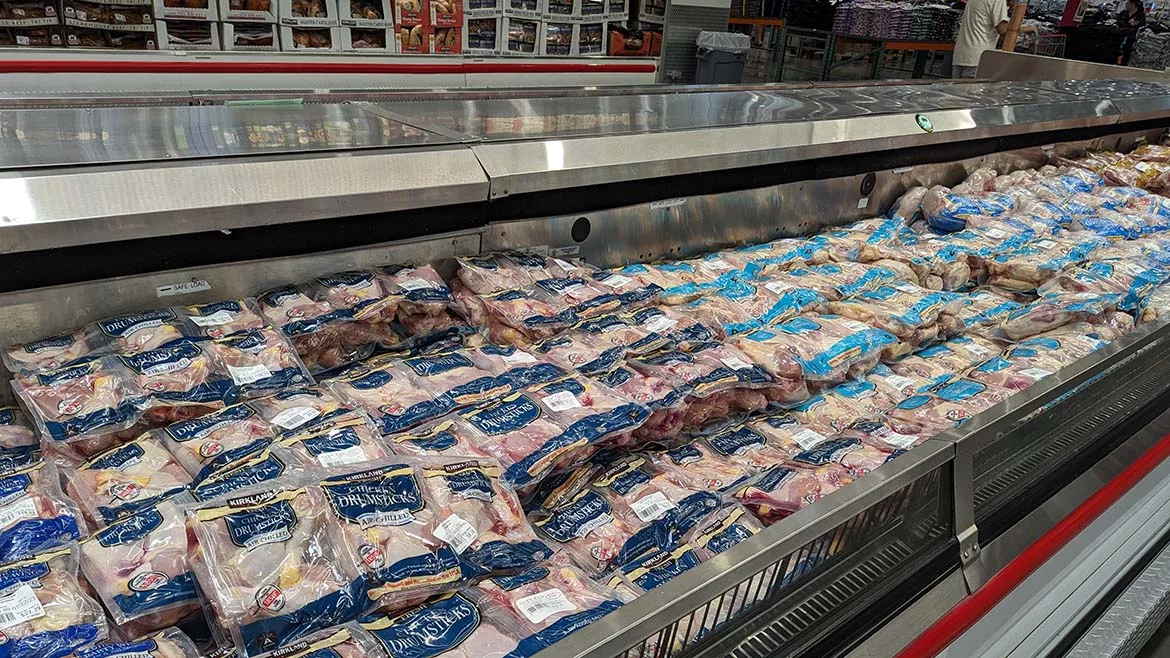
Supermarket Chicken Refrigeration Case
TARGET TEMP: Chicken needs to be kept at a target of 34°F, regardless of the outdoor temperature. (Staff photo)
August 1, 2023
✕
Image in modal.

When troubleshooting a refrigeration system, it is important to understand how the refrigeration cycle accomplishes the goal of removing heat from a room and rejecting the heat absorbed by the refrigerant to the outdoor ambient space. The entire process is actually quite simple. The heat must be taken from where it’s unwanted and deposited where it won’t do any damage, usually outside. This refrigeration cycle happens again and again, monitored by a thermostat set to the desired temperature.

This article will look at the role each component plays in the process as the baseline for proper operation.


Refrigeration Cycle

The compressor is a vapor pump, so it’s important to ensure liquid refrigerants aren’t introduced into the vapor pump’s inlet. Some components are included in the system in order to prevent this from happening as well as safeguard the overall operation of the compressor.

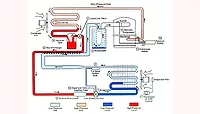
When the compressor starts, it compresses the vapor and discharges high-pressure, high-temperature gas through the discharge line. The gas then enters the condensing coil, where the refrigerant condenses as it gives up — or rejects — heat to the outdoor air. This allows the refrigerant to change state from a high-temperature, high-pressure gas to a medium-temperature liquid.

The medium-temperature liquid leaves the condenser’s outlet and is directed to a liquid receiver, where it is pushed out through a dip tube. It usually also goes through a liquid line filter drier, where any contaminants in the refrigerant are trapped.

The liquid refrigerant continues through the line, and in mechanical systems using a thermostatic expansion valve (TXV), a solenoid valve will open when cooling is needed, allowing refrigerant to flow through the expansion device. In electronic systems, the electronic expansion valve (EEV) does the job of both the solenoid and the TXV.

The expansion device feeds the distributor tubes, which evenly distribute refrigerant through the coil passage on the evaporator coil inlet. As the liquid refrigerant enters the evaporator coil inlet, there is a sudden drop in pressure, which also lowers the refrigerant’s temperature significantly.

Looking for quick answers on air conditioning, heating and refrigeration topics? Try Ask ACHR NEWS, our new smart AI search tool. Ask ACHR NEWS →

The refrigerant is in the path of warmer air that is being drawn across the coil by the evaporator fan motor, and because heat always moves from a hotter source to a colder source, heat is transferred from the air into the colder refrigerant. As the refrigerant continues to pick up the warmth from the air, it changes state and exits the coil as a vapor.

The main job of the expansion device (either TXV or EEV) is to control the amount of superheat, which is the excess heat present in the refrigerant beyond what is needed to transition from a liquid to a vapor state. The refrigerant picks up additional heat from its surroundings as it travels down the suction line on its way back toward the compressor. This superheat is necessary to ensure that only vapor enters the compressor.

Before reaching the compressor, there will likely be a suction filter drier, which sequesters any contaminants and allows the refrigerant to continue through. There may also be a suction accumulator, which is a vessel to hold any remaining liquid so it can safely boil off as a vapor. A tube inside the accumulator then draws the vapor to the compressor’s inlet.

Heatcraft Basic Refrigeration Cycle Diagram.

Basic Refrigeration Cycle Diagram Click to enlarge


Control Valves

The refrigeration cycle must be stable and consistent, regardless of the outdoor ambient temperature. For instance, when storing chicken at a store or restaurant at a target of 34°, the proper temperature must be maintained, whether the outdoor temperature is 10° or 110°. Differing temperatures can influence the refrigerant, but head pressure control valves — either single or dual systems — can manage those changes by artificially inflating the discharge pressure, ensuring that the liquid in the receiver always has an adequate supply of liquid to supply to the metering device.

In a system with a single head pressure control valve, when it’s warm outside, refrigerant from the compressor — in the form of a hot gas — makes its way to the condensing coils inlet. Assuming the pressure is high enough, the refrigerant will take the normal path, exiting the condenser outlet to flow from port “C” to port “R.”

Note: The refrigerant goes through the condenser coil, and by the time it reaches the last third of the coil, it has changed from a high-temperature vapor into a liquid.

As outdoor temperatures fall, the pressure falls, too, and there may not be enough liquid refrigerant for the receiver to feed 100% liquid to the expansion device. In this case, the head pressure control valve allows the hot gas to flow from port “D” to port “R” — straight from the discharge valve to the receiver, bypassing the condensing coil (see Figure 1). This helps pressurize what liquid remains in the liquid receiver.

Figure 1.

Figure 1 Click to enlarge

Meanwhile, the path to the condenser outlet is closed off. The compressor is still putting hot gas into the top of the condensing coil, so liquid is stacking in the bottom portion of the coil. As that stacking takes place, the refrigerant has nowhere to go, and the pressure inside the coil increases. Once pressure is sufficient, some liquid is let out of the condensing coil outlet and into the liquid receiver.

In systems with dual head pressure control valves, two valves work together to provide a path around the condensing coil. The ORI valve, which opens on a rise in inlet pressure, works in conjunction with the ORD valve, which opens on a rise in differential pressure (see Figure 2). The ORI valve opens when the inlet pressure of the valve itself rises. Typically adjustable, this valve can be fine-tuned during installation to the condensing coil’s outlet. The pressure of the liquid exiting the coil determines if the refrigerant is allowed to flow. If the pressure is high enough, it opens, or it can be held back if the pressure isn’t great enough.

Figure 2.

Figure 2 Click to enlarge

Meanwhile, a path is needed for the discharge gas to go directly into the top of the liquid receiver. The ORD opens on a rise in differential pressure between the refrigerant line exiting the ORI valve and the discharge line coming from the compressor. Only then does the hot gas move through the valve into the receiver. In addition, gas coming from the compressor is still filling the top of the condensing coil. The ORI valve holds and stacks the liquid, elevating the pressure, and when it’s high enough, that liquid goes into the liquid receiver. The TXV or EEV will only work if there is enough liquid — and no vapor.

These valve systems ensure that a consistent temperature is maintained, no matter the season or ambient conditions. By artificially inflating the head pressure, the system can do its job and create 100% liquid for the expansion device. Without these valves in place, these systems would only run in warm ambient conditions.


This is the last of a three part Basic Refrigeration series. Read the rest, which also cover:

  • Thermodynamics of Heat Transfer
  • Major Components in the System

To learn about troubleshooting refrigeration systems, technicians may want to attend in-person technical training at Heatcraft’s training facility in Stone Mountain, Georgia.

KEYWORDS: FROSTlines refrigeration systems troubleshooting and HVACR

Share This Story

Looking for a reprint of this article?
From high-res PDFs to custom plaques, order your copy today!


Don fort
Don Fort, senior technical trainer for Heatcraft Refrigeration Products, has nearly 40 years of HVACR industry experience — with 25 of those years focused on technical training and education. To contact Don, email don.fort@heatcraftrpd.com.

Recommended Content

JOIN TODAY
To unlock your recommendations.

Already have an account? Sign In

  • HVAC-enrollment

    The Trades Are Back: HVACR Programs See Nearly 30% Enrollment Spike

    A new wave of future technicians is entering the pipeline.  
    Training and Education
    By: Matt Jachman
  • 2025 Top 40 Under 40

    2025 Top 40 Under 40 HVACR Professionals List

    The 11th annual Top 40 Under 40 list highlights those...
    HVAC Contracting
    By: Hannah Belloli-Oster
  • LG Ductless Mini-Split Systems

    The 9 Types of Heat Pumps

    As the U.S. moves toward electrification, heat pumps are...
    HVAC Commercial Market
    By: Joanna R. Turpin
Subscription Center
  • Create an Account
  • Start a Subscription
  • Manage My Account
  • Sign Up for Newsletters
  • Visit Customer Service
  • Update Preferences

More Videos

Sponsored Content

Sponsored Content is a special paid section where industry companies provide high quality, objective, non-commercial content around topics of interest to The News audience. All Sponsored Content is supplied by the advertising company and any opinions expressed in this article are those of the author and not necessarily reflect the views of The News or its parent company, BNP Media. Interested in participating in our Sponsored Content section? Contact your local rep!

close
  • An illustration shows a house with a geothermal heating system. Pipes are depicted running underground.
    Sponsored byClimateMaster

    Residential Tax Credits Are Ending, But Demand Continues

  • Piggy Bank
    Sponsored byWatercress Financial

    Energy Prices, Inflation, and HVAC: What Today’s Homeowners Care About

  • Refrigerated Food
    Sponsored bySolstice Advanced Materials

    R-455A Refrigeration: A Cold Storage Solution for the Future

Popular Stories

price-raising-practices.jpg

Rising Costs Force Contractors to Take a Harder Look at Pricing

DOE-sign.jpg

HVAC Groups Support DOE’s Rulemaking to Cut Energy Efficiency Mandates

Data-Center-Inspection.jpg

Can HVAC Train Enough Technicians for the Data Center Boom?

HARDI lolgo navy

HARDI Distributors' Sales Down Nearly 5% in May

Industry-Ethics_-Service-Calls.jpg

HVAC Contractor Agrees to $300K Settlement Over Alleged Deceptive Sales Practices

View The ACHR NEWS
Centennial Anniversary Timeline

The ACHR News Timeline Chart
Submit a Letter
Submit a letter to our editors.

Events

November 6, 2025

Next-Gen Data Center Cooling: HVAC Innovation and Real-World Solutions

On Demand As AI workloads and high-density computing push traditional cooling methods to their limits, the data center industry is accelerating the adoption of next-generation HVAC technologies.

July 22, 2026

Designing VRF Systems Using A2L Refrigerant

In this session, we will cover how to design VRF systems for the U.S. market using new A2L refrigerants. These systems provide an advanced zoning solution by using inverter technology to deliver precise heating and cooling control across multiple zones and spaces.

View All Submit An Event

Poll

Summer Staff

Are you fully staffed for the summer season?
View Results Poll Archive

Products

BNI Mechanical/Electrical Square Foot Costbook, 2026 Edition

BNI Mechanical/Electrical Square Foot Costbook, 2026 Edition

See More Products
Designing Systems Using A2L Refrigerant - Free Webinar - 7/22/2026

Related Articles

  • The Basic Refrigeration Cycle

    See More
  • Basic Refrigeration Cycle

    A Simple Guide to the Refrigeration Cycle and How Air Conditioners Work

    See More
  • A Review of the Refrigeration Cycle

    See More

Related Products

See More Products
  • Uncomplicating The Heat Pump: Refrigeration & Air Flow Systems DVD

  • Understanding TXV Refrigeration Systems: Superheat and Subcooling DVD

  • basicelectricty_cover.jpg.jpg

    Understanding Basic Electricity - A Companion Guide

See More Products

Related Directories

  • Perfect Cycle

    Perfect Cycle specializes in the purchase & sale of refrigerant gas, chiller recovery, reclamation, plus manufactures a complete line of recovery & reclaim processing machinery.
  • The Chemours Co., Refrigerants by Chemours

    Trade NamesFreon™ RefrigerantsISCEON™ RefrigerantsOpteon™ RefrigerantsRefrigetants by Chemours™Suva™ Refrigerants
  • Dynatemp Refrigerants Co.

    Dynatemp Refrigerant Co. specializes in providing high-quality refrigerants, refrigerant management solutions, and industry innovation.
×

Sign Up. Stay Informed.

The #1 trusted source for the HVACR industry since 1926

SUBSCRIBE
  • RESOURCES
    • Advertise
    • Contact Us
    • Advisory Board
    • Classifieds
    • Submit a Letter
    • Directories
    • Store
  • ACCOUNT CENTER
    • Create an Account
    • Start a Subscription
    • Manage My Account
    • Sign Up for Newsletters
    • Visit Customer Service
    • Update Preferences
  • SERVICES
    • Marketing Services
    • Reprints
    • Market Research
    • List Rental
    • Survey/Respondent Access
  • STAY CONNECTED
    • LinkedIn
    • Facebook
    • Instagram
    • YouTube
    • X (Twitter)
  • PRIVACY
    • PRIVACY POLICY
    • TERMS & CONDITIONS
    • DO NOT SELL MY PERSONAL INFORMATION
    • PRIVACY REQUEST
    • ACCESSIBILITY

Copyright ©2026. All Rights Reserved BNP Media, Inc. and BNP Media II, LLC.

Design, CMS, Hosting & Web Development :: ePublishing